
Best Sellers
Floor and Table Lamps`
Floor and Table Lamps`
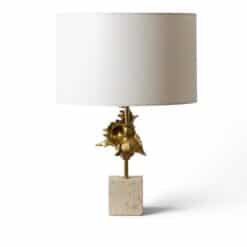
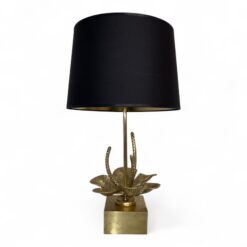
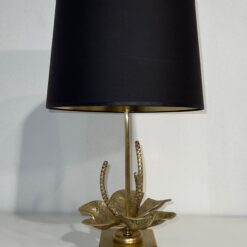
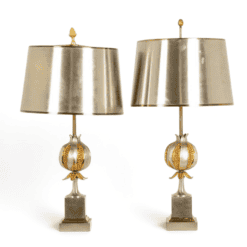
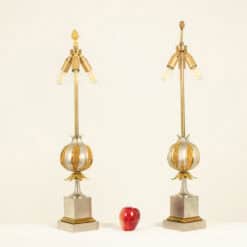
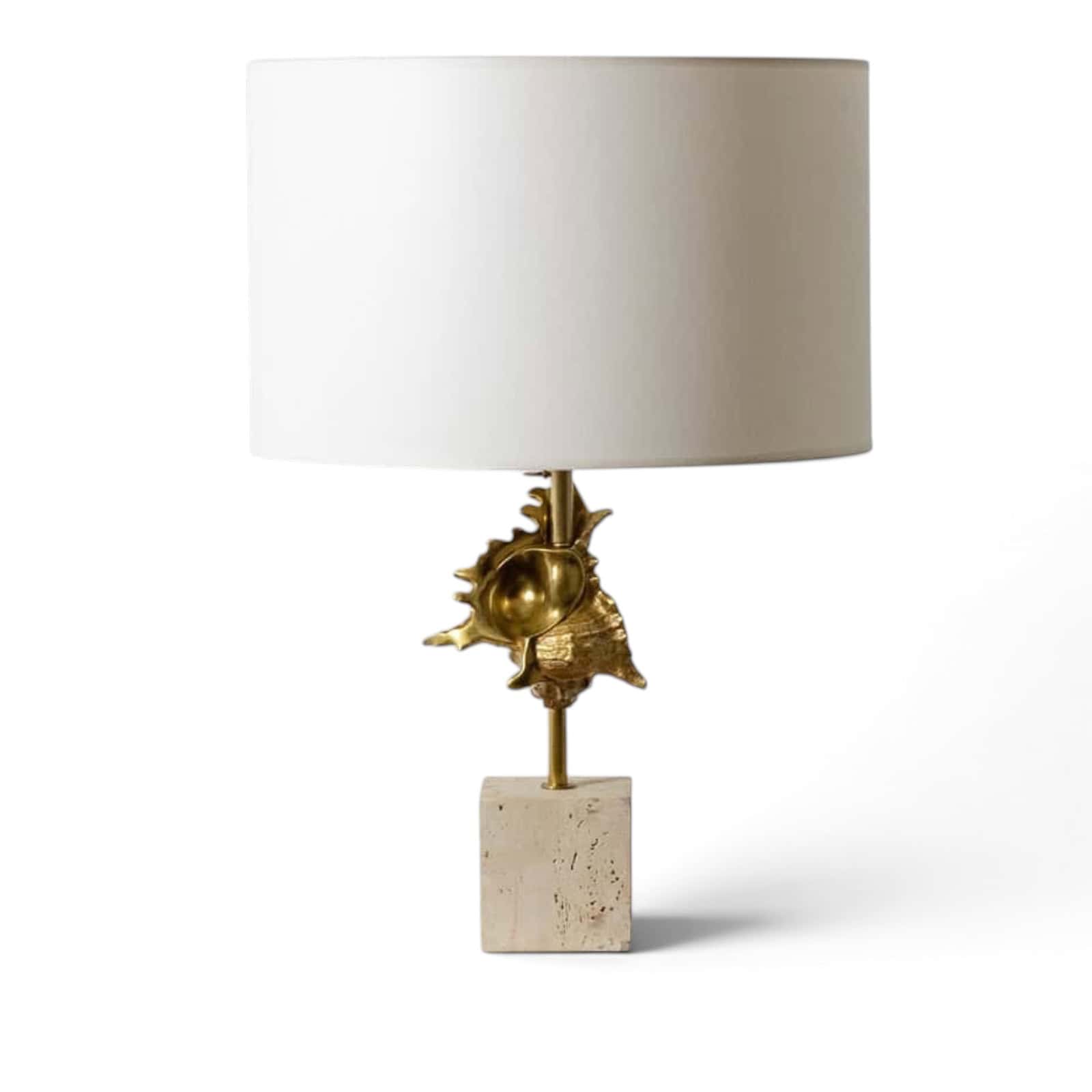
Nenuphar Table Lamp, Attributed to Maison Charles. Circa 1970
Floor and Table Lamps`
Floor and Table Lamps`
Lighting, Styylish History, Styylish Research Library
Maison Charles: History of Iconic French Lighting & Lamps
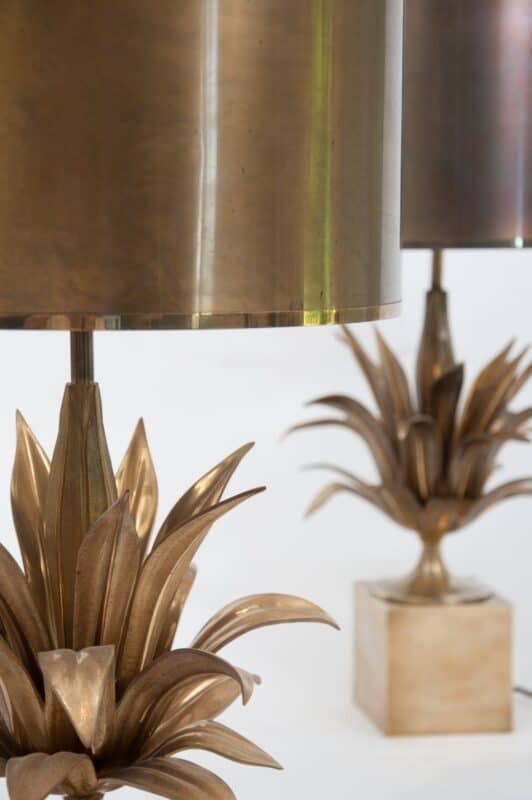
Few names in twentieth-century French lighting combine decorative craftsmanship, sculptural imagination, and unmistakable glamour quite like Maison Charles. Best known today for its extraordinary bronze lamps inspired by pineapples, lotus flowers, pinecones, corn, and other forms from nature, the Parisian house occupies a fascinating position between the traditions of the French bronzier and the creative freedom of postwar design.
From its origins in the early twentieth century to the iconic lighting of the 1960s and 1970s, Maison Charles developed a distinctive vocabulary that continues to appeal to collectors and interior designers. Its best pieces are more than functional lighting: they are decorative sculptures designed to transform an interior.
The Origins of Maison Charles
The history of Maison Charles Paris begins in 1908, when Ernest Charles took over the bronze workshop Maison Ullmann. Initially, the company specialized in reproductions of historic lighting fixtures and established a reputation for high-quality bronze work. Ernest’s son Émile-Albert Charles later assumed control of the business, joined by his brother Pierre in the 1930s, when the firm became known as Charles Frères.
This background is important to understanding Maison Charles. Unlike many modern lighting manufacturers, the company emerged directly from the French tradition of decorative bronze work. Casting, chasing, patination, polishing, and assembling metal were not simply production techniques; they formed the foundation of the firm’s design identity.
That technical heritage would become especially significant when a new generation entered the company.
The Birth of the “Style Charles”
A decisive transformation occurred in 1959 when Émile-Albert’s sons Jean and Jacques Charles joined the family business. Jean had trained at Paris’s prestigious École Boulle in interior architecture and wood sculpture, while Jacques studied applied arts and interior architecture. Together with their father, they developed what became known as the “Style Charles”—an approach combining classical references with a distinctly contemporary sensibility.
During the 1960s, Maison Charles began producing the designs that would make the company internationally recognizable.
Rather than treating a lamp as a simple base supporting a shade, the designers transformed the base itself into sculpture.
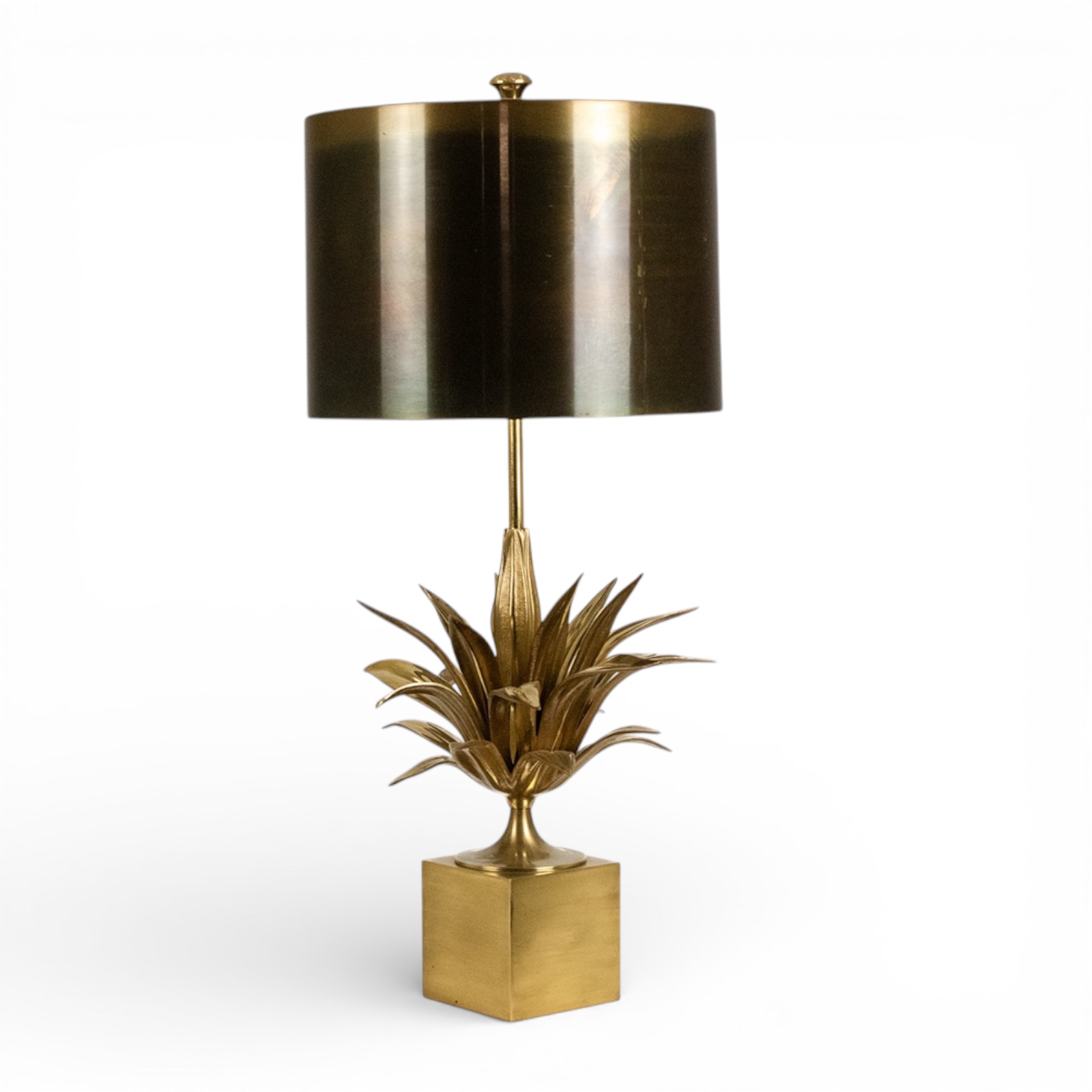
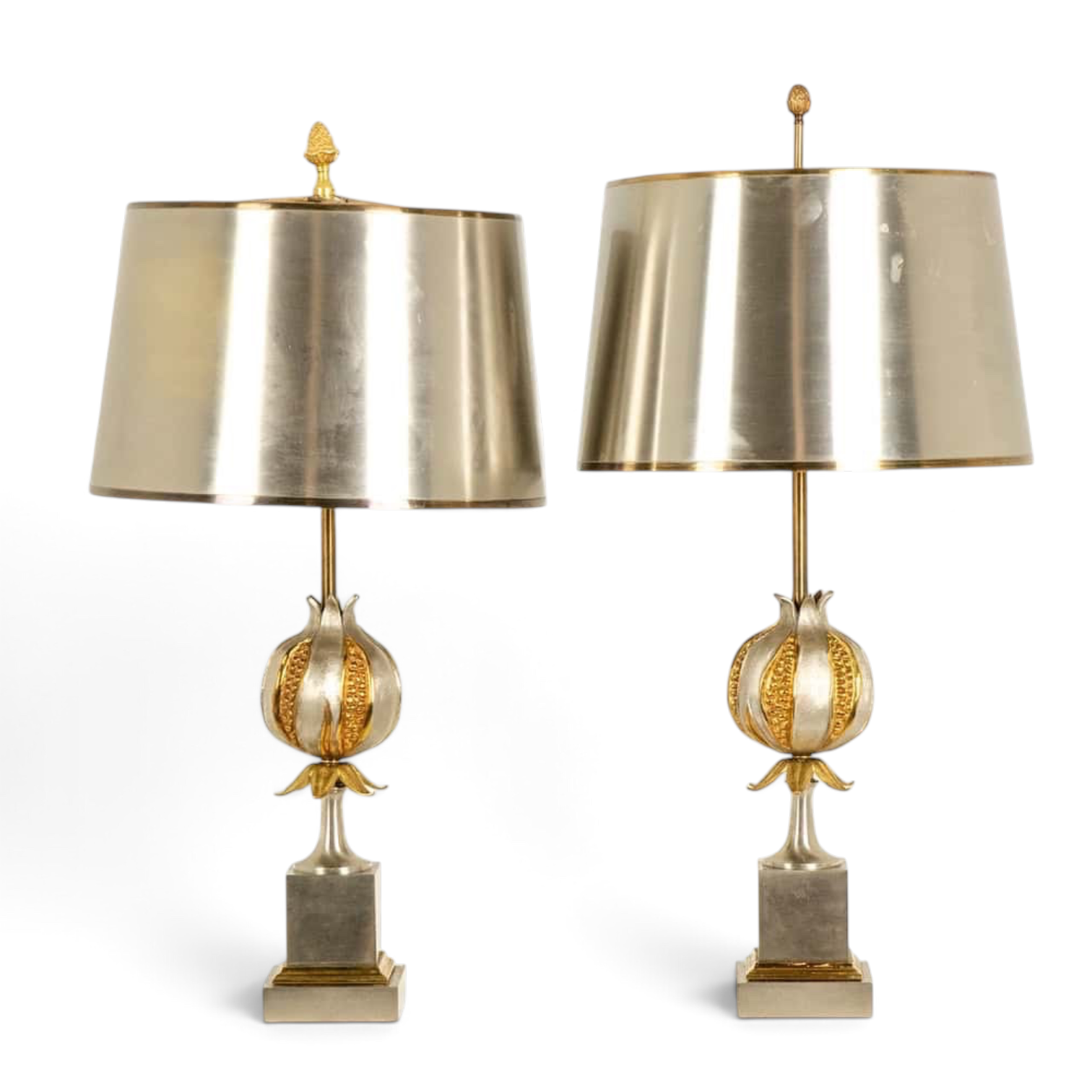
Pineapples, ears of corn, pinecones, lotus flowers, leaves, and classical vessels were interpreted in bronze and brass. Models including the Ananas, Épi de Maïs, Pomme de Pin, Lotus, and Vase Médicis became signatures of the house. Architectural Digest has likewise noted that these nature-inspired designs established the company’s reputation during the postwar period.
The resulting lamps occupy an intriguing space between traditional French decorative arts and Mid-Century Modern design.
Nature Cast in Bronze
Perhaps the most recognizable characteristic of vintage Maison Charles lighting is its fascination with the natural world.
Leaves curl upward from polished bases. Pinecones become sculptural columns. Corn husks are transformed into elegant metallic compositions. The pineapple—a centuries-old European symbol of hospitality and luxury—becomes an exuberant decorative object.
What prevents these pieces from feeling merely whimsical is the quality of their execution.
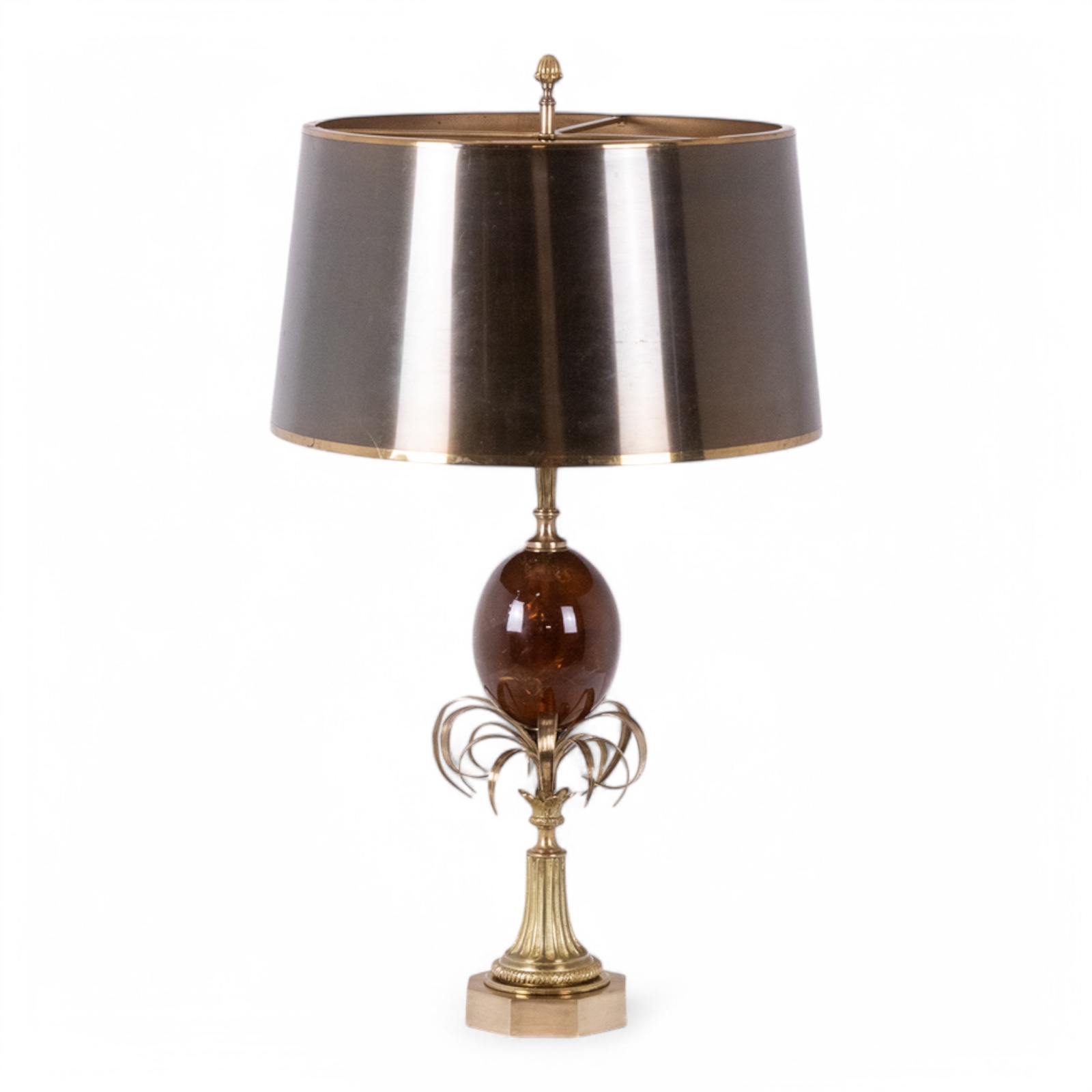
Maison Charles inherited the techniques and visual sophistication of traditional Parisian bronze workshops. Surfaces could be polished, gilded, darkly patinated, or contrasted against one another, allowing a single lamp to possess remarkable depth and texture.
This tension between realism and stylization is central to their appeal. A leaf may be recognizable botanically, yet when enlarged and executed in bronze it becomes almost architectural.
Placed on a console, side table, or pair of nightstands, a Maison Charles lamp therefore functions simultaneously as lighting, sculpture, and decorative art.
Chrystiane Charles and the Lamp as Sculpture
One of the most important figures in the history of the company was Chrystiane Charles, wife of Jean Charles and an accomplished sculptor.
Following the deaths of Émile-Albert, Jean, and Jacques Charles in 1970, Chrystiane became Artistic Director of Maison Charles in 1971. The following year she introduced a collection of signed and numbered sculptural lamps inspired extensively by nature, including designs such as the Amaryllis, Alizée, Orchidée, and Tulipe.
Her work pushed Maison Charles further toward the idea of the lamp as an independent artistic object.
Botanical forms became increasingly expressive and sculptural. Flowers, water plants, and leaves were translated into compositions in which stems and foliage simultaneously concealed and celebrated the structure of the lighting fixture.
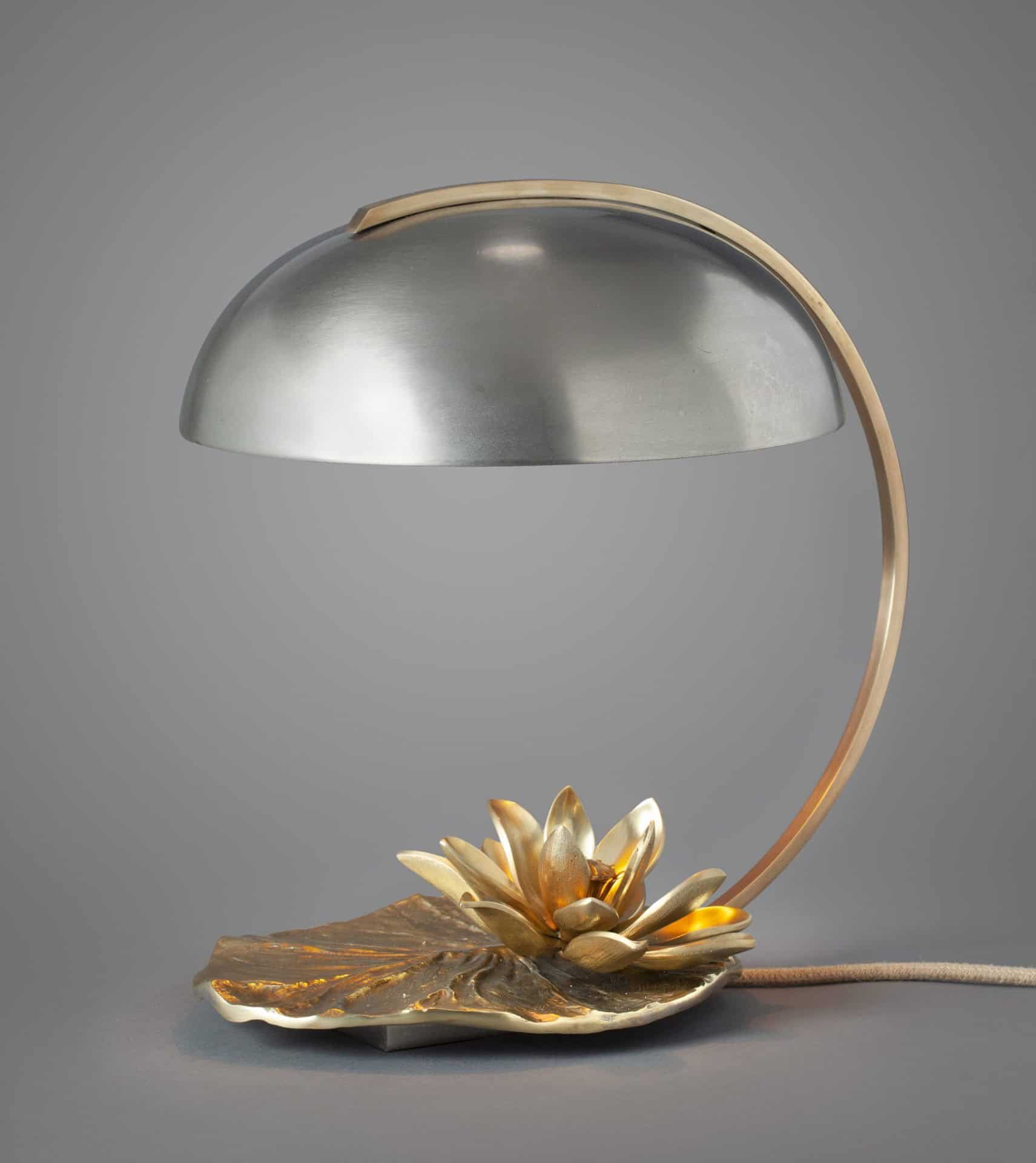
Her achievements were recognized at the Salon International du Luminaire de Paris, where designs received the Lampe d’Or, including the Feuille d’Eau in 1978 and Orchidée in 1981.
These pieces remain particularly compelling examples of the dialogue between sculpture and interior design that characterized French decorative lighting during the 1970s.
Beyond Botanical Design: The Inox Collection
Maison Charles was never limited to naturalistic bronze lamps.
In 1965, Jacques Charles introduced the Inox Collection, exploring stainless steel, lacquer, and strongly geometric forms. The celebrated Organ or “organ pipe” lamps, constructed from groups of polished tubular elements, presented an entirely different vision of modern lighting.
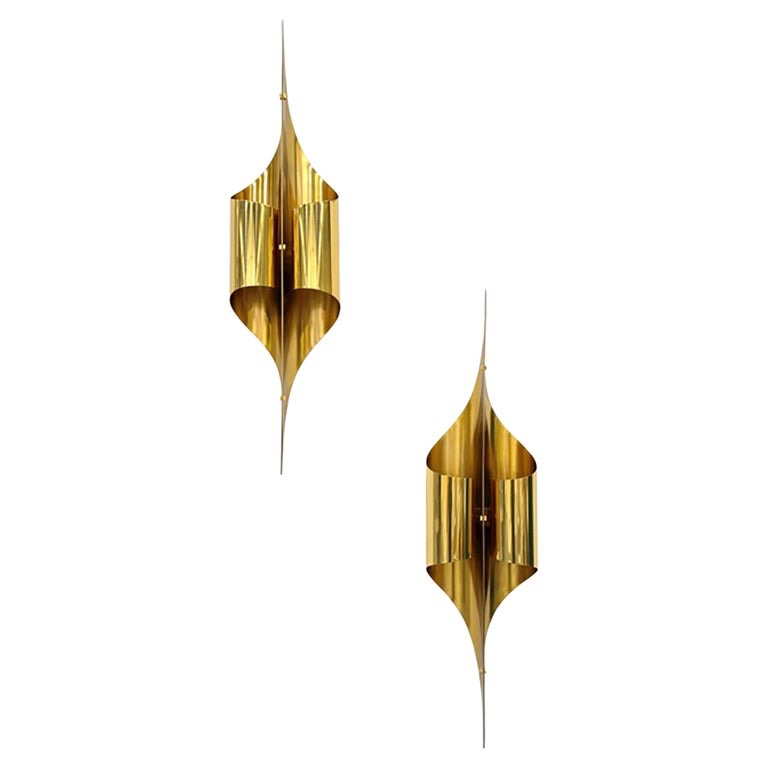
The contrast is striking.
On one side are luxuriant leaves, flowers, and fruits modeled in bronze. On the other are sleek cylinders and reflective surfaces associated with the technological optimism of the 1960s.
Yet both belong unmistakably to Maison Charles. Each treats the lamp as an object with architectural presence rather than a purely functional source of illumination.
Why Collectors Seek Vintage Maison Charles Lighting
Today, Maison Charles lamps from the 1960s and 1970s have become increasingly desirable within interiors that mix periods and styles.
Their versatility is part of the attraction. A sculptural bronze lamp can sit comfortably beside an eighteenth-century commode, a contemporary sofa, or a streamlined Mid-Century console. The warmth of aged brass and bronze also provides a particularly effective contrast to stone, lacquer, glass, and richly grained woods.
For collectors, details matter.
Period Maison Charles pieces may carry stamped or engraved markings such as “Charles” or “Charles Made in France,” while certain sculptural designs associated with Chrystiane Charles can also bear signatures. A circa-1965 corn-form lamp documented by Christie’s, for example, was stamped “Charles Made in France.”
As with all vintage designer lighting, however, attribution should consider the entire object: construction, materials, proportions, patination, electrical components, documented model comparisons, and provenance when available.
Maison Charles in Contemporary Interiors
The renewed appreciation for Maison Charles reflects a broader shift in interior design toward objects with individuality and craftsmanship.
These lamps do not disappear quietly into a room.
A pair of monumental botanical lamps can frame a mirror or artwork. A pineapple lamp can bring warmth and eccentricity to a restrained interior. An Inox lamp introduces a sharper, architectural note to a collection of antiques.
This ability to bridge French decorative tradition and twentieth-century modernism may ultimately explain the lasting appeal of Maison Charles.
More than a century after the company’s foundation, its finest vintage lighting continues to demonstrate how a functional object can become something considerably more ambitious. Through bronze, brass, stainless steel, and an extraordinary vocabulary drawn from nature and architecture, Maison Charles transformed illumination into sculpture.
For collectors and designers, that combination of craftsmanship, history, and visual character makes vintage Maison Charles lighting as relevant in contemporary interiors as it was in the sophisticated rooms of Paris in the 1960s and 1970s.

Silke Berlinghof
People also buy
Floor and Table Lamps`
Floor and Table Lamps`
Floor and Table Lamps`
Nenuphar Table Lamp, Attributed to Maison Charles. Circa 1970
Floor and Table Lamps`