
Antique Louis XVI Corner Cabinet, Germany 1780
Dimensions: H: 220 cm (86.61 in.) × W: 80 cm (31.50 in.) × D: 56 cm (22.05 in.)
Exquisite Antique Neoclassical Marquetry Corner Cabinet, circa 1800
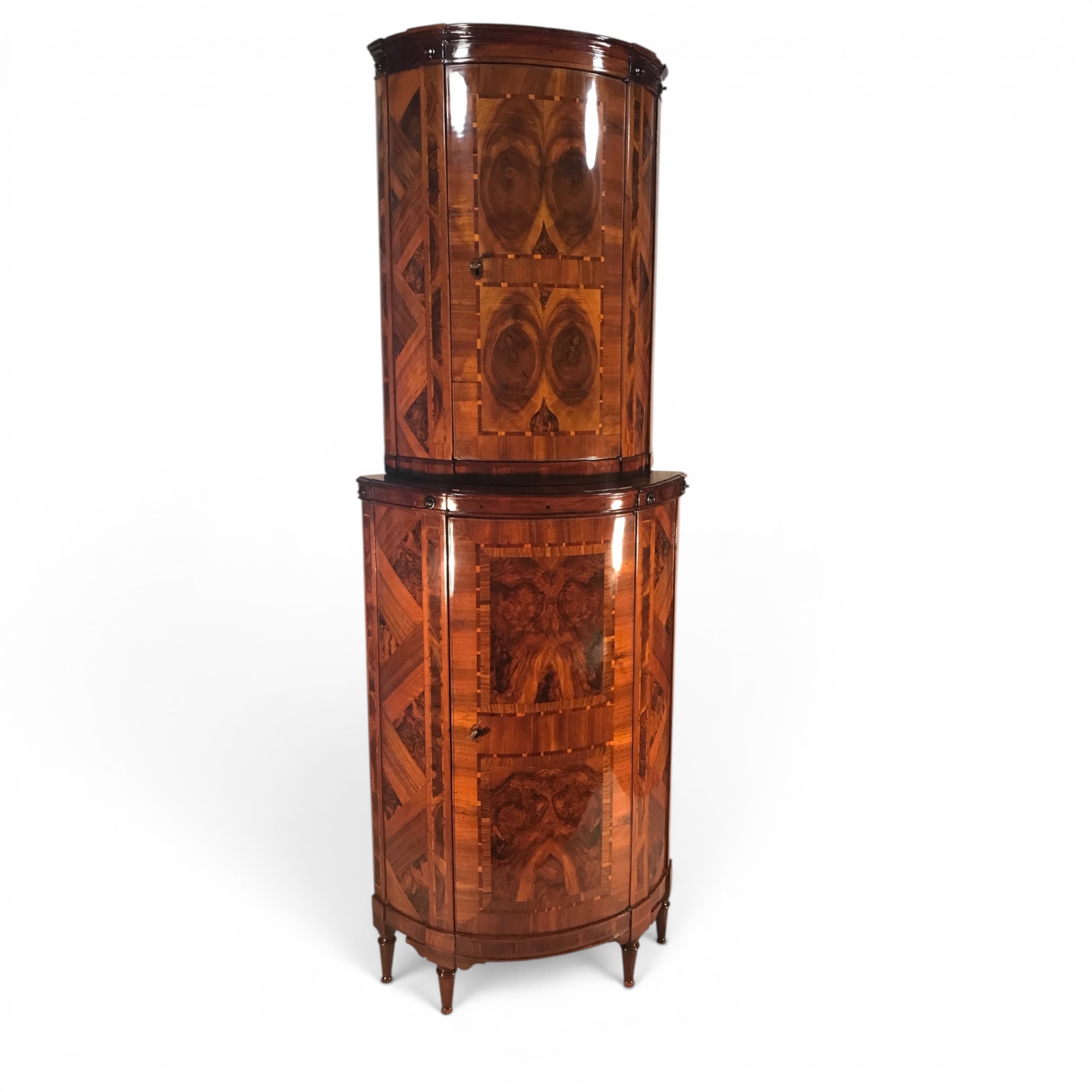
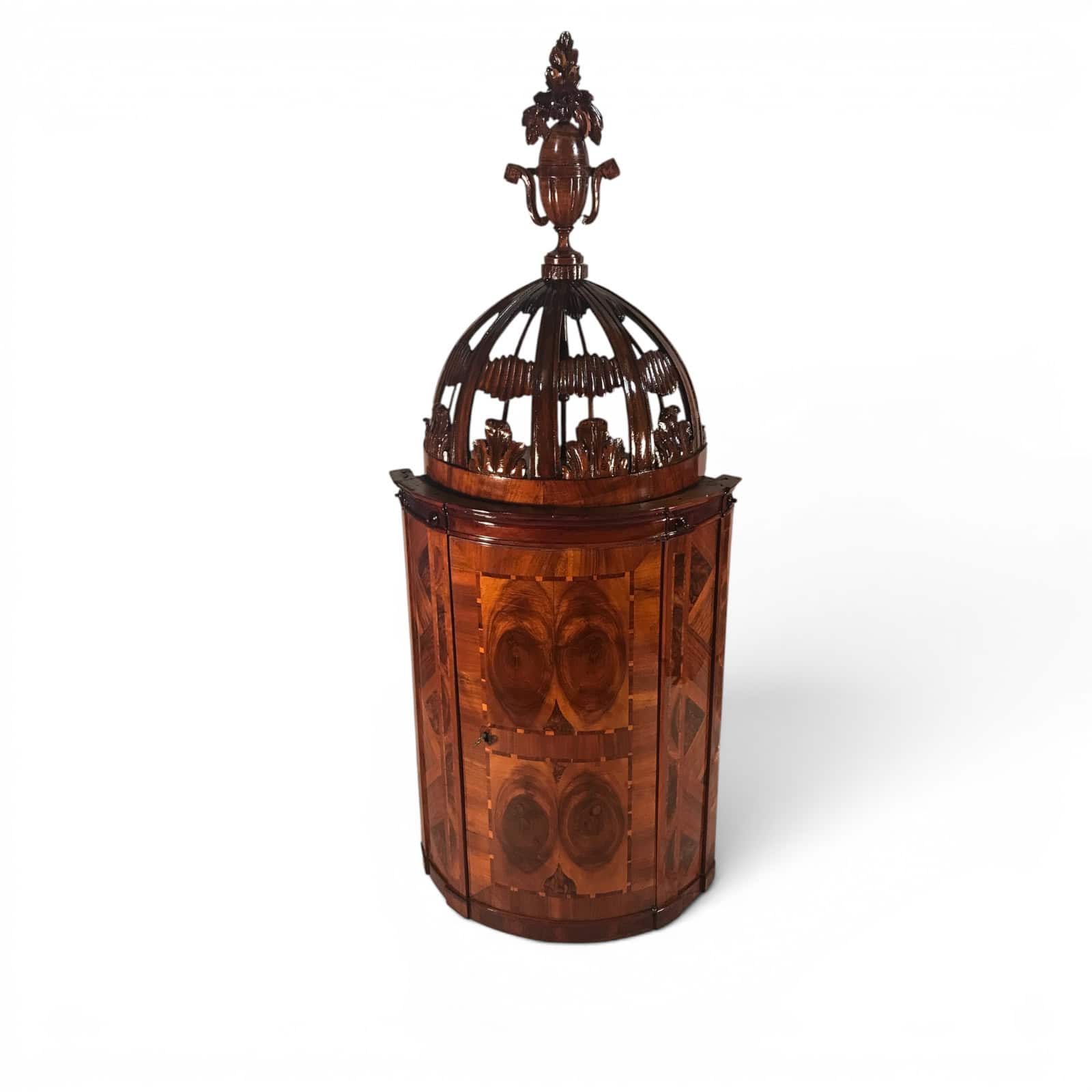
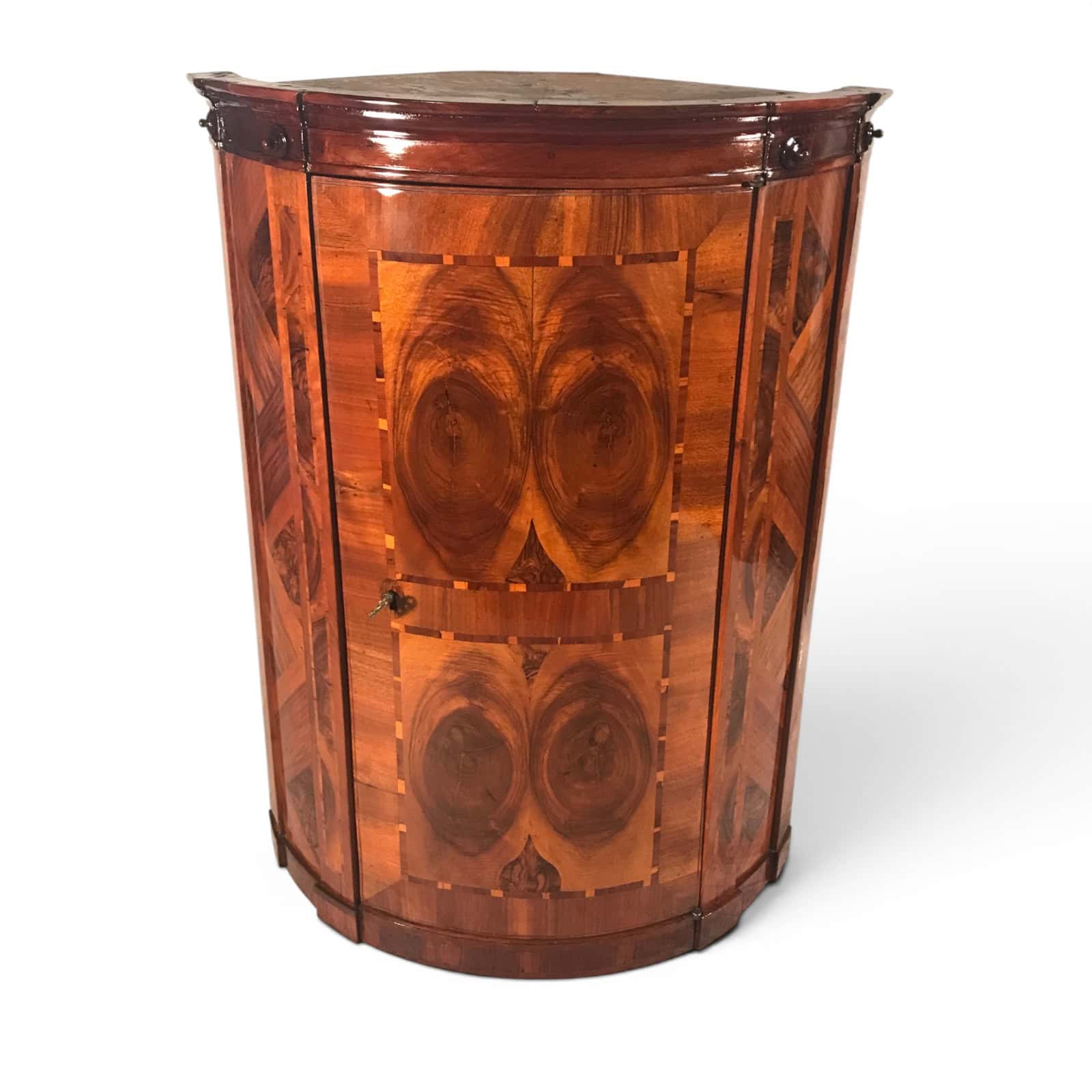
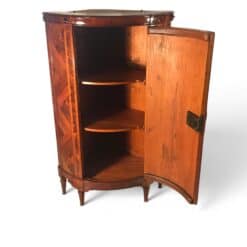
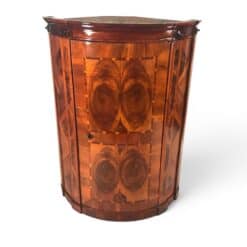
This exceptional antique Neoclassical corner cabinet dates to around 1780 and most likely originates from Germany. Its elegant architectural form combines richly figured walnut veneers with elaborate geometric marquetry.
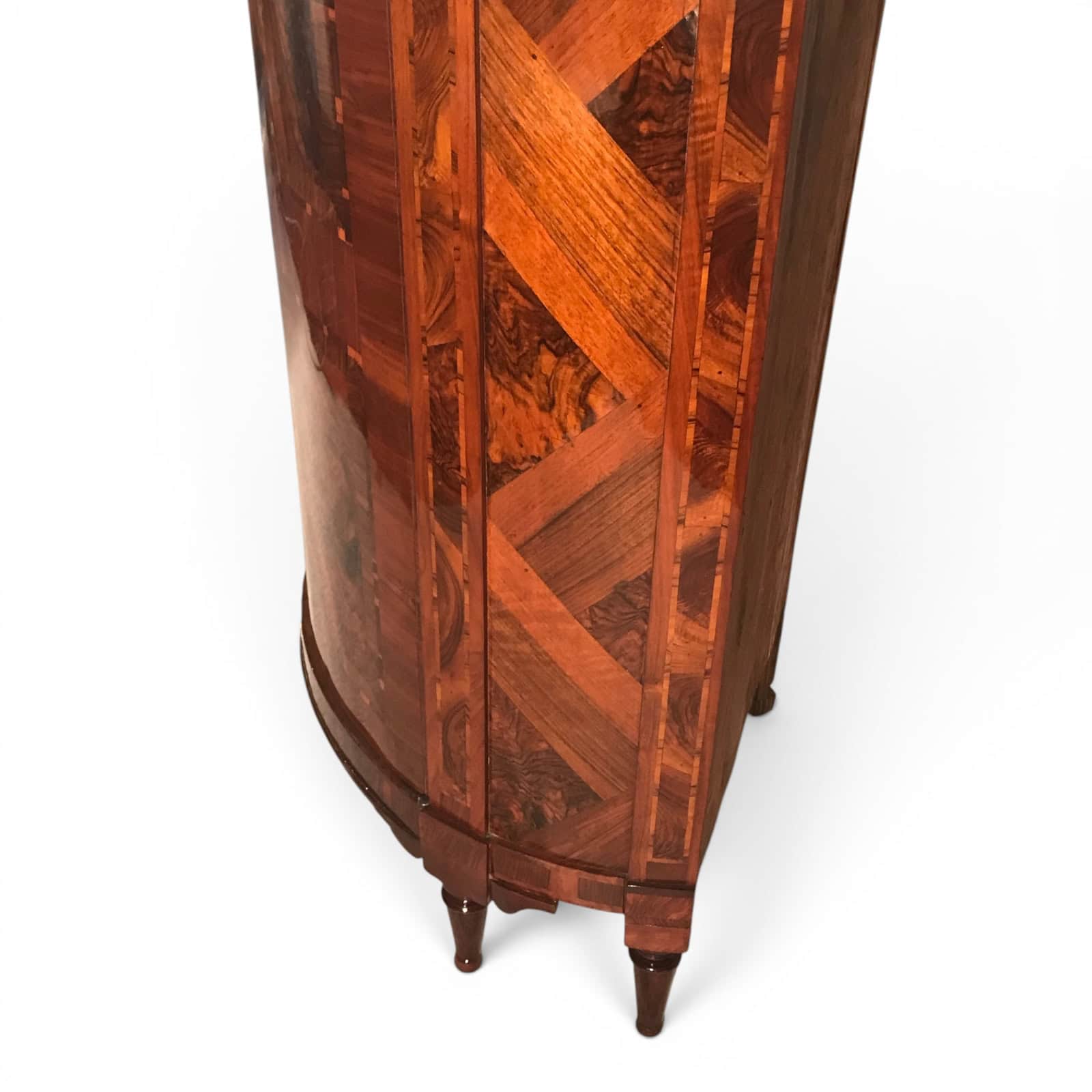
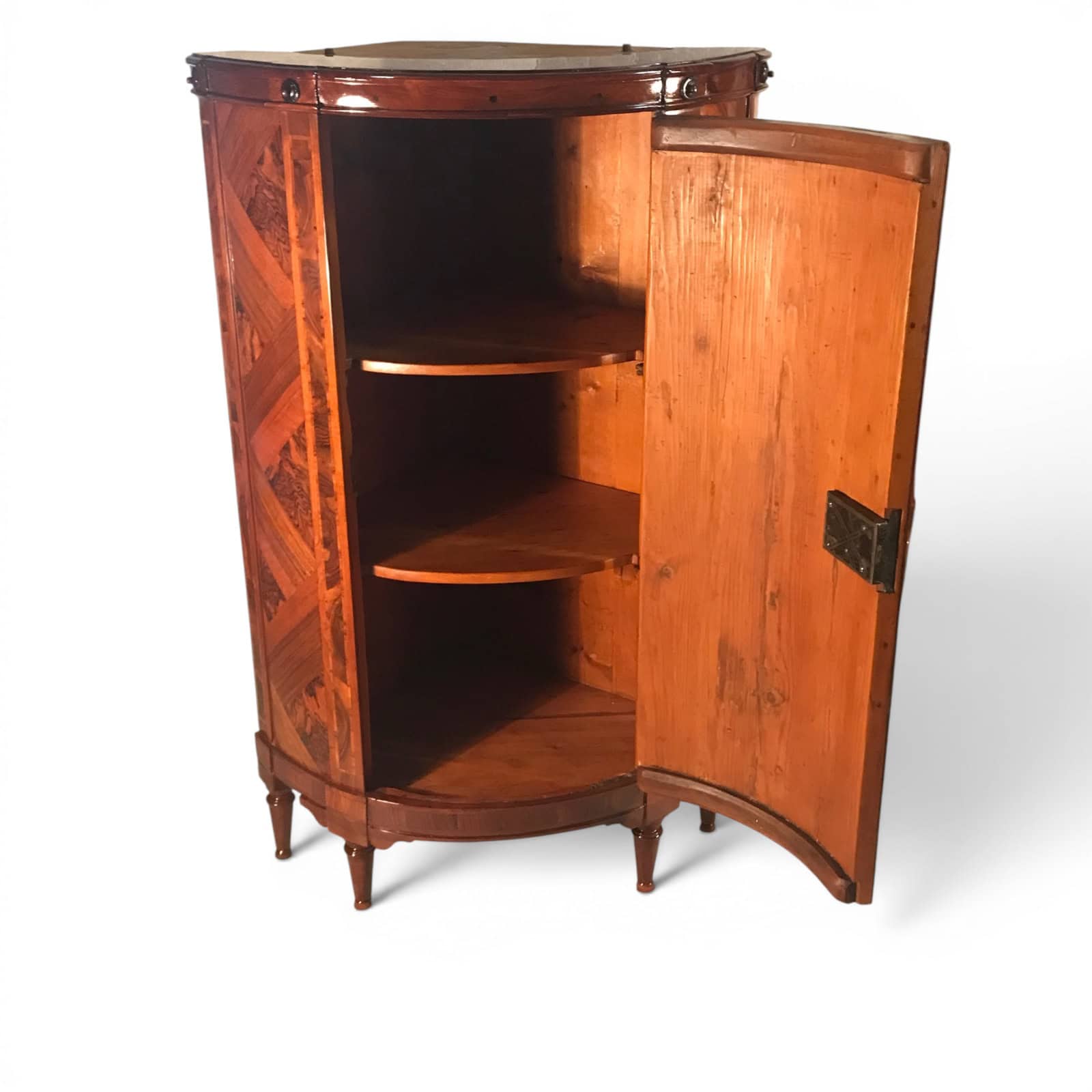
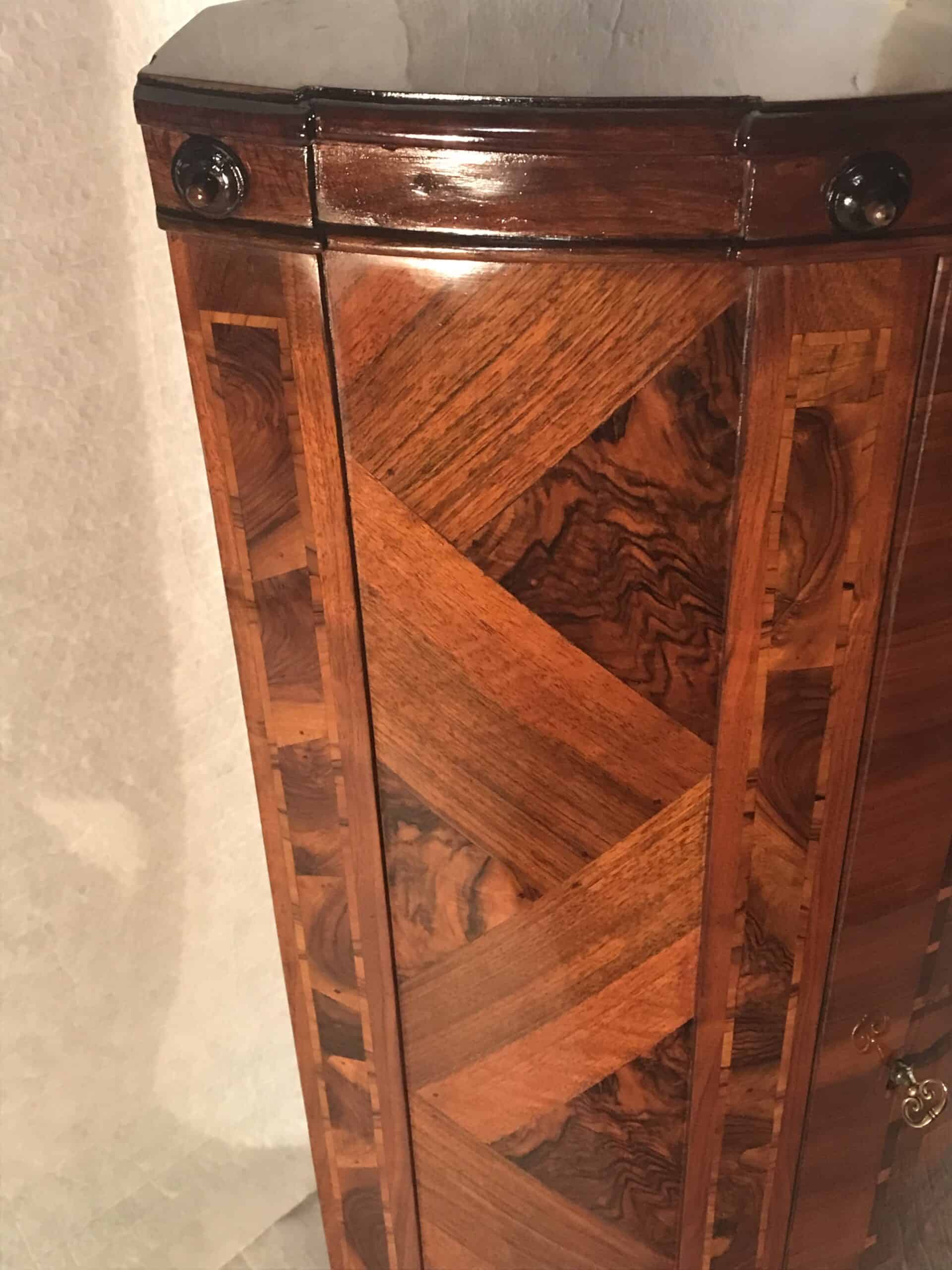
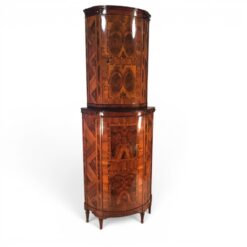
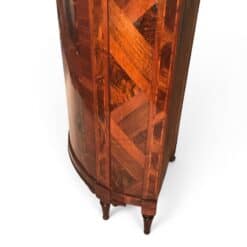
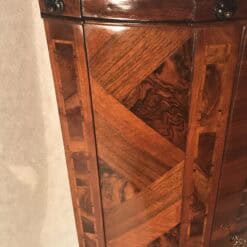
The cabinet consists of two sections, each with a gently rounded front. Carefully arranged walnut veneers create striking symmetrical patterns across the doors. Contrasting banding frames the central panels and emphasizes the cabinet’s refined proportions.The side panels feature particularly impressive geometric marquetry. Diagonal bands create a dynamic pattern of contrasting woods and figured veneers. Fine inlay borders add another layer of detail.
Two doors provide a lot of practical interior storage while preserving the cabinet’s slender profile. The lower section stands on elegant tapered legs, a characteristic element of late 18th-century Neoclassical furniture.
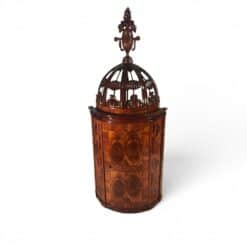
An elaborate 18th-century openwork crown, added to the cabinet at a later date, can be placed on top as an optional decorative element. Its domed form and classical urn finial create a striking architectural silhouette. The sculptural silhouette adds height and gives the cabinet an impressive presence.
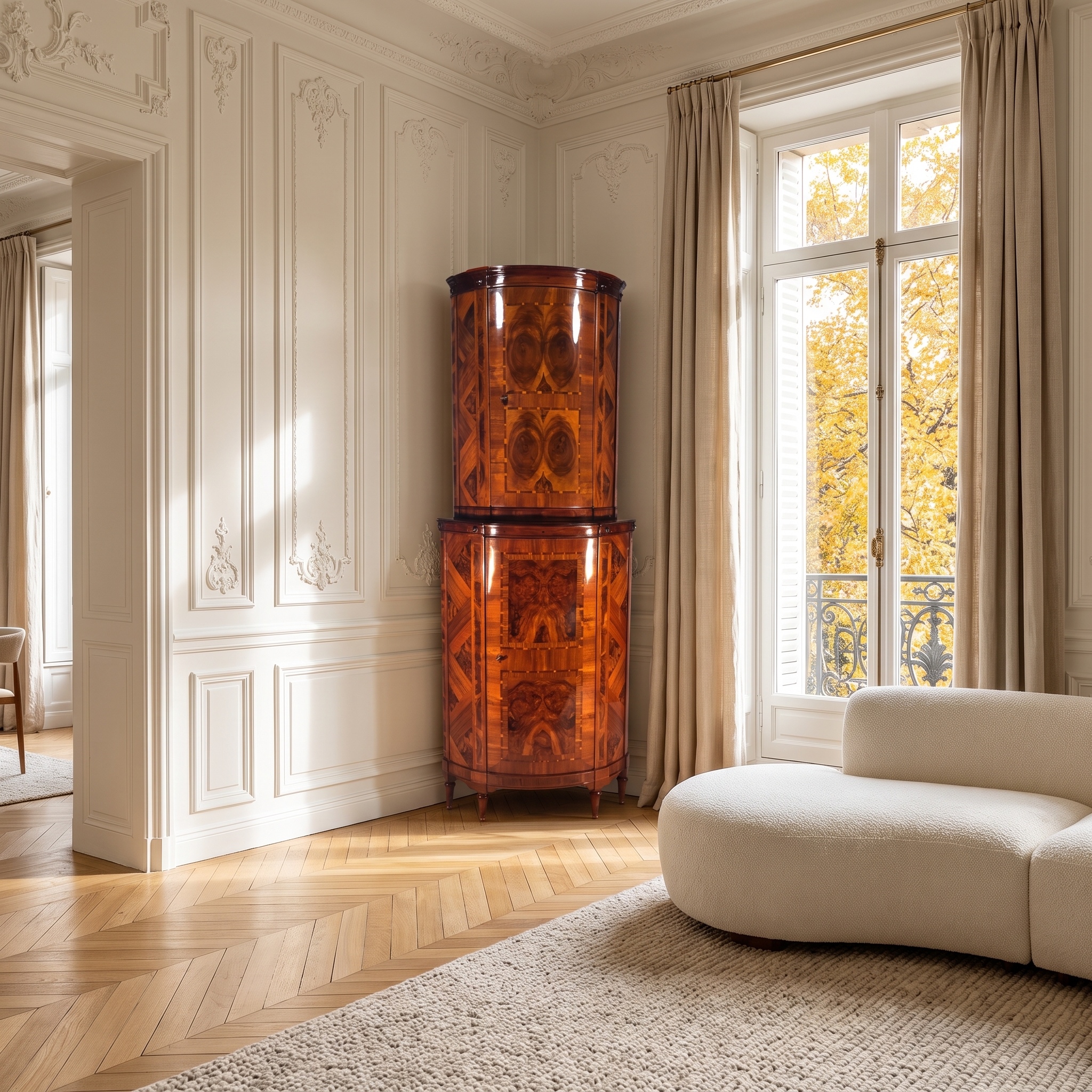
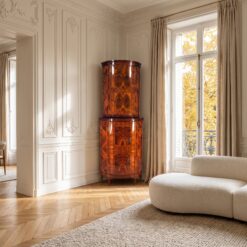
Designed specifically to fit into a corner, this cabinet combines decorative impact with an unusually efficient use of space. Its warm veneers and strong geometric patterns make it equally compelling in a traditional or contemporary interior.
Details
Origin: Central Europe
Date: circa 1780
Style: Neoclassical/ Louis XVI
Type: Corner cabinet
Materials: Wood, figured veneers and marquetry
Decoration: Geometric marquetry and contrasting inlay
Configuration: Two-part cabinet with upper and lower storage
Base: Tapered legs
Condition: In expertly refinished condition.
Dimensions: H: 220 cm (86.61 in.) × W: 80 cm (31.50 in.) × D: 56 cm (22.05 in.)
This Neoclassical marquetry corner cabinet stands out for its sophisticated veneer work, elegant proportions, and unusual architectural form. It represents the refined craftsmanship that characterized Central European cabinetmaking around 1780.
| Product Dimensions: | |
|---|---|
| Height | 220 cm (86.61 in) |
| Width | 80 cm (31.5 in) |
| Depth | 56 cm (22.05 in) |
| Date of Manufacture | 1780 |
| Restoration | Yes |
| Condition | Expected wear and tear |
| Color | Brown |
| Country Of Origin | Germany |
| Item Condition | Excellent |
| Material | Walnut |
| Period | Late 18th century |
| Techniques | Veneer |
| Product style | Louis XVI, Neoclassical Style |
| Weight | 60 kgs (132.28 lbs) |
Be the first to review “Antique Louis XVI Corner Cabinet, Germany 1780”
Styylish has a huge network of shipping companies and can negotiate competitive quotes for worldwide shipping for you. Please ask us for a shipping quote before your purchase. We will make sure that you get a fair rate and do not pay too much!
Local Pick up
Local pickup allows customers to inspect an item at the time of pickup and avoid shipping costs.
White Glove Shipping
Item is delivered inside your home and placed in the room of your choice (installation and hookup are not included).
Local Deliveries
Local rates are available on most items where the delivery location is within 30 miles.
Shipping charges start at $150, depending on product type, size, location of the buyer. Local deliveries typically take up to 2 weeks.
Shipping within the Continental US
Flat rate shipping costs between $450-$750, depending on your location and the size of the item. The delivery usually takes between 3-5 weeks.
Express delivery can be organized but is subject to additional fees.
Overseas, Alaska and remote areas please ask for a shipping quote.
Parcel Delivery
Shipment is arranged through recognized carriers such as UPS, FedEx, and DHL.
Only pieces that can be safely packed in a box or envelope may be shipped via parcel.
Shipping charges start at $20 and vary based on the size, weight, packaging and the value of the item.
Items are typically delivered within 2 weeks of the purchase date.
The Styylish Buyer Guarantee ensures that you have complete peace of mind when making a purchase on Styylish in the event that your item:
- Does not arrive
- Is materially different than what you purchased
All sales are final on Made–to–Order items.
For all other items, sales are final 48 hours after delivery (Except Free Local Pickup and Local Delivery — see below).
To request a return, please email [email protected] and include the order number and the reason for your return request.
On approved returns, the buyer is responsible for full cost of return packing & shipping.
The items are insured during the shipping process and the shipper’s insurance will cover the cost for any damage caused by the shipper during the shipping process.
Local Pickup & Local Delivery
All sales are final once buyer or buyer’s agent takes possession of an item.
Upon inspection, if you decide not to move forward with the purchase, you or your agent must refuse the item at the time of pickup/delivery from the seller.
Once you have taken possession of the item, all sales are final.
Please contact [email protected] to let us know you did not accept the item and would like to initiate a refund.
Related products
Chests of Drawers, Dressers, Commodes
Antique Furniture and Decor
Chests of Drawers, Dressers, Commodes
Antique Furniture and Decor
Antique Furniture and Decor
Antique Furniture and Decor
Antique Furniture and Decor
Antique Furniture and Decor
Ask a Question
Thank you!
Your question has been sent. We’ll get back to you shortly.
Reviews
There are no reviews yet.