
Best Sellers
Antique Furniture and Decor
Antique Furniture and Decor
Antique Furniture and Decor
Accent chairs
Antique and Vintage Seating

Antique Furniture and Decor
Antique Furniture and Decor
Antique Furniture and Decor
Antique Furniture and Decor
Antique Furniture and Decor
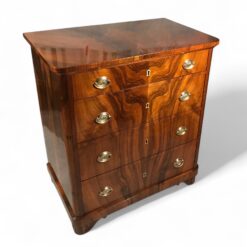
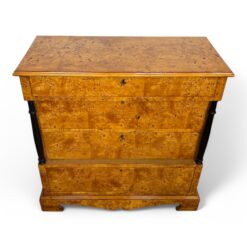
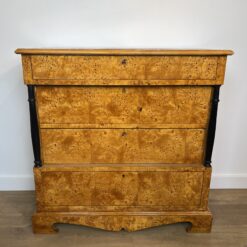
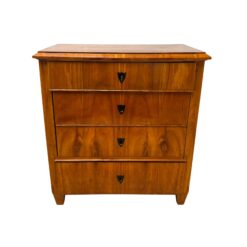
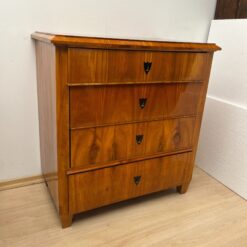
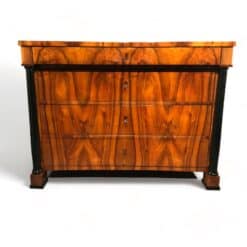
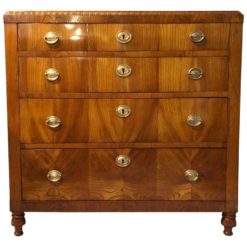
Small Biedermeier Style Chest of Drawers with Four Drawers in Maple
Antique and Vintage Seating
Antique Furniture and Decor
Antique Furniture Guide, Biedermeier
Dolphin Motifs on Biedermeier Furniture: The Bourgeois Love of Myth
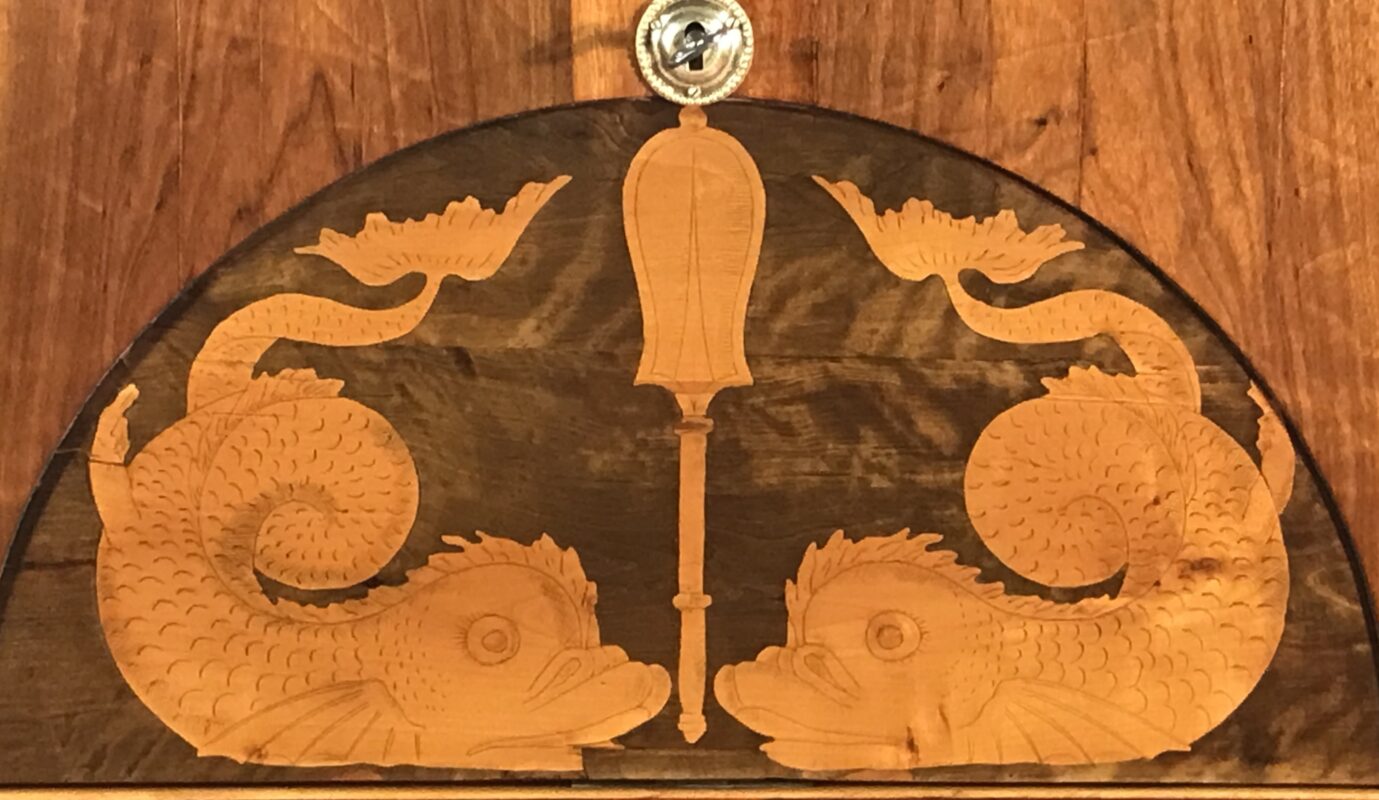
Biedermeier furniture is often described as restrained, domestic, elegant, and quietly bourgeois. Yet one decorative detail surprises many collectors and design historians: dolphin motifs on Biedermeier furniture. These maritime, mythological creatures appear on drawer pulls, escutcheons, carved feet, and bronze mounts—adding a layer of symbolism to otherwise calm and polished surfaces.
At first glance, dolphins seem like an unlikely match for the sober interiors of early 19th-century Central Europe. Playful and mythic, they feel more at home in ancient mosaics or Baroque fountains than on a Viennese secrétaire. And yet, once you start noticing them, they appear again and again.
So why do dolphins appear on Biedermeier furniture?
At first glance, it feels like a mismatch. Dolphins are playful, maritime, and mythic—more at home in ancient mosaics or Baroque fountains than on a sober secrétaire in a Viennese apartment. Yet dolphin motifs show up again and again in the decorative vocabulary of the Biedermeier period: in drawer pulls, escutcheons, carved feet, crest ornaments, and gilded mounts.
And once you start noticing them, you can’t stop.
This post looks at dolphin motifs on Biedermeier furniture: where they appear, what they meant, why they were popular, and what they can tell us about the mindset of the early 1800s.
The Biedermeier Period: Calm Surfaces, Hidden Symbolism
The Biedermeier period (roughly 1815–1848) sits between high Neoclassicism and the Romantic era. In German-speaking regions—especially Austria and Southern Germany—it reflects a cultural shift toward private life, family interiors, and the home as a place of identity.
Biedermeier design is famous for its emphasis on:
-
clean, functional forms
-
fine craftsmanship
-
richly grained veneers (especially cherry, walnut, maple, and mahogany)
-
minimal ornament compared to earlier styles
But “minimal ornament” does not mean “no ornament.” In fact, the ornament that does appear is often highly deliberate: small motifs with long cultural histories, placed strategically where the hand touches or the eye rests.
Dolphins fall squarely into that category.
Where Dolphin Motifs Show Up on Biedermeier Furniture
If you’re trying to identify dolphin decoration in Biedermeier furniture, you’ll usually find it in the details—especially metalwork and transitional areas where structure meets embellishment.
Common placements include:
1) Drawer pulls and handles
Some Biedermeier commodes and desks use dolphin-shaped handles, often in brass or bronze. The body of the dolphin curves into a functional grip, making it both ornamental and practical.
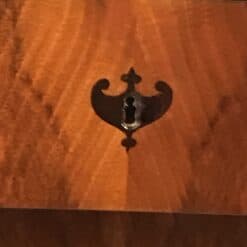
2) Escutcheons (keyhole plates)
One of the most frequent places dolphins appear is the keyhole. Dolphin-shaped escutcheons are small, decorative, and perfect for Neoclassical symbolism—like a little mythological “signature” on an otherwise plain façade.
3) Feet and supports
In some pieces, dolphins appear as stylized feet, often paired symmetrically. This can look almost like a hybrid between a dolphin and a sea-horse or other classical marine creature.

4) Crest ornaments on mirrors or cabinets
Occasionally, dolphin motifs show up in carved crest details on Biedermeier mirrors, display cabinets, or clock cases—especially where the piece leans more toward the decorative end of the Biedermeier spectrum.
5) Bronze mounts and applied decoration
In more luxurious pieces—especially those influenced by French Empire style—dolphins can appear as part of applied mounts: a nod to aristocratic taste filtered into bourgeois interiors.
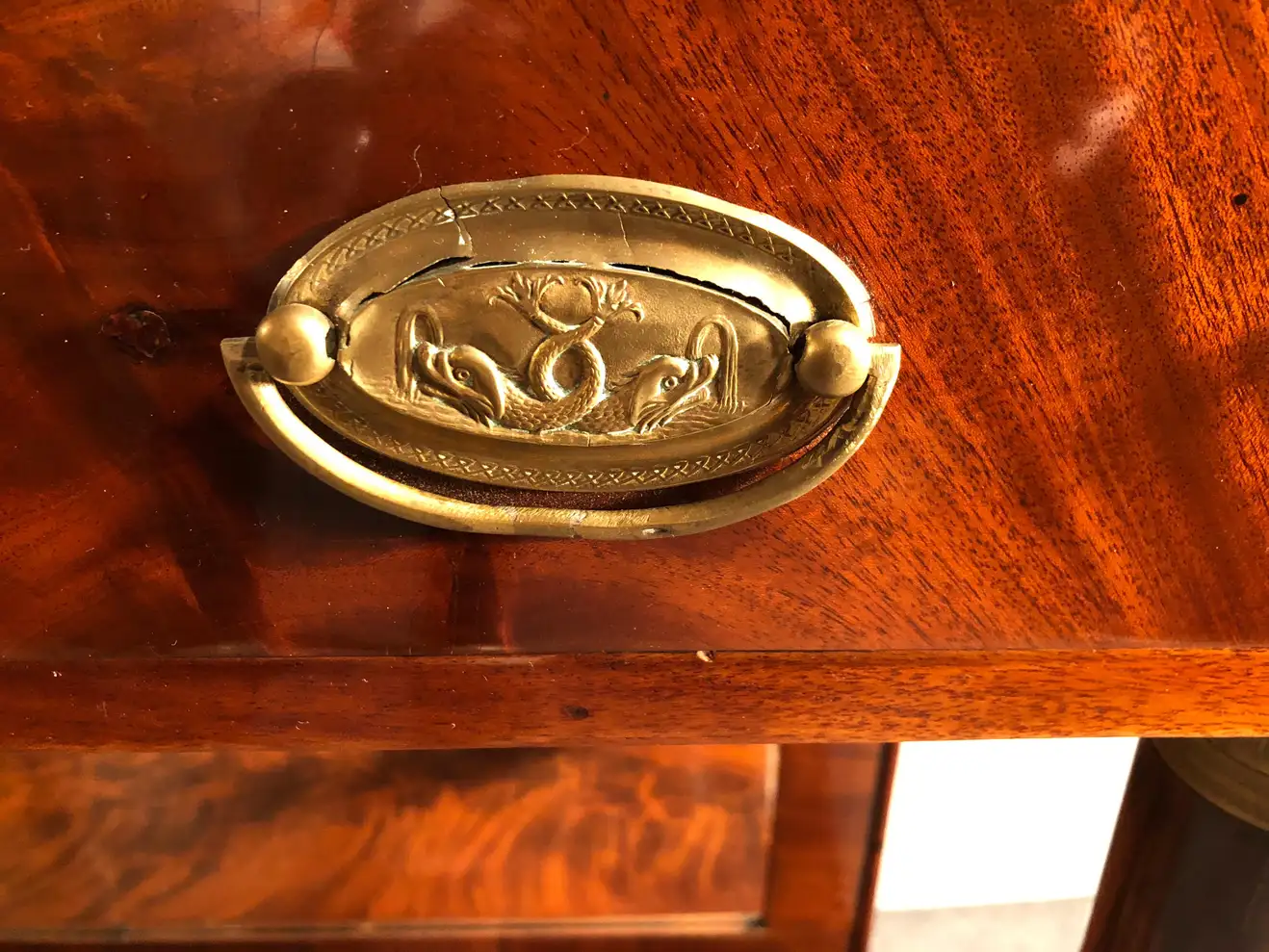
Are They Really Dolphins? The “Sea Creature” Problem
One reason dolphin motifs are so fascinating is that they’re not always clearly dolphins.
Many are stylized in a way that makes them look like:
-
generic sea creatures
-
fish with curled tails
-
hippocampi (mythical sea-horses)
-
dragons or serpents softened into marine forms
This ambiguity is part of the motif’s long history. In classical and Renaissance ornament, dolphins were often depicted in highly stylized ways—more symbolic than zoologically accurate.
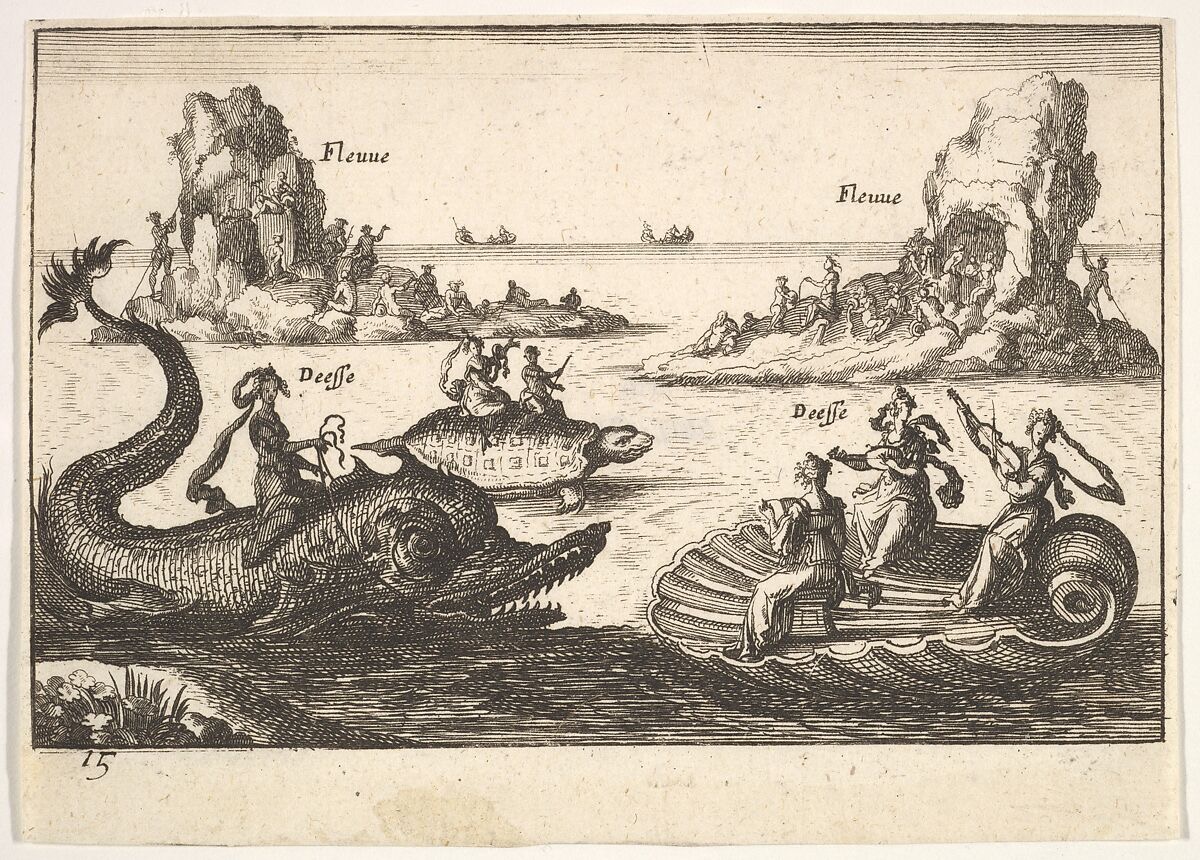
So when a seller labels a mount as “dolphin,” they may be correct… but they may also be using a convenient shorthand for “Neoclassical marine ornament.”
That in itself is worth discussing, because it gives readers a practical takeaway: dolphin motifs can be an identification clue, but you need to look at the broader design language of the piece.
What Dolphins Symbolized: Myth, Protection, and Prosperity
So what did dolphins mean to a Biedermeier buyer?
The answer depends on how deeply you want to go. Dolphins are one of those motifs with layered symbolism that changes across centuries—yet remains broadly positive.
Here are the strongest symbolic threads that likely carried into the early 1800s:
Dolphins as classical guardians and guides
In Greco-Roman mythology, dolphins are associated with protection, guidance, and rescue. They’re famously depicted saving sailors, accompanying gods, and guiding ships.
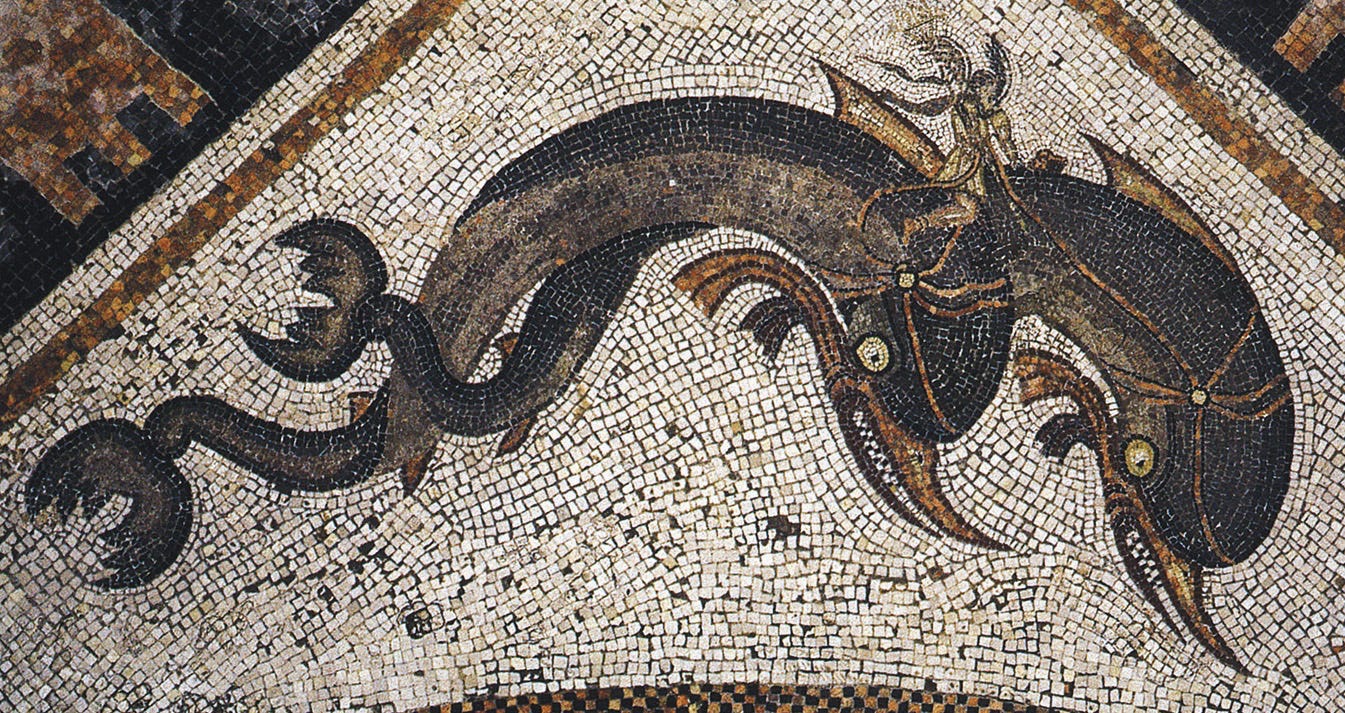
In a domestic context, this symbolism translates surprisingly well: the dolphin becomes a “guardian motif,” a quiet emblem of safety and well-being.
Dolphins as signs of prosperity and trade
Marine motifs often imply commerce, travel, and connection to the wider world. For a rising bourgeois class, these associations mattered. Even if the household never saw the sea, the sea represented mobility, opportunity, and modernity.
Dolphins as emblems of intelligence and harmony
Dolphins were also admired as intelligent, social animals—even in pre-modern imagination. They symbolized harmony, loyalty, and benevolent power.
For Biedermeier culture—so invested in ideals of family, order, and virtue—this symbolism fits almost perfectly.
The Neoclassical Afterlife: Why Biedermeier Still Uses Ancient Motifs
A key point: dolphin motifs on Biedermeier furniture don’t come out of nowhere.
They’re part of the long afterlife of Neoclassicism.
In the decades before Biedermeier, European design was saturated with classical references:
-
Pompeii-inspired ornament
-
Greek and Roman architectural motifs
-
mythological animals and gods
- laurel deaths, urns, sphinxes, griffins and dolphins
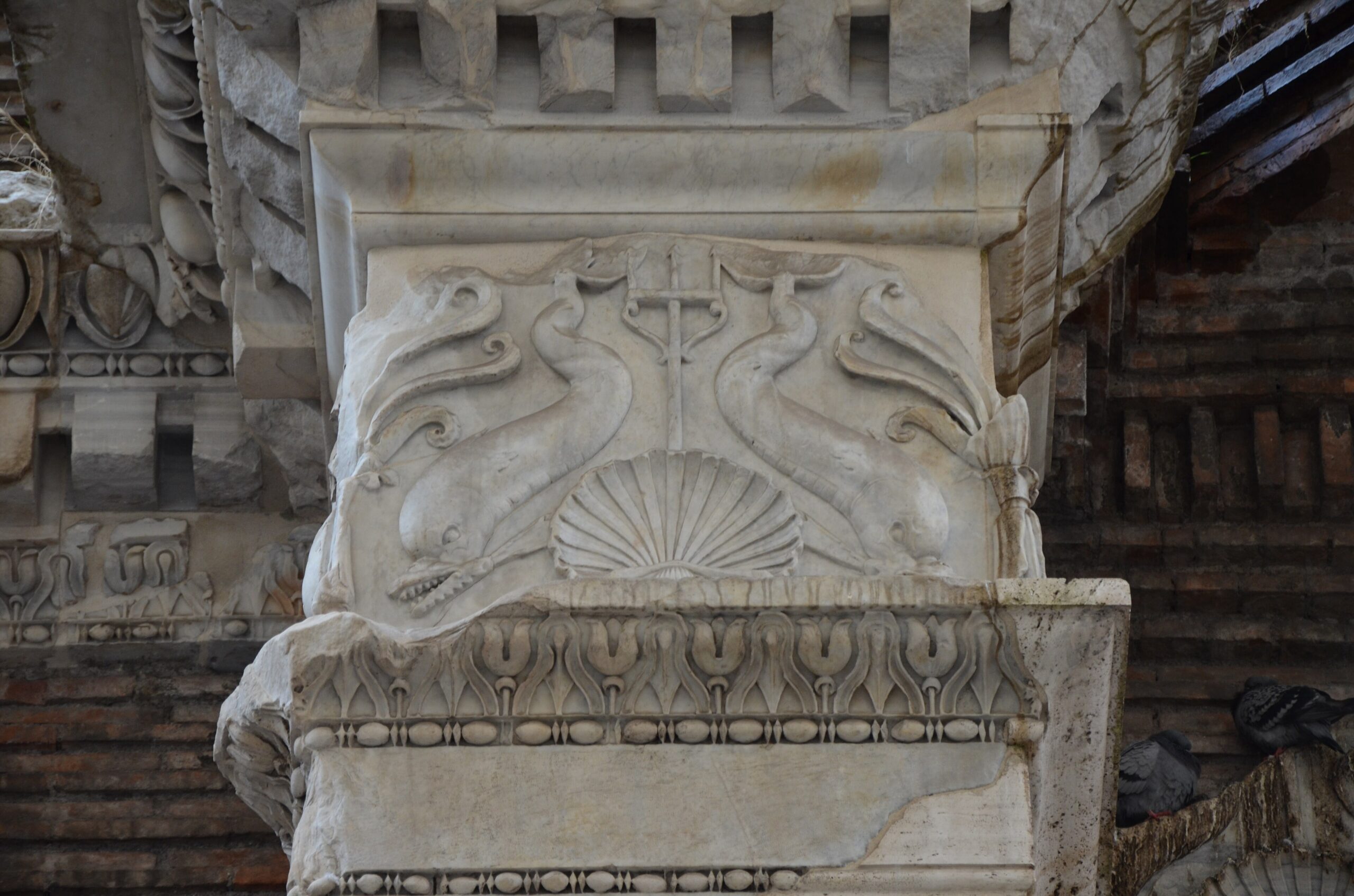
Remains of the Basilica of Neptune built by Agrippa in 25 AD
Even as Biedermeier simplified the overall silhouette, it didn’t completely abandon this symbolic vocabulary. Instead, it miniaturized and domesticated it.
The result is a fascinating hybrid:
-
Biedermeier form: calm, smooth, practical
-
Neoclassical detail: mythic, coded, decorative
Dolphins are a perfect example of this: a small, classical flourish embedded into a piece meant for everyday life.
The Bourgeois Domestication of Myth
Here’s the most interesting angle: dolphins on Biedermeier furniture aren’t just decorative. They show how myth moved into middle-class interiors.
Earlier centuries often used mythological motifs to signal aristocratic education, power, and access to elite culture. But by the early 19th century, the educated bourgeoisie had its own relationship to antiquity.
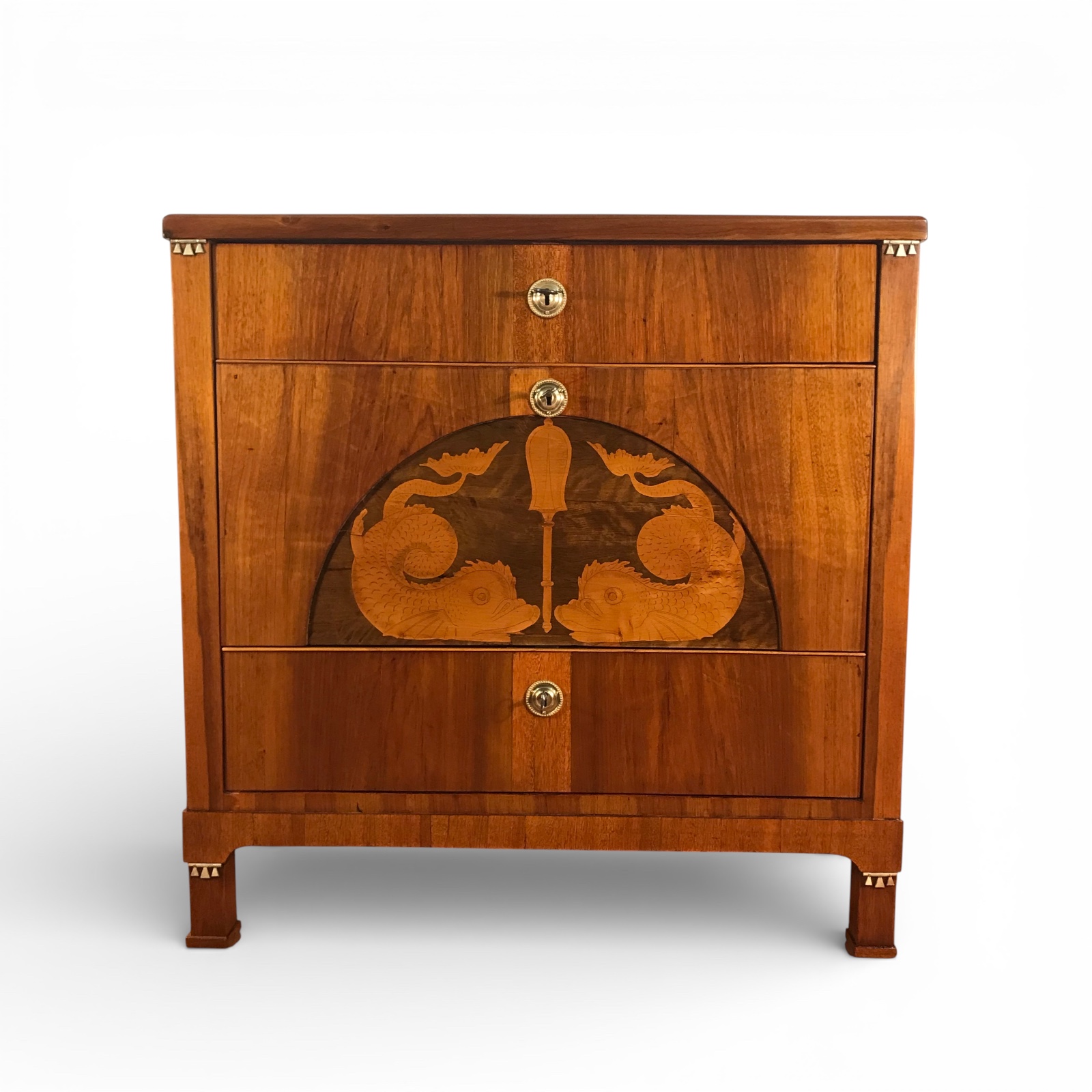
Classical motifs became:
-
a sign of refinement
-
a marker of cultural literacy
-
an aesthetic of stability and “good order”
-
a safe way to express imagination without excess
A dolphin on a writing desk is not wild fantasy—it’s fantasy that has been made respectable.
It says: this home is cultivated.
Not theatrical. Not aristocratic. Not extravagant.
But quietly connected to the “serious” world of history, art, and ideals.
Motifs on the Move: How Dolphins Travel Between Decorative Arts
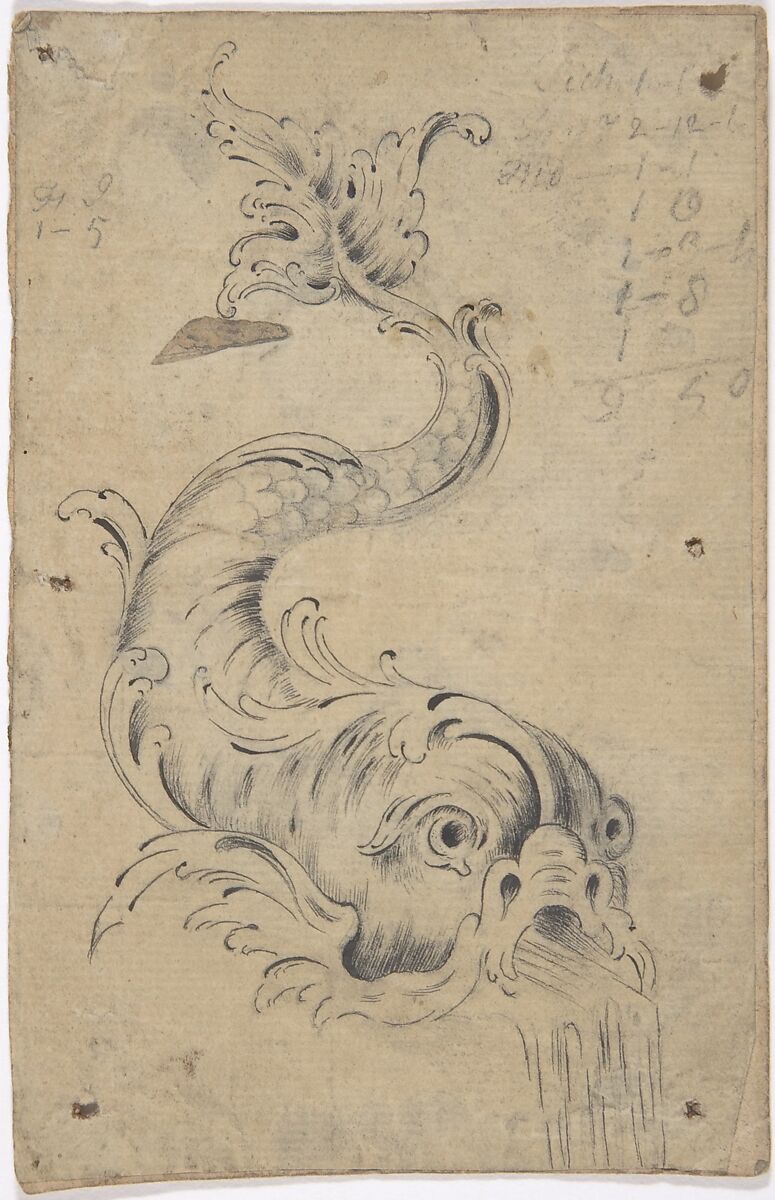
Another reason dolphin motifs show up in Biedermeier furniture is that motifs don’t stay in one category.
Design patterns migrate across:
-
architecture
-
metalwork
-
ceramics
-
textiles
-
furniture
-
printed ornament books
A dolphin motif might start as an architectural detail, appear in a bronze mount, then become a drawer pull, then reappear as a printed border in a decorative manual.
In the early 1800s, workshops often shared suppliers for mounts and fittings. If a bronze foundry produced dolphin-shaped handles, cabinetmakers could incorporate them into furniture without inventing new ornament from scratch.
This explains why dolphin motifs sometimes feel “standardized” across different pieces: they may have been workshop options rather than bespoke designs.
How to Spot Dolphin Motifs When Buying Biedermeier Furniture
For collectors, interior designers, and antique buyers, dolphin motifs can be more than charming—they can be diagnostic.
A few practical tips:
Look for dolphins in metal fittings
If you see stylized marine animals in brass escutcheons or drawer pulls, you’re likely in the Neoclassical-to-Biedermeier design zone.
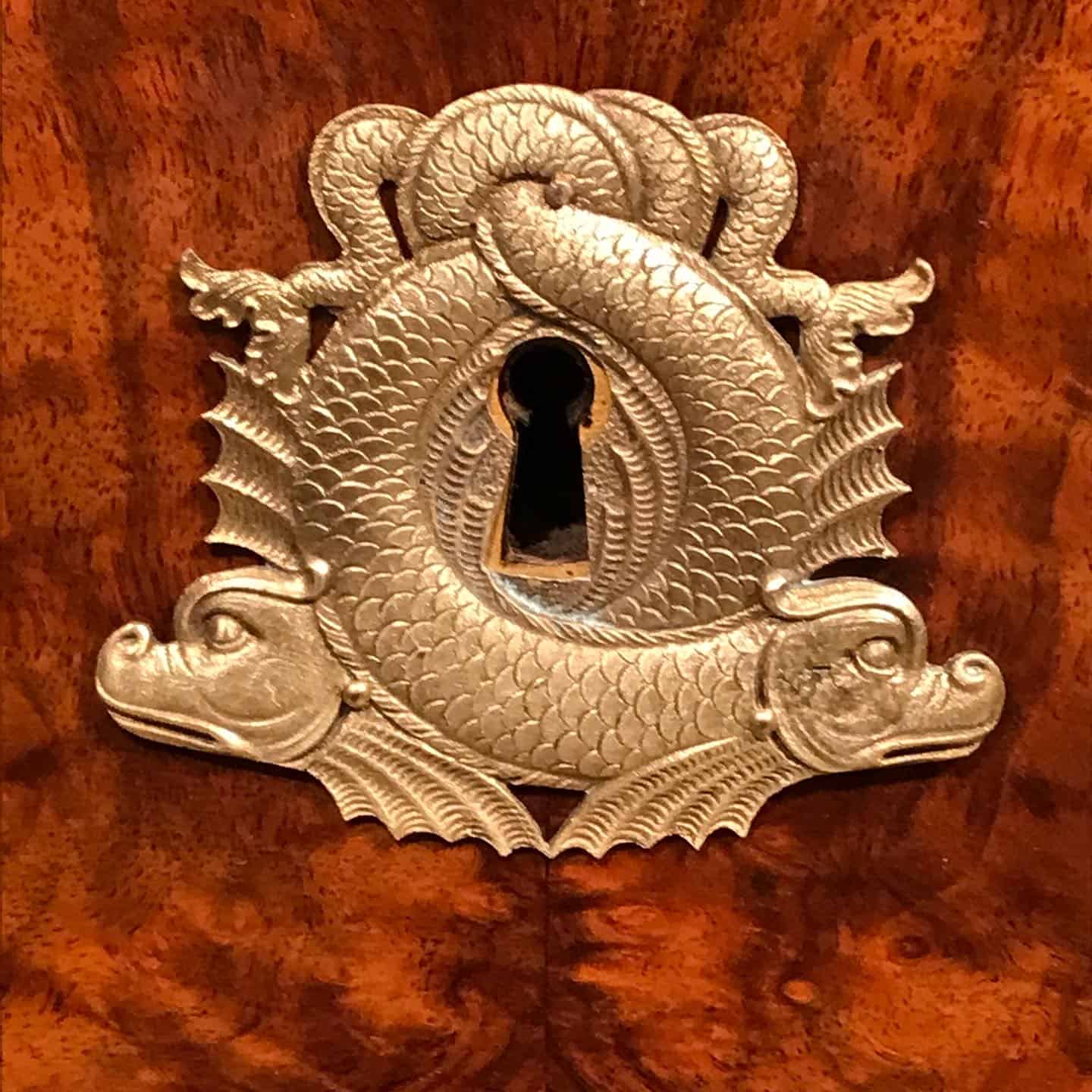
Check whether the form matches the decoration
A piece with a pure Biedermeier silhouette and dolphin mounts may signal a transitional moment: the workshop kept classical ornament while adopting newer forms.
Don’t overdate based on the motif alone
Dolphins have a long decorative history. The same motif can appear in:
-
late 18th-century Neoclassicism
-
early 19th-century Empire
-
Biedermeier
-
later historicist revivals
Use the motif as one clue, not the whole story.
Why Dolphins Still Feel Modern (and Why We Love Them)
The reason this topic works so well today is that dolphins still carry cultural energy. They feel friendly and intelligent. They suggest motion, water, escape, and calm. They’re optimistic symbols.
And Biedermeier—despite its historical distance—also feels modern. Its clean forms, functional thinking, and warm materials translate easily into contemporary interiors.
Put the two together and you get something unexpectedly fresh: a furniture style known for restraint paired with a motif known for joy.
Dolphins on Biedermeier furniture are not a contradiction. They’re a reminder that even the most “serious” design movements leave room for myth—just scaled down, polished, and brought into the home.
Final Thought: A Tiny Motif with a Big Story
If you’re looking for a way to make Biedermeier furniture feel vivid, human, and culturally alive, dolphin motifs are an excellent entry point.
They connect:
-
domestic life and classical symbolism
-
craftsmanship and mass-produced mounts
-
bourgeois taste and mythological imagination
-
the calm surface of Biedermeier and the deeper currents beneath it
And they give you a detail that feels small, but opens into a whole world.

Silke Berlinghof
People also buy
Antique Furniture and Decor
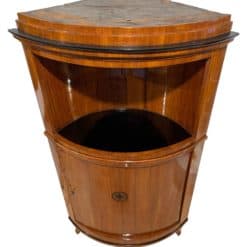
Biedermeier Corner Cabinet, Cherry Veneer, Ebony, South Germany circa 1820
Antique Furniture and Decor
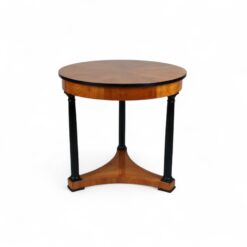
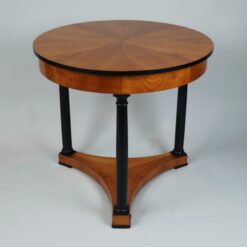
19th Century Fine Biedermeier Cherry Table. Vienna, c. 1830.
Antique Furniture and Decor

Antique and Vintage Seating
Antique Furniture and Decor
Antique Furniture and Decor
Antique Furniture and Decor
Antique Furniture and Decor
Antique Furniture and Decor
Antique Furniture and Decor
Chests of Drawers, Dressers, Commodes
Antique Furniture and Decor