
Best Sellers
Antique Furniture and Decor
Antique and Vintage Seating
Antique Furniture and Decor
Antique Furniture and Decor
Antique Furniture and Decor
Antique Furniture and Decor
Antique Furniture and Decor

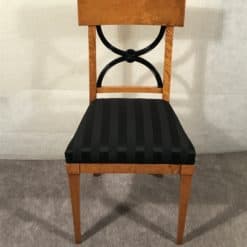
Accent chairs
Antique Furniture and Decor
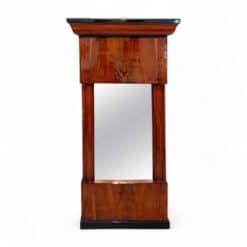
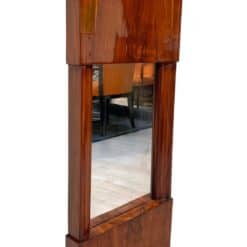
Small Biedermeier Wall Mirror, Cherry Veneer, South Germany, circa 1820
Antique Furniture and Decor
Antique Furniture Guide, Decoration Tips, Design Philosophy, Furniture, Resources
How to Source Antique Furniture for a Design Project
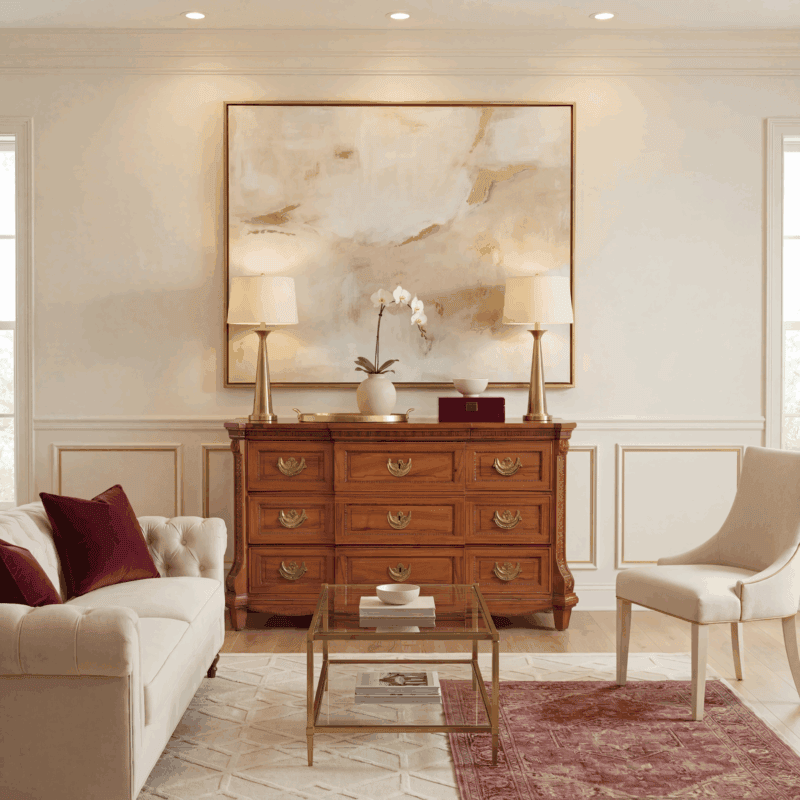
Sourcing antique furniture is not simply about finding beautiful objects—it’s about shaping a space with intention. For designers and discerning private clients alike, antiques introduce depth, contrast, and a sense of permanence that contemporary pieces rarely achieve.
But knowing how to source antique furniture—efficiently, intelligently, and within the context of a project—is what transforms a space from well-decorated to truly composed.
A Project-Led Approach to Sourcing
The most common mistake when buying antique furniture is starting with the piece instead of the project.
Before sourcing begins, it’s essential to define:
- The architectural context
- The overall atmosphere (minimal, layered, expressive)
- Functional requirements
- Key focal points within the space
From there, sourcing becomes intentional. Rather than collecting individual objects, you are building a composition—typically anchored by one or two defining antique pieces, supported by more restrained elements.
This approach ensures that each piece contributes to a cohesive whole.
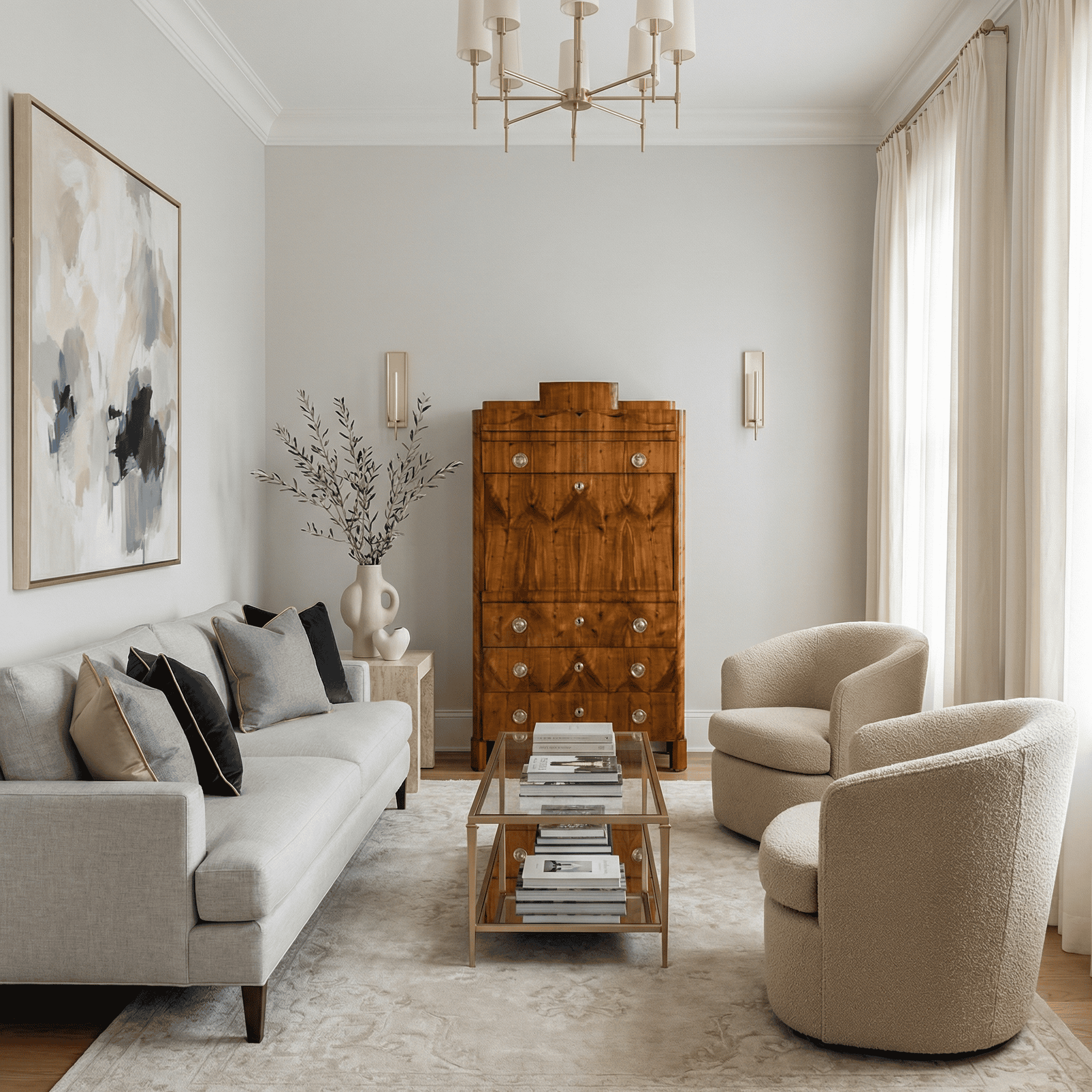
What Should Be Antique—and What Shouldn’t
Not every element in a room benefits from being antique. In fact, the most compelling interiors rely on contrast.
Antique furniture is most effective where it brings depth and presence:
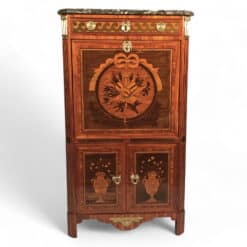
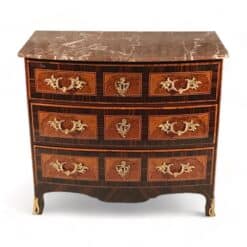
- Case pieces such as commodes, cabinets, and consoles
- Sculptural lighting, including chandeliers and pendants
- Singular statement pieces that anchor a room
By contrast, highly functional elements—such as seating or upholstery—are often better sourced in a contemporary context.
The goal is not to recreate a period interior, but to balance old and new in a way that feels intentional and current.
Where to Source Antique Furniture
Understanding where to source antique furniture is central to both quality and efficiency.
Dealers
Offer expertise and carefully selected pieces, often with strong provenance. However, selection can be limited.
Auctions
Provide access to rare objects, but require experience. Condition and logistics are not always transparent.
Online Marketplaces
Offer breadth and accessibility, though quality can vary significantly without curation and expertise.
The Role of Curation
As sourcing increasingly moves online, curation becomes essential.
A well-curated selection reduces noise and ensures that each piece meets a certain standard—both aesthetically and structurally. It also allows sourcing to become more focused, particularly when working within the framework of a design project.
How to Evaluate Antique Furniture
When sourcing antique furniture—especially online—the ability to assess quality quickly is key.
Focus on three primary elements:
Materials
Solid woods and prestigious veneers such as walnut, oak, or mahogany tend to indicate durability and long-term value.
Construction
Look for traditional joinery and well-balanced proportions, which signal craftsmanship.
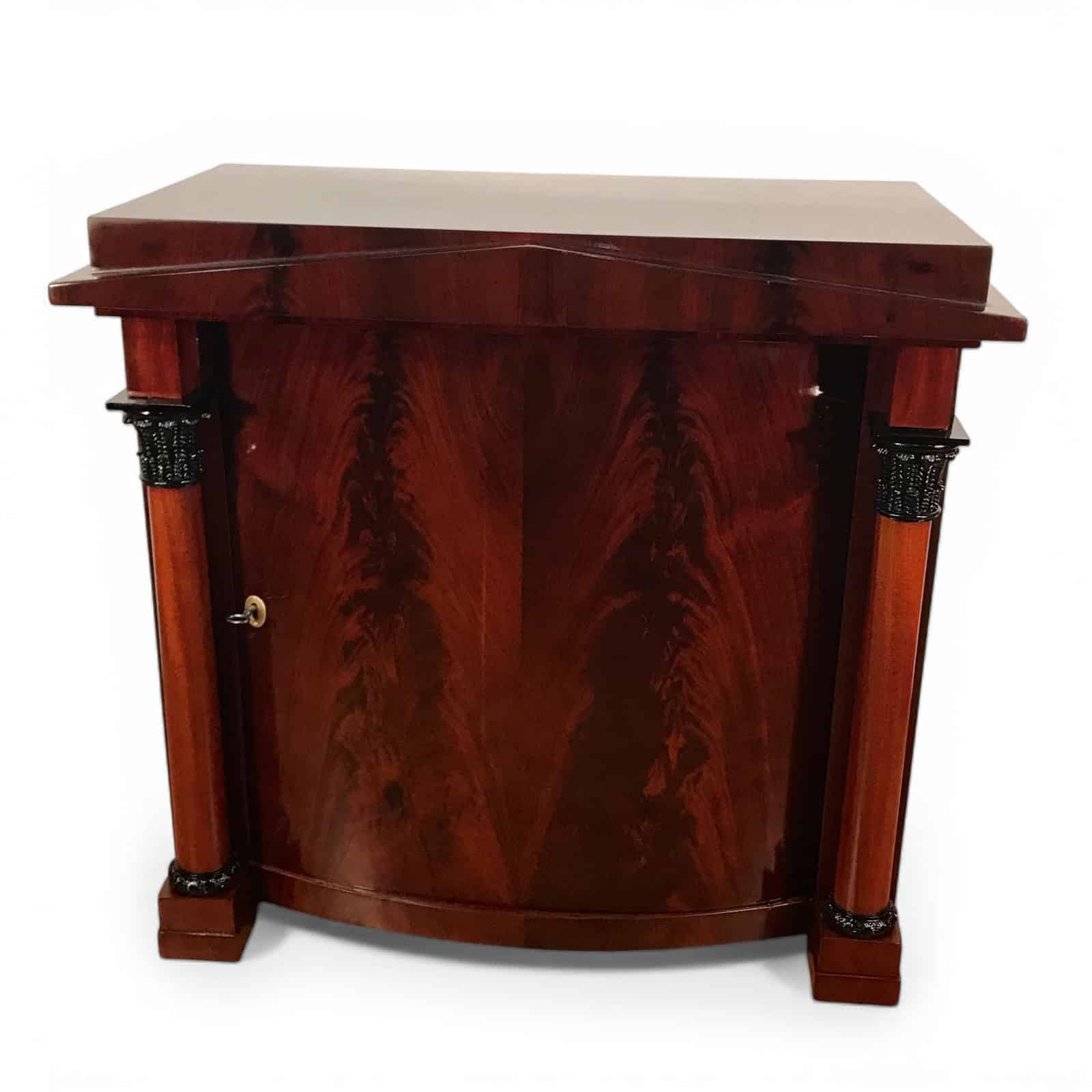
Surface and Finish
Original patina often enhances a piece, adding depth and a sense of history that cannot be replicated.
At the same time, a well-executed restoration can significantly elevate an object. Traditional techniques—such as a hand-applied shellac polish—can enrich the natural tones of the wood, refine the surface, and bring back clarity and depth without compromising the character of the piece.
The key distinction lies in approach: thoughtful restoration enhances, while heavy or insensitive refinishing can diminish both material quality and authenticity.
Developing sensitivity to these differences helps ensure that selections are both visually and structurally sound.
Mixing Antique Furniture into Modern Interiors
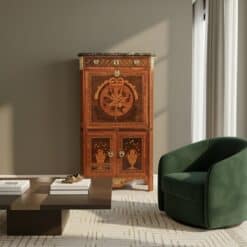
One of the most effective ways to use antique furniture today is through contrast.
Rather than matching styles, consider balance:
- Allow one design language to dominate
- Introduce antiques as points of tension and interest
For example:
- A minimal architectural space anchored by a 18th-century cabinet
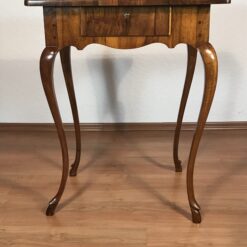
- Contemporary seating paired with an antique table
- Clean interiors contrasted with a sculptural chandelier
Antique pieces often carry visual weight, so spacing and proportion are critical. Giving them room to stand allows their character to emerge.
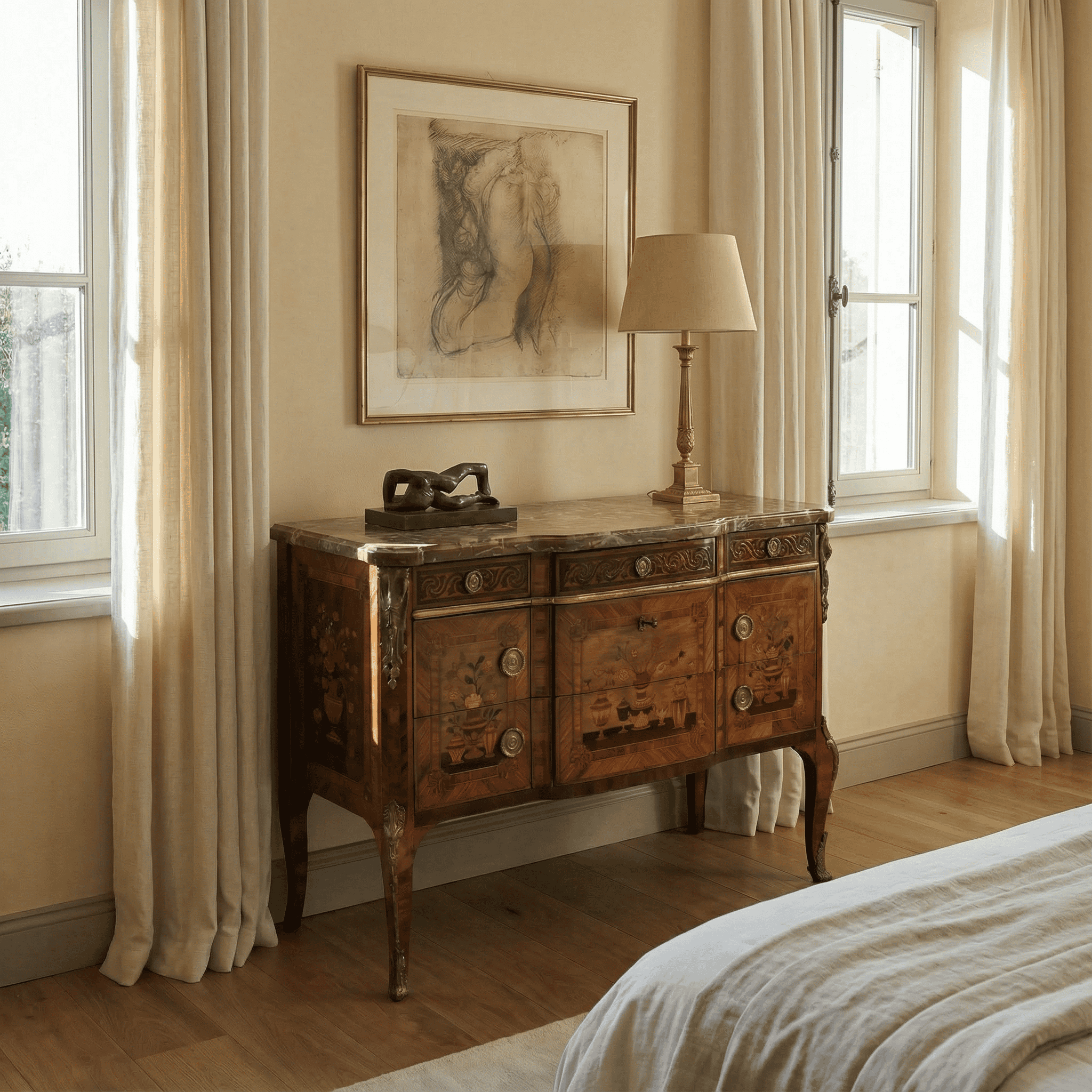
Restoration: When to Intervene
Most antique pieces require some level of intervention. The question is how much.
Consider restoration when:
- Structural integrity is compromised
- Surfaces are significantly damaged or look bland.
- Functionality is affected
Consider preservation when:
- Patina contributes to the piece’s character
- Original finishes remain intact
- Wear reflects age in a meaningful way
Thoughtful restoration enhances a piece. Excessive intervention risks removing what makes it distinctive.
Logistics and Timing
Sourcing antique furniture is not only about selection—it is also about execution.
Important factors include:
- Lead times for rare pieces and for any required restoration or preparation
- Specialized handling and shipping requirements
- Coordination with broader project timelines
While antique pieces are not made to order, they often require careful preparation before delivery—such as restoration, refinishing, or adaptation to suit a specific space.
In parallel, projects may include custom or made-to-order elements (for example lighting or upholstery), which need to be aligned with the sourcing process.
For larger or more complex pieces, early decisions are often essential to avoid delays later in the project.
A More Considered Way to Source
Traditional sourcing can be fragmented and time-intensive. A more considered approach focuses on selecting pieces within the context of a complete space—prioritizing quality, cohesion, and long-term value.
This is where curated platforms and design-led selection offer a clear advantage: they simplify the process while maintaining a high level of discernment.
Source Antique Furniture with Styylish
Styylish is a curated marketplace for antique and contemporary furniture, designed for both interior designers and private clients working on complete spaces.
Our focus is on pieces that bring character, material quality, and longevity—selected with the needs of real interiors in mind.
Whether you are looking for a single statement piece or refining an entire project, Styylish offers a more thoughtful way to source.
→ Explore the collection
→ Discover pieces by style and period
→ Get in touch about your project
Final Thoughts
Antique furniture brings something that new pieces rarely can: depth, history, and individuality. But its value lies not only in the object itself, but in how it is chosen and integrated.
Sourcing well means thinking beyond the piece—toward the space as a whole.

Silke Berlinghof
People also buy
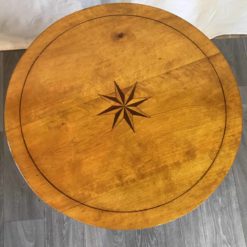
Antique Furniture and Decor
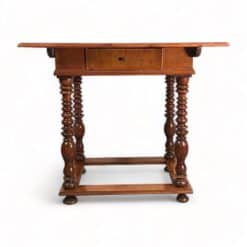
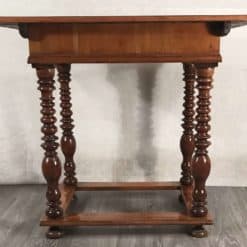
Antique Farm Tables
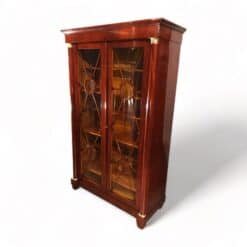
Antique Furniture and Decor
accent tables
Antique Furniture and Decor
Antique Furniture and Decor
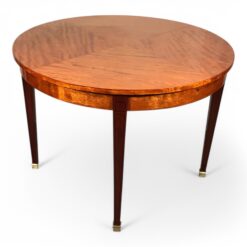
Antique Furniture and Decor
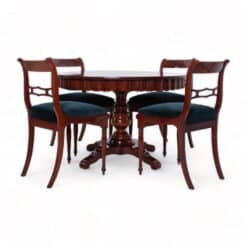
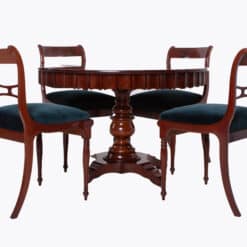
Antique Furniture and Decor
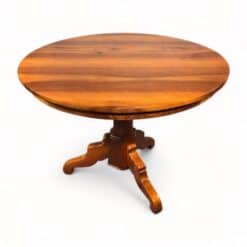
Biedermeier Dining Set, Round Table and Four Chairs, 19th Century
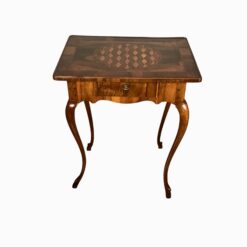
accent tables
Antique Furniture and Decor

Antique Furniture and Decor
Antique Furniture and Decor
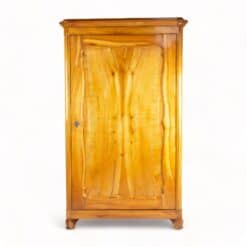
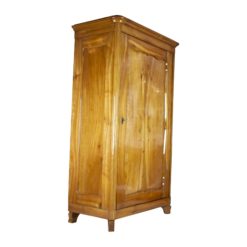
Single Door Viennese Biedermeier Wardrobe, Cherrywood, 1850, Antique