
Best Sellers


Newspaper Stands


Bar Carts and Bar Furniture


Bar Carts and Bar Furniture
Neoclassical Style Oval Brass Drinks Trolley with Removable Trays by Maison Bagués


Bar Carts and Bar Furniture
Neoclassical Brass Drinks Trolley with Removable Glass Sides, France


Bar Carts and Bar Furniture


Coffee Tables
Bar Carts and Bar Furniture
Secretary Desks
Furniture, Style, Styylish History, Styylish Research Library
Faux Bamboo Furniture: History, Chinoiserie & Maison Baguès
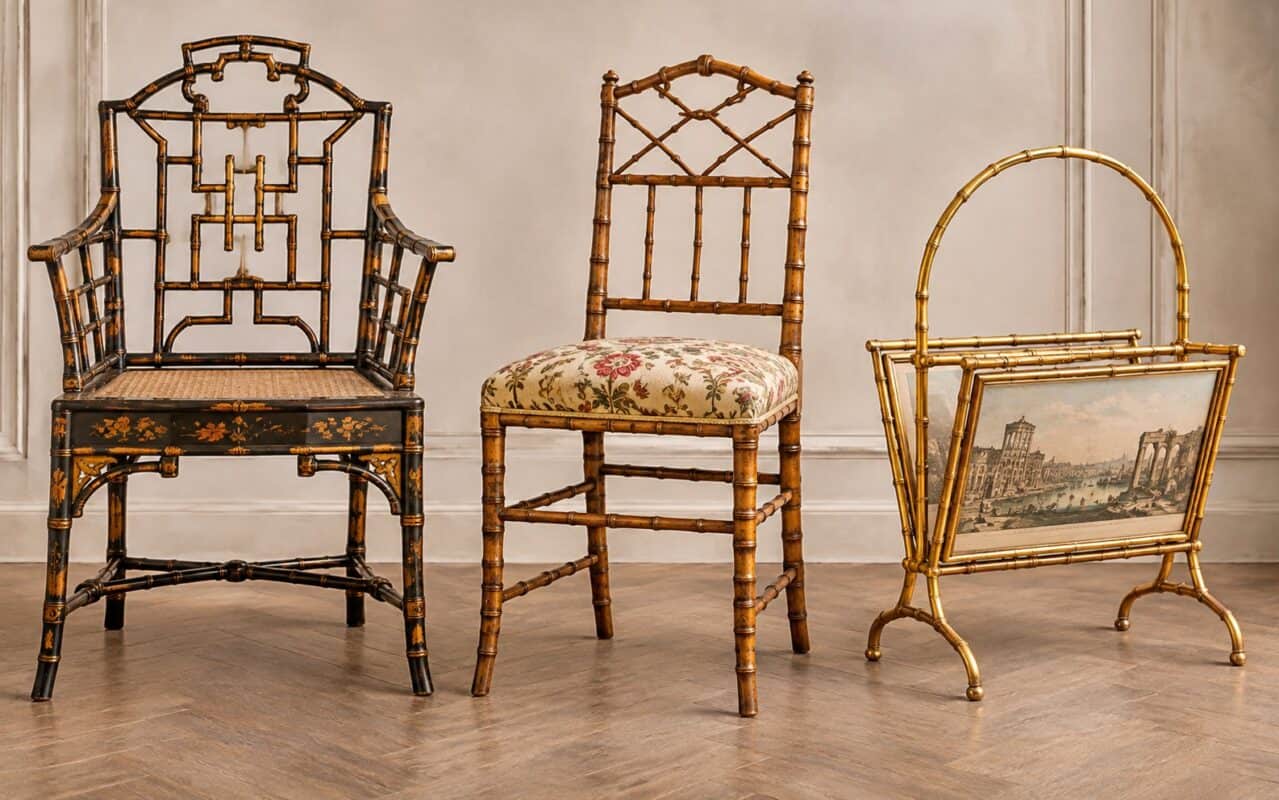
The Art of Faux Bamboo Furniture: From Chinoiserie to Maison Baguès
How bamboo-inspired furniture became a distinctive feature of European interiors, from the 18th century to the elegant creations of Maison Baguès.
Few decorative motifs have traveled through the history of European furniture design as gracefully as bamboo. With its slender proportions, distinctive joints, and natural elegance, bamboo has inspired generations of cabinetmakers and designers. Yet some of the most beautiful examples of bamboo-style furniture are not made from bamboo at all.
From the imaginative Chinoiserie interiors of the 18th century to carved wooden furniture of the Victorian era and the luxurious gilt brass creations of Maison Baguès, faux bamboo furniture tells a fascinating story of cultural exchange, craftsmanship, and changing tastes.
What began as a European fascination with Asian decorative arts gradually developed into a recognizable design language of its own.
Chinoiserie: The Arrival of Bamboo-Inspired Design in Europe
During the 17th and 18th centuries, expanding trade between Europe and Asia introduced European collectors to Chinese porcelain, lacquerware, silk, and furniture. These objects fascinated aristocratic patrons and inspired a new decorative fashion known as Chinoiserie.
Rather than faithfully reproducing Chinese designs, European artists and craftsmen developed imaginative interpretations of Asian aesthetics. Elaborate pagodas, tropical birds, flowering branches, and delicate latticework appeared on furniture, wallpaper, porcelain, and architectural interiors.
Bamboo, with its characteristic segmented stems, became one of the recognizable elements of this decorative vocabulary.
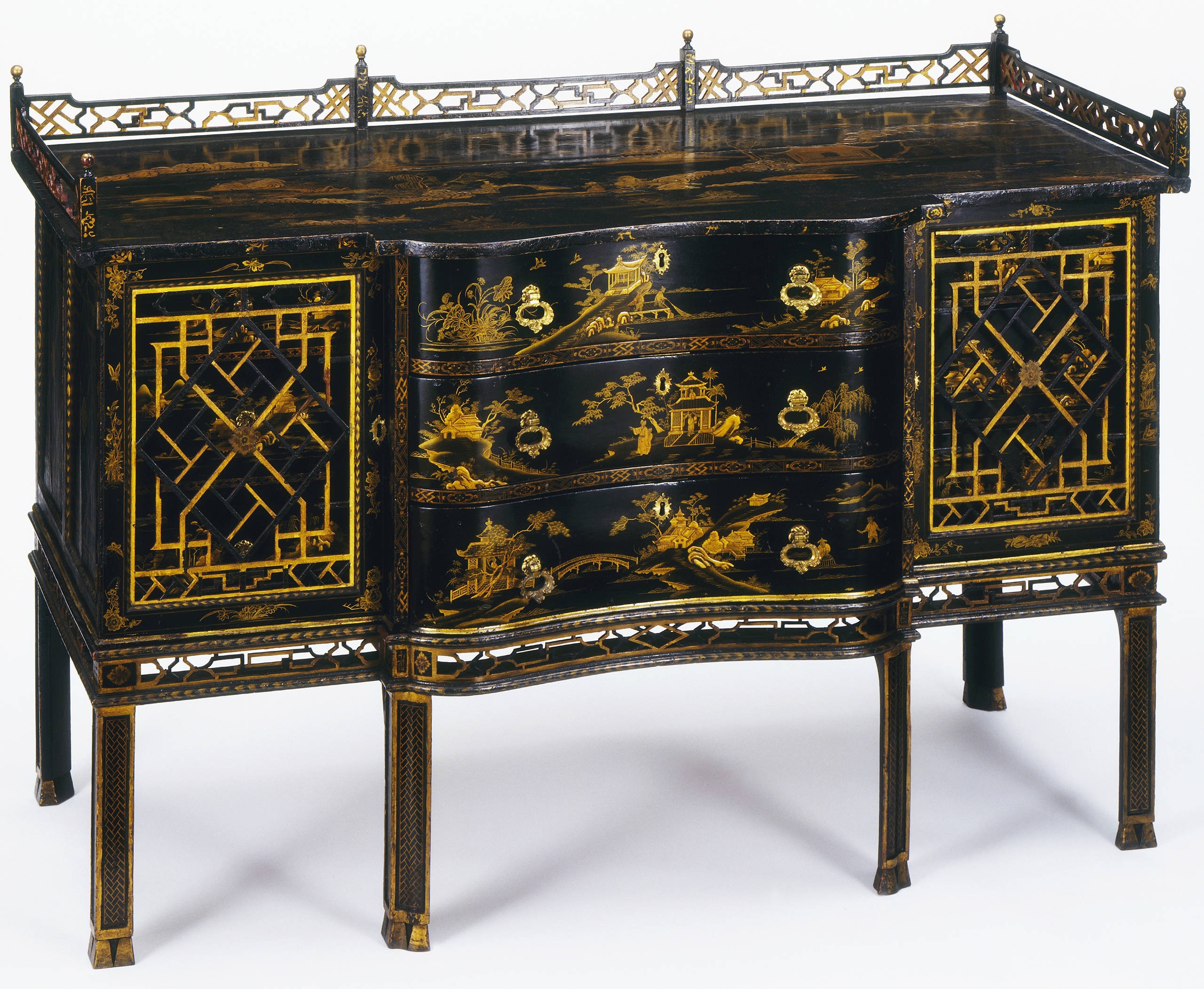
In France, Chinoiserie flourished during the Rococo period, particularly under Louis XV. Chinese-inspired motifs appeared in lacquered cabinets, decorative panels, and luxurious interiors. However, French cabinetmakers generally favored incorporating these influences into surface decoration rather than reproducing entire bamboo furniture structures.
In England, the influence was more directly visible in furniture design.
Thomas Chippendale and the Chinese Taste
One of the most influential figures in the development of Chinese-inspired European furniture was the English cabinetmaker Thomas Chippendale (1718–1779).
His celebrated pattern book, The Gentleman and Cabinet-Maker’s Director, first published in 1754, included designs in Gothic, Chinese, and contemporary English tastes.
The Chinese-inspired designs featured geometric fretwork, pagoda-like forms, and delicate open structures. Some incorporated lattice patterns resembling bamboo construction, although the furniture itself was generally made from traditional cabinetmaking woods.
Chippendale’s designs helped popularize the Chinese taste among wealthy English patrons and influenced furniture production far beyond Britain.
These early interpretations established an important principle: bamboo did not have to be used as a material to influence furniture design. Its distinctive appearance could be recreated through carving, joinery, and ornament.
The 19th Century: The Rise of Faux Bamboo Furniture
During the 19th century, bamboo-inspired furniture evolved from a not European decorative fashion into a widely appreciated furnishing style.
The Regency period in England continued the fascination with Asian-inspired interiors. Meanwhile, growing international trade introduced more examples of genuine bamboo and cane furniture to European households.
By the Victorian era, bamboo-style furniture had become especially popular for bedrooms, conservatories, sitting rooms, and informal domestic spaces.
Carved Wood That Imitated Bamboo
One of the most intriguing developments was the increasing popularity of faux bamboo furniture, created from wood rather than natural bamboo.
Cabinetmakers carefully carved and turned wooden components to reproduce bamboo’s characteristic nodes and internodes. The resulting furniture combined the visual lightness of bamboo with the structural possibilities of traditional woodworking.
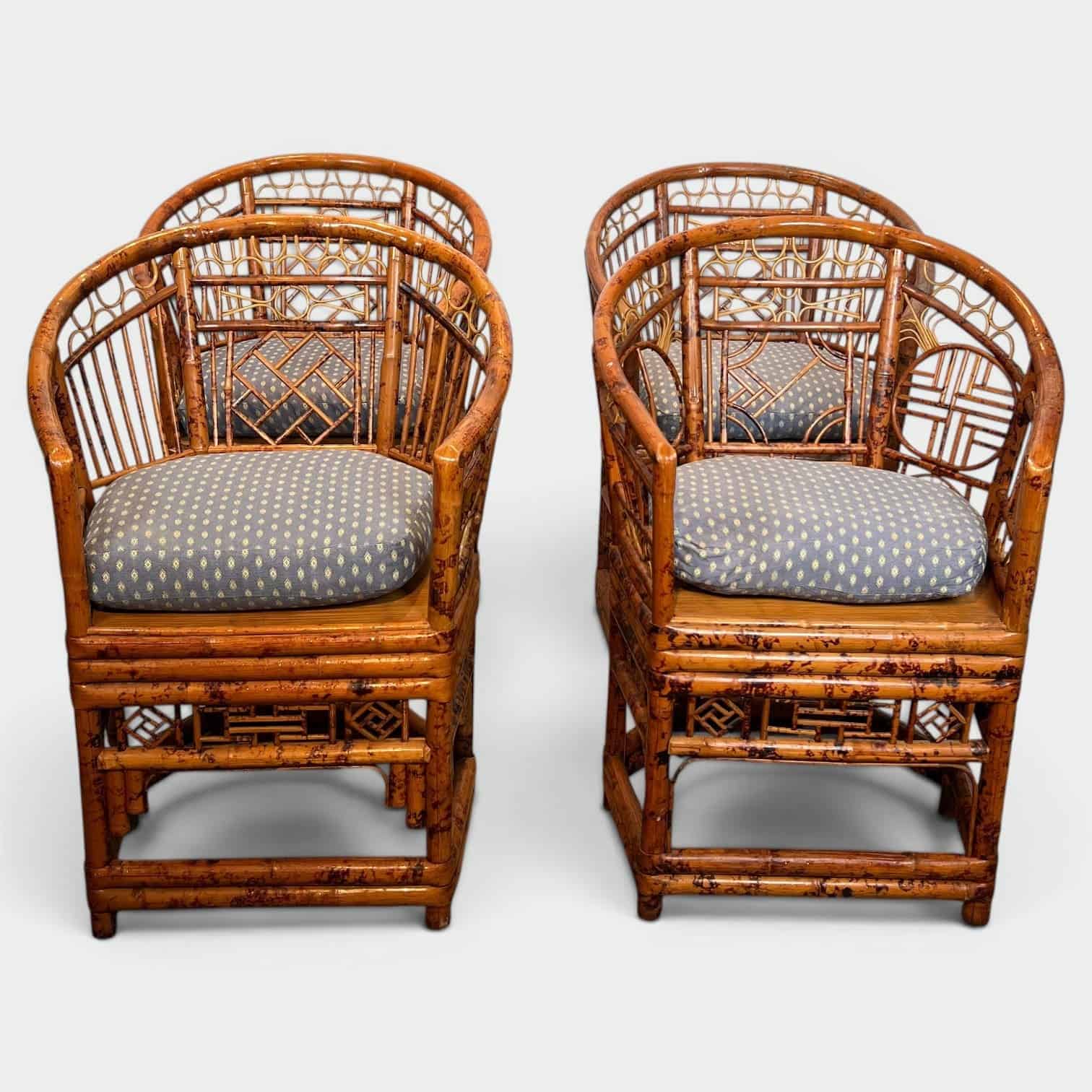
Beech, maple, and other hardwoods could be shaped into slender posts, rounded frames, and decorative joints. Depending on the desired effect, the finished surfaces might be stained, painted, lacquered, or polished to resemble natural bamboo.
This technique allowed craftsmen to create furniture that appeared delicate while retaining the durability of solid wood.
Beds with bamboo-style posts, dressing tables, chairs, cabinets, and occasional tables became fashionable furnishings. Their relatively light appearance offered an attractive alternative to the heavy, elaborately carved furniture associated with many Victorian interiors.
Bamboo Furniture and the Aesthetic Movement
During the second half of the 19th century, the Aesthetic Movement brought renewed attention to Japanese art and design.
Following Japan’s increasing commercial and cultural exchange with the West, Japanese decorative objects, prints, ceramics, and furniture attracted considerable interest among European artists and designers.
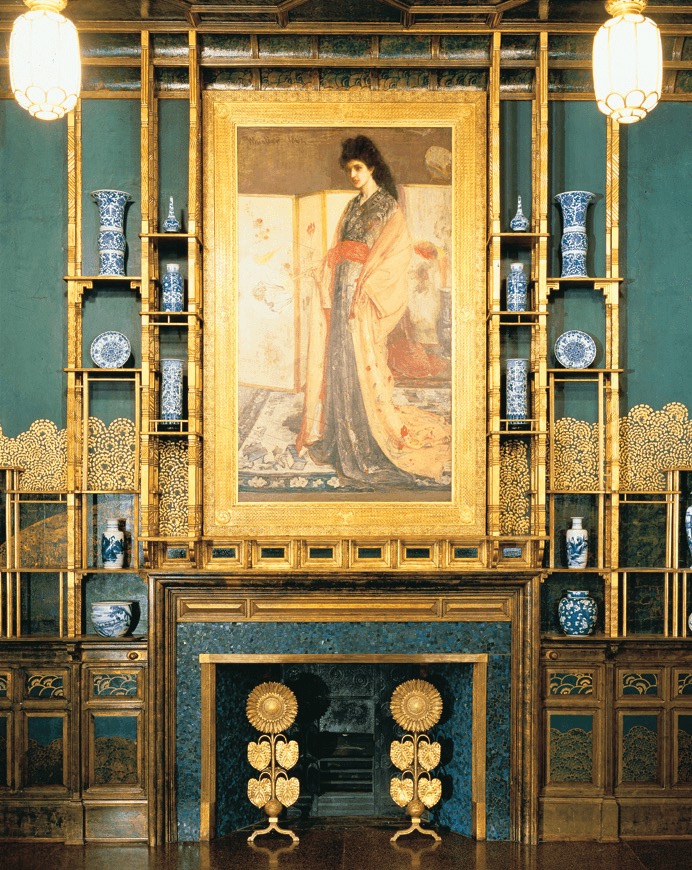
The movement favored artistic expression, refined proportions, and the beauty of everyday objects. Bamboo and bamboo-inspired furniture fitted naturally into this aesthetic.
Lightweight shelving, occasional tables, and decorative stands complemented interiors filled with Japanese ceramics, textiles, and prints.
However, an important distinction emerged between furniture constructed from genuine bamboo and European pieces that merely imitated its appearance.
Both traditions contributed to the development of bamboo-style furniture, but they represented different materials, construction methods, and artistic intentions.
Maison Baguès: Bamboo Transformed into Gilt Brass
By the early 20th century, bamboo-inspired design had taken on an entirely different character in French decorative arts.
Instead of recreating bamboo in wood, designers began translating its organic forms into luxurious metals.
One of the most celebrated names associated with this interpretation is Maison Baguès, the Parisian decorative lighting and metalwork firm established in 1860.
Originally specializing in bronze work, Maison Baguès developed an international reputation for sophisticated lighting, furniture, and decorative accessories.
Its designs often drew inspiration from historical French styles, natural forms, and the ornamental traditions of Chinoiserie.
The Elegance of Gilt Brass Faux Bamboo
Maison Baguès and other French decorative metalworkers transformed the familiar bamboo motif into a refined ornamental structure.
Slender brass rods imitated bamboo stems, while carefully modeled joints reproduced their characteristic segmented appearance. Gilded surfaces introduced warmth and luminosity, creating an elegant contrast between the natural inspiration and the luxurious material.
The motif appeared in decorative lighting, occasional tables, étagères, and magazine racks.

Unlike earlier wooden faux bamboo furniture, these gilt metal designs were not necessarily intended to resemble genuine bamboo convincingly.
Instead, they celebrated bamboo as a sculptural form.
The result was furniture that combined the delicacy of nature with the glamour of French decorative arts.
A Charming Example: The Maison Baguès Magazine Rack
A particularly appealing expression of this tradition is a gilt brass faux bamboo magazine rack associated with Maison Baguès.
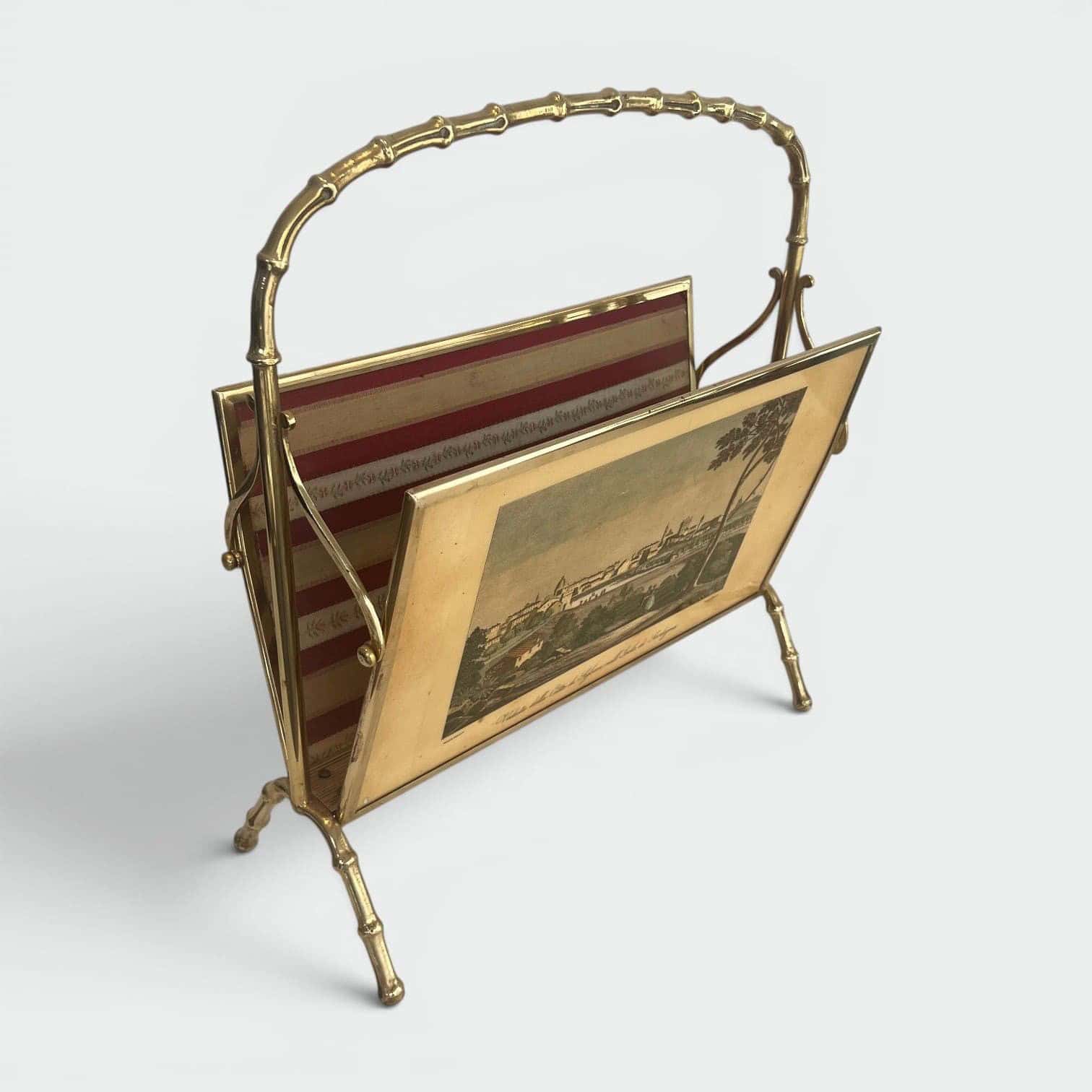
Its arched handle, slender uprights, and gently curved feet reproduce the segmented appearance of bamboo. Two angled compartments provide practical storage, while framed panels display hand-colored antique engravings depicting picturesque Italian scenes.
The combination is especially charming: a bamboo-inspired structure associated with Chinoiserie surrounds images celebrating the European landscape.
Here, different decorative traditions meet in a single functional object.
The magazine rack demonstrates how an originally Asian-inspired motif became fully integrated into the vocabulary of sophisticated French interiors.
It also illustrates the enduring appeal of decorative furniture that is both practical and visually distinctive.
Why Faux Bamboo Furniture Remains Timeless
The continued popularity of faux bamboo furniture lies partly in its remarkable versatility.
Its slender proportions introduce visual lightness, while its rhythmic joints create subtle architectural interest. Depending on the material and finish, bamboo-inspired pieces can feel playful, understated, or exceptionally elegant.
An antique carved wooden bamboo chair can soften a contemporary bedroom. A 19th-century bamboo-style table adds character to a traditional library. Meanwhile, a gilt brass Maison Baguès accessory introduces warmth and refinement to a modern living room.
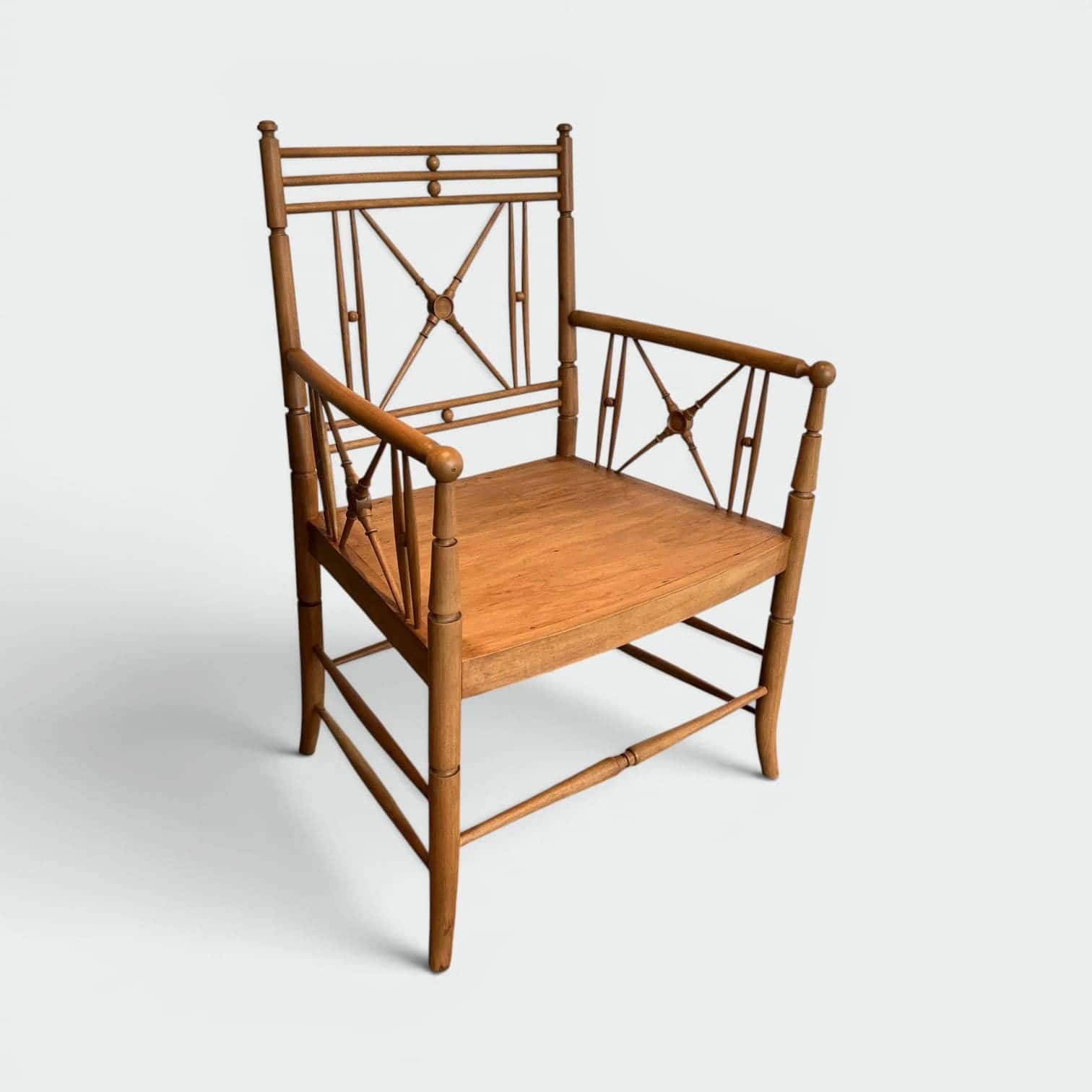
For collectors, these objects offer more than decorative appeal. They reflect centuries of artistic exchange and demonstrate the ingenuity with which European craftsmen adapted an unfamiliar natural form into their own furniture traditions.
From Chinoiserie to French gilt brass, faux bamboo furniture remains a beautiful example of how a decorative idea can evolve across centuries without losing its essential character.
At Styylish, we appreciate furniture that tells a story. Antique and vintage bamboo-inspired pieces offer exactly that combination of history, craftsmanship, and timeless design that makes a carefully curated interior truly distinctive.

Silke Berlinghof
People also buy
Secretary Desks
Bar Carts and Bar Furniture
Bar Carts and Bar Furniture
Bar Carts and Bar Furniture
Neoclassical Style Oval Brass Drinks Trolley with Removable Trays by Maison Bagués
Newspaper Stands
Coffee Tables
Bar Carts and Bar Furniture
Neoclassical Brass Drinks Trolley with Removable Glass Sides, France
Bar Carts and Bar Furniture