
Neoclassical Secretary Desk with Marquetry Decor, France 1780
Height: 162 cm (63.8 in)
Width: 93 cm (36.6 in)
Depth: 39 cm (15.4 in)
Neoclassical Secretary Desk with Geometric Cube Marquetry, circa 1800
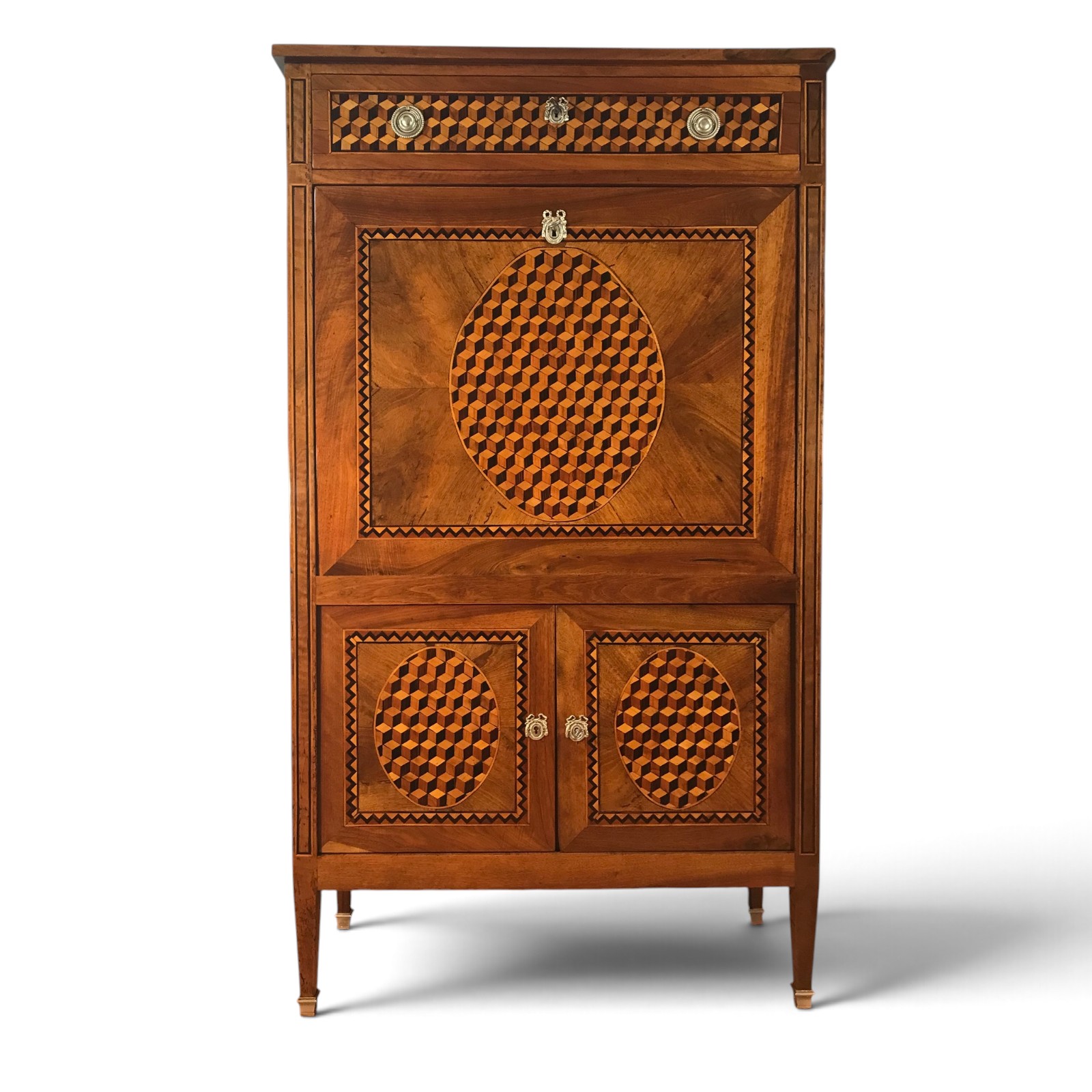
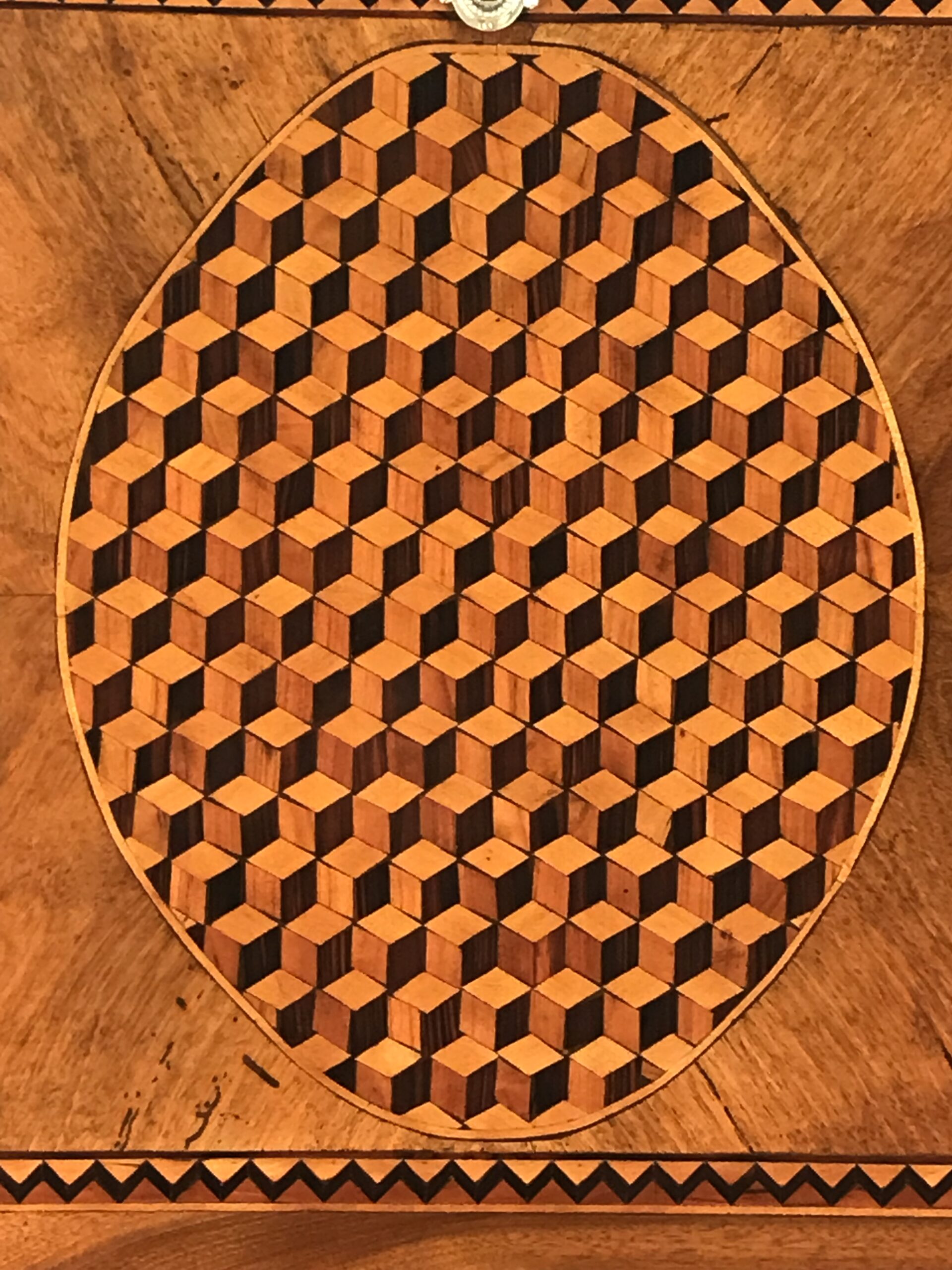
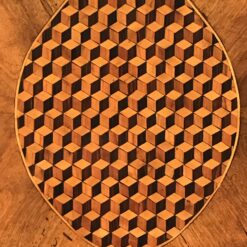
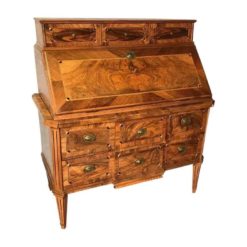
This exceptional Neoclassical secretary desk from circa 1800 combines the refined elegance of French Louis XVI furniture with the elaborate geometric marquetry associated with German and Central European cabinetmaking traditions. Its striking three-dimensional cube pattern, contrasting wood veneers, and architectural proportions create a sophisticated example of European craftsmanship around the turn of the 19th century.
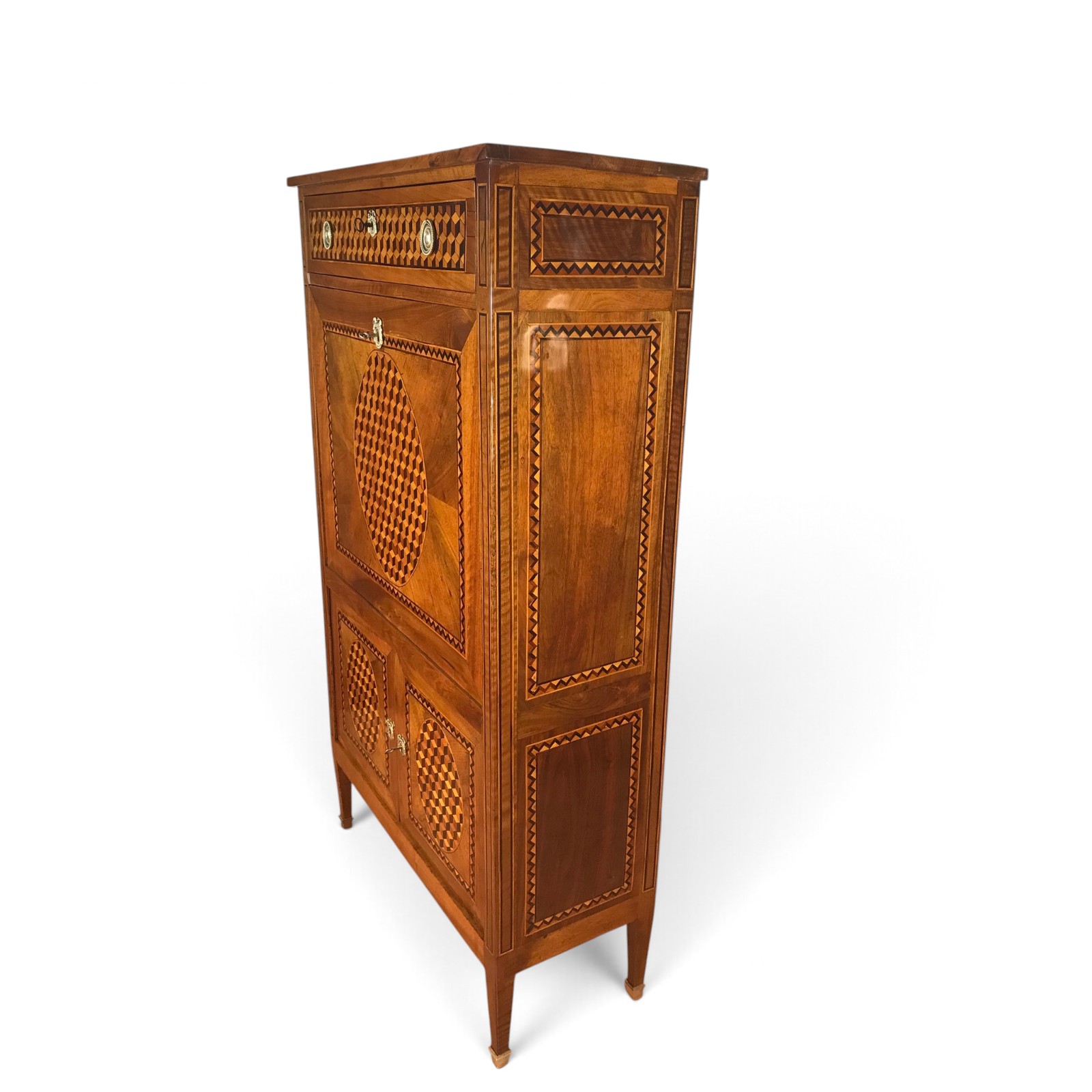
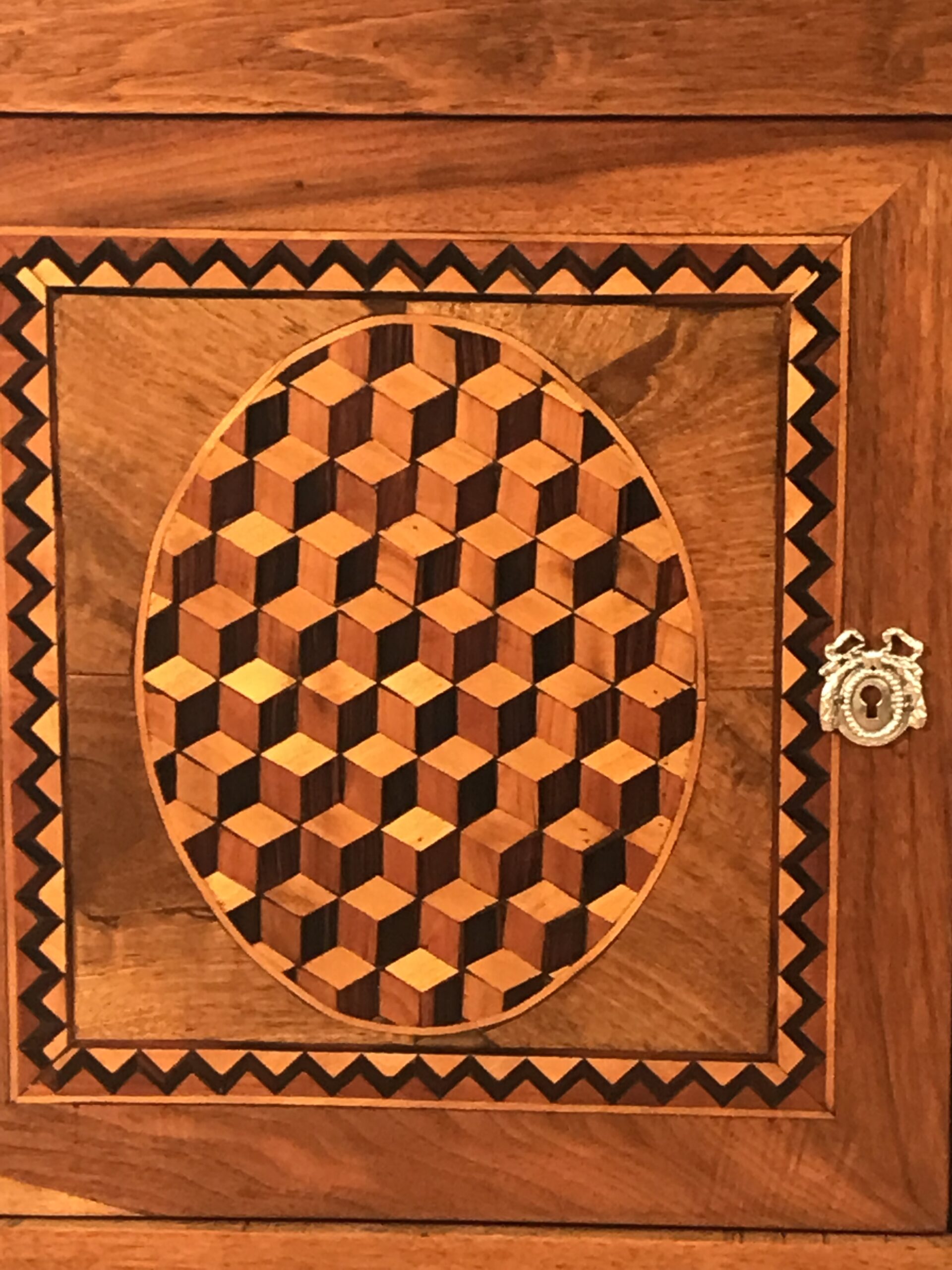
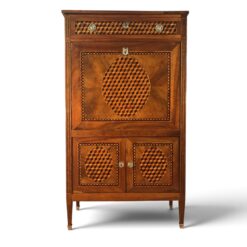
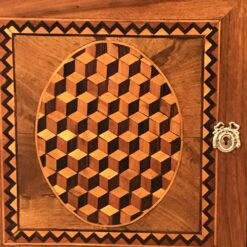
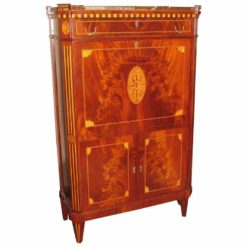
The rectangular cabinet features an upper drawer decorated with intricate cube marquetry. Below, the fall-front writing surface displays a large oval medallion filled with the same illusionistic geometric pattern. Contrasting wood veneers and finely executed zigzag borders frame the central decoration, creating a remarkable sense of depth and movement.
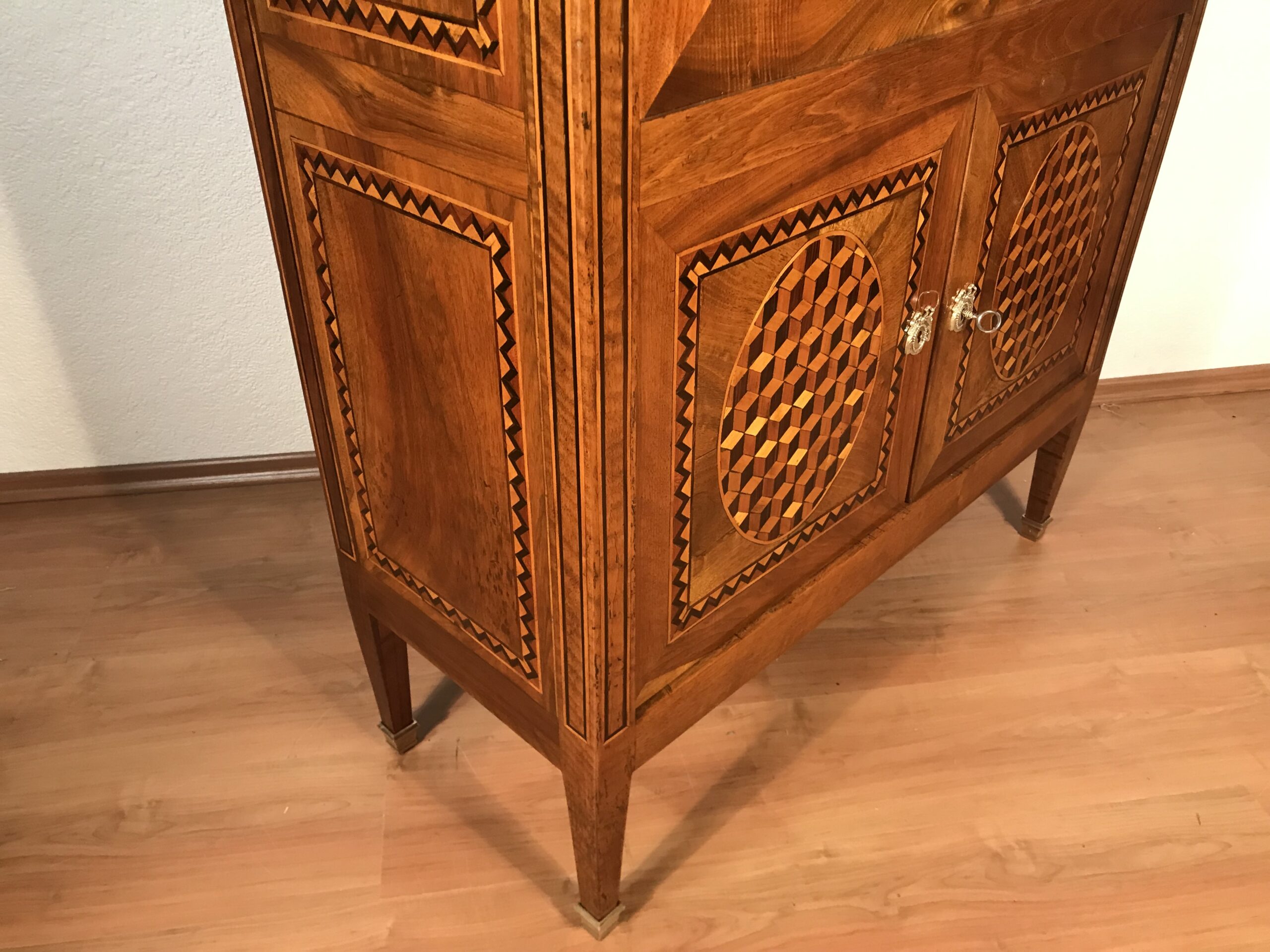
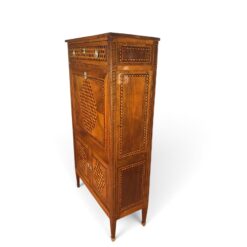
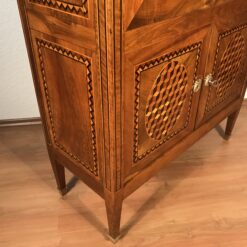
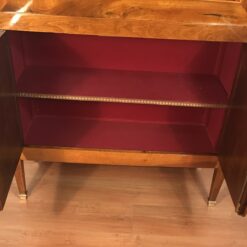
Furthermore, two lower cabinet doors feature matching oval marquetry medallions. Decorative geometric borders continue along the sides, while slender tapered legs with brass sabots complete the elegant Neoclassical silhouette.
French Louis XVI Design and Germanic Marquetry Influences
During the late 18th century, European cabinetmakers embraced the symmetry, architectural clarity, and decorative refinement of Neoclassical design. French Louis XVI furniture became particularly influential, inspiring regional workshops throughout Europe.
This antique secretary desk reflects that artistic exchange. Its restrained architectural form and elegant interior arrangement recall French secrétaires à abattant, while the elaborate three-dimensional cube marquetry suggests Germanic and Central European decorative traditions.
The combination of these stylistic elements may indicate a regional workshop in provincial France or the Southern Netherlands, where French and Germanic influences intersected.
An Elegant and Functional Antique Secretary Desk
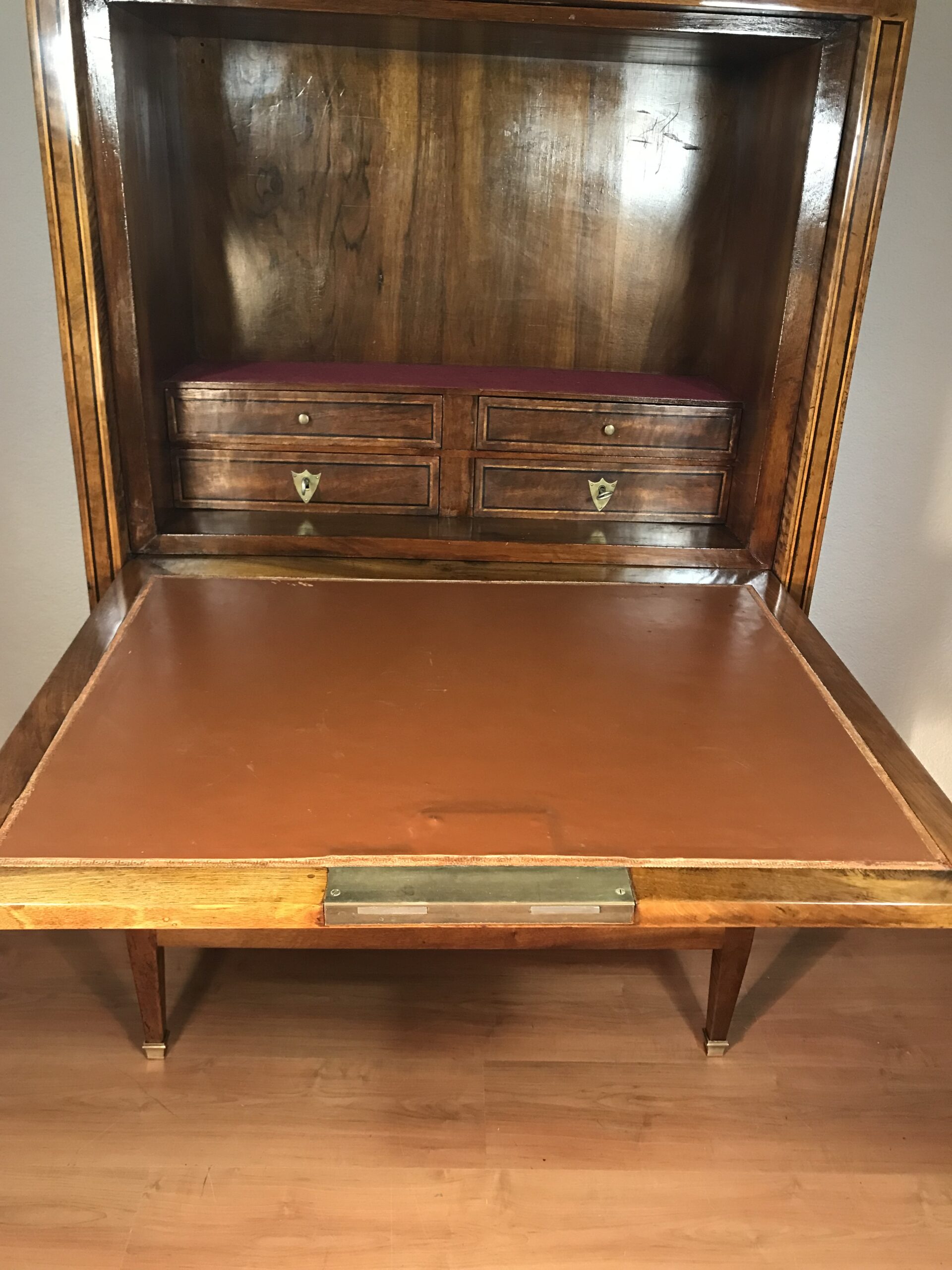
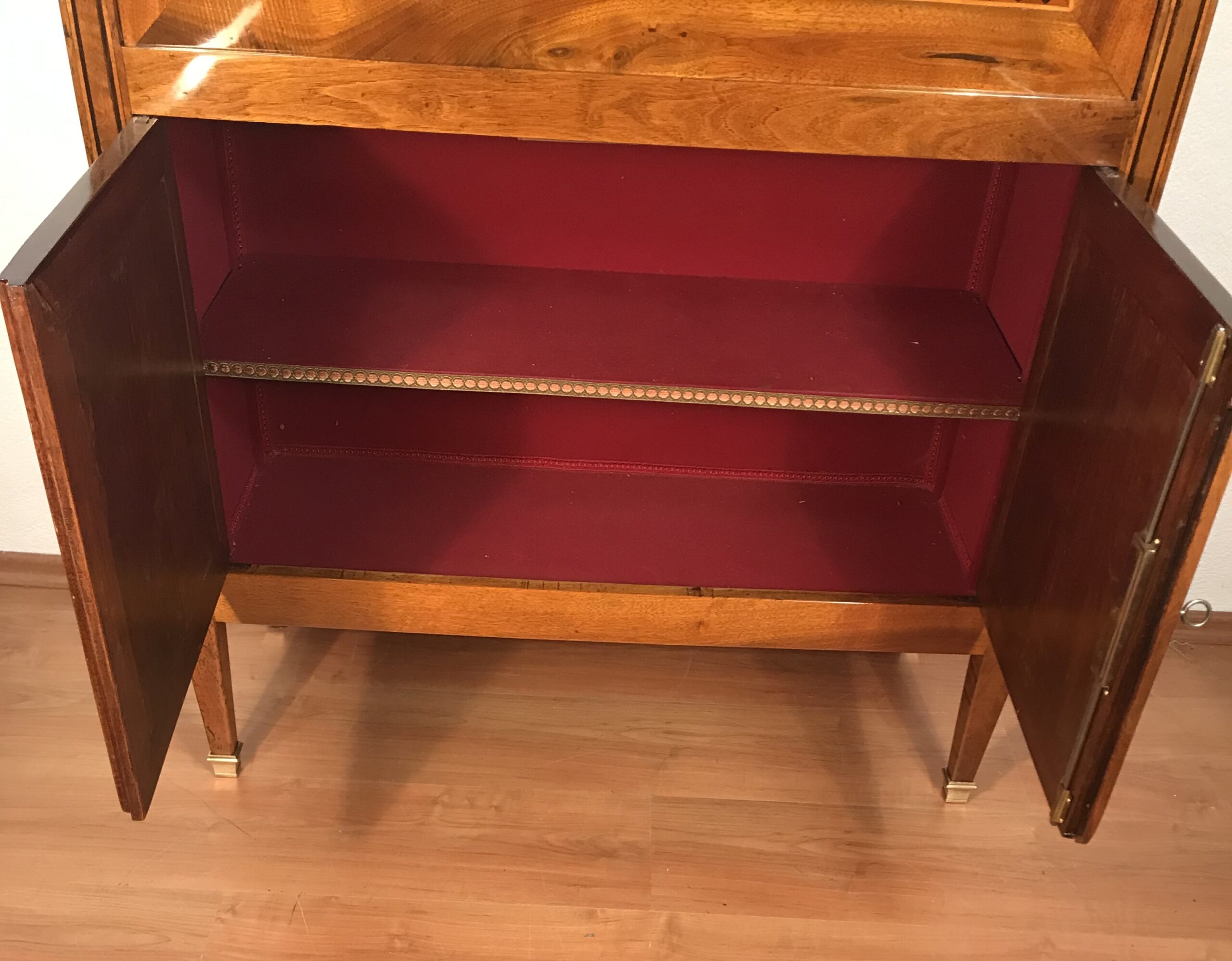
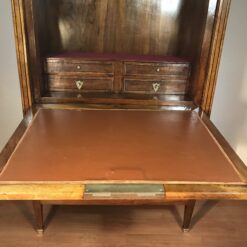
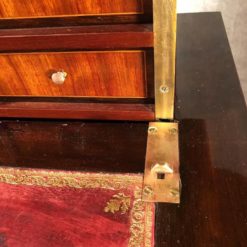
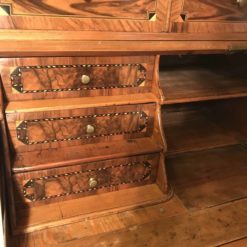
The fall-front opens to reveal a writing compartment with a leather-covered writing surface and four small interior drawers. In addition, the lower cabinet provides concealed storage behind two doors, while the upper drawer offers further space for documents and personal belongings.
With its relatively shallow depth of just 39 cm (15.4 in), this Neoclassical secretary desk is particularly suitable for interiors where space is limited.
Whether placed in a contemporary living room, private library, or elegant home office, it combines historical craftsmanship with practical functionality. Expertly refinished with a shellac hand polish.
Dimensions
Height: 162 cm (63.8 in)
Width: 93 cm (36.6 in)
Depth: 39 cm (15.4 in)
Details
Period: Circa 1800
Style: Neoclassical / Louis XVI influence
Origin: Continental Europe, possibly provincial France or the Southern Netherlands
Materials: Contrasting wood veneers, geometric marquetry, brass fittings, leather writing surface
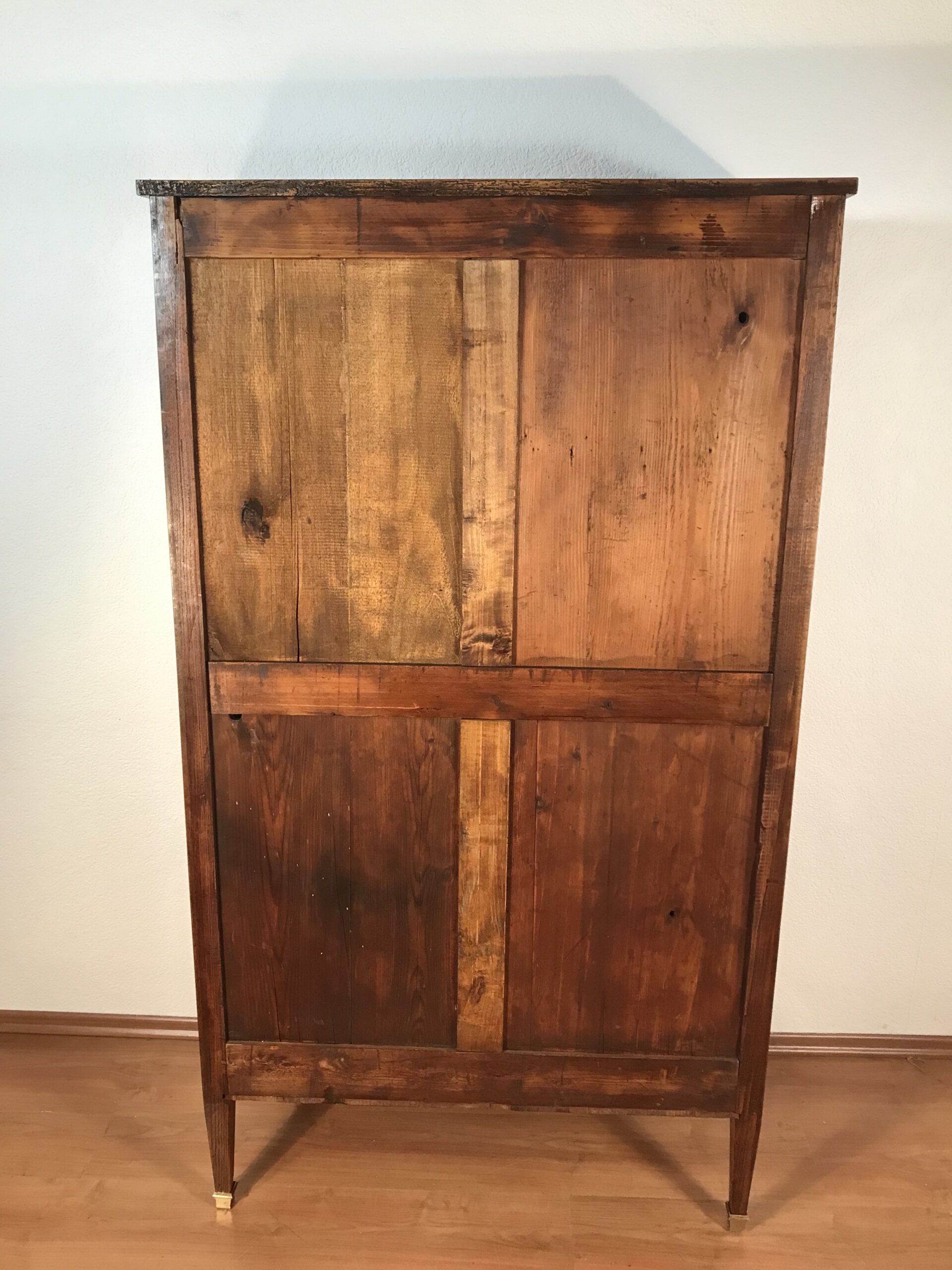
Construction: Fall-front secretary with upper drawer, four small interior drawers, and lower two-door cabinet
Decorative Features: Three-dimensional cube marquetry, oval medallions, geometric borders, tapered legs, and brass sabots
| Product Dimensions: | |
|---|---|
| Height | 162 cm (63.78 in) |
| Width | 93 cm (36.61 in) |
| Depth | 39 cm (15.35 in) |
| Date of Manufacture | 1780 |
| Restoration | Yes |
| Condition | Expected wear and tear |
| Color | Brown |
| Country Of Origin | Belgium |
| Item Condition | Good |
| Material | Walnut, Yew |
| Period | Late 18th century |
| Techniques | Marquetry, Veneer |
| Product style | Louis XVI, Neoclassical Style |
| Weight | 80 kgs (176.37 lbs) |
Be the first to review “Neoclassical Secretary Desk with Marquetry Decor, France 1780”
Styylish has a huge network of shipping companies and can negotiate competitive quotes for worldwide shipping for you. Please ask us for a shipping quote before your purchase. We will make sure that you get a fair rate and do not pay too much!
Local Pick up
Local pickup allows customers to inspect an item at the time of pickup and avoid shipping costs.
White Glove Shipping
Item is delivered inside your home and placed in the room of your choice (installation and hookup are not included).
Local Deliveries
Local rates are available on most items where the delivery location is within 30 miles.
Shipping charges start at $150, depending on product type, size, location of the buyer. Local deliveries typically take up to 2 weeks.
Shipping within the Continental US
Flat rate shipping costs between $450-$750, depending on your location and the size of the item. The delivery usually takes between 3-5 weeks.
Express delivery can be organized but is subject to additional fees.
Overseas, Alaska and remote areas please ask for a shipping quote.
Parcel Delivery
Shipment is arranged through recognized carriers such as UPS, FedEx, and DHL.
Only pieces that can be safely packed in a box or envelope may be shipped via parcel.
Shipping charges start at $20 and vary based on the size, weight, packaging and the value of the item.
Items are typically delivered within 2 weeks of the purchase date.
The Styylish Buyer Guarantee ensures that you have complete peace of mind when making a purchase on Styylish in the event that your item:
- Does not arrive
- Is materially different than what you purchased
All sales are final on Made–to–Order items.
For all other items, sales are final 48 hours after delivery (Except Free Local Pickup and Local Delivery — see below).
To request a return, please email [email protected] and include the order number and the reason for your return request.
On approved returns, the buyer is responsible for full cost of return packing & shipping.
The items are insured during the shipping process and the shipper’s insurance will cover the cost for any damage caused by the shipper during the shipping process.
Local Pickup & Local Delivery
All sales are final once buyer or buyer’s agent takes possession of an item.
Upon inspection, if you decide not to move forward with the purchase, you or your agent must refuse the item at the time of pickup/delivery from the seller.
Once you have taken possession of the item, all sales are final.
Please contact [email protected] to let us know you did not accept the item and would like to initiate a refund.
Related products
Antique Furniture and Decor


Desks and Secretary Desks
Antique Furniture and Decor
Antique Furniture and Decor
Antique Furniture and Decor
Antique Furniture and Decor


Desks and Secretary Desks


Antique Furniture and Decor
Ask a Question
Thank you!
Your question has been sent. We’ll get back to you shortly.
Reviews
There are no reviews yet.