
Best Sellers
Antique and Vintage Seating
Antique Furniture and Decor
Contemporary Furniture
Coffee Tables
Clocks and Technical Instruments
Contemporary Furniture and Decor
Antonine de Saint Pierre, Sculpture “Monsieur Jouve”, Contemporary
Antique and Vintage Seating
Antique and Vintage Seating
Floor and Table Lamps`
Biedermeier, Furniture, Neoclassical Furniture, Styylish History
Made for the Corner: The Surprising History of the Corner Cabinet
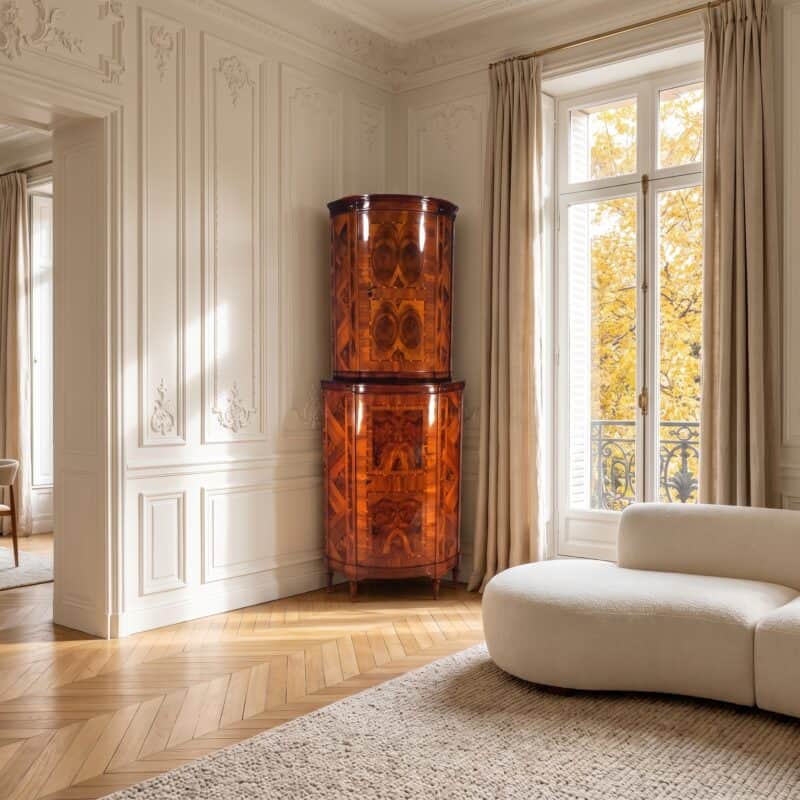
Some pieces of furniture were created primarily for beauty. Others developed in response to a practical problem. The corner cabinet manages to do both.
Designed specifically for the meeting point of two walls, corner cabinets transformed an awkward and often unused part of a room into valuable storage or display space. Over time, however, this clever solution became an important furniture type in its own right.
From elegant French encoignures and tall English corner cupboards to architectural German cabinets, 19th-century display pieces, and streamlined 20th-century designs, the corner cabinet has appeared in a remarkable variety of shapes.
Its history tells us not only about changing furniture styles, but also about the evolving relationship between furniture, architecture, and the way we live.
The Origins of the Corner Cabinet
Furniture designed specifically for corners existed before the 18th century. Early corner cupboards offered a practical way to create storage without sacrificing valuable wall or floor space.
The form became increasingly sophisticated during the 18th century, when European interiors were often carefully organized around architectural features.
Doors, windows, fireplaces, paneling, mirrors, and wall decorations created a strong rhythm within a room. Furniture frequently responded directly to this architecture.
Corners presented an interesting challenge.
A conventional rectangular cabinet placed diagonally wastes space behind it. A cabinet constructed specifically for a corner, however, can follow both walls while presenting an attractive façade toward the room.
This simple idea gave cabinetmakers considerable freedom. Some corner cabinets were triangular. Others had bowed, curved, or serpentine fronts. Some were low and elegant, while others extended almost to the ceiling.
There was never just one corner cabinet.
The French Encoignure
France produced some of the most sophisticated corner furniture of the 18th century.
The French term encoignure, derived from coin, or corner, describes a cabinet specifically intended to occupy this part of a room.
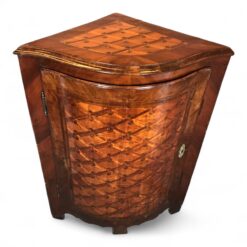
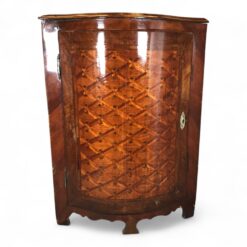
During the Louis XV period, encoignures often reflected the taste for curved forms. Their façades could be bowed or gently serpentine, sometimes with a single door beneath a marble top. Fine examples featured tropical wood veneers, floral marquetry, lacquer panels, and gilt-bronze mounts.
These were far more than practical storage cupboards. They belonged to the same world of luxury cabinetmaking as commodes and secrétaires.
Encoignures were also frequently conceived as pairs. Positioned in opposite corners, they could reinforce the symmetry of a room and relate to a central commode, fireplace, mirror, or other architectural feature.
The corner cabinet had become part furniture, part architecture.
From Louis XV Curves to Louis XVI Geometry
The changing shape of the French corner cabinet reflects one of the most important stylistic transitions of the 18th century.
Louis XV furniture embraced curves and the fluid vocabulary of the Rococo. A corner cabinet might have a bombé or bowed façade that softened the transition between two walls.
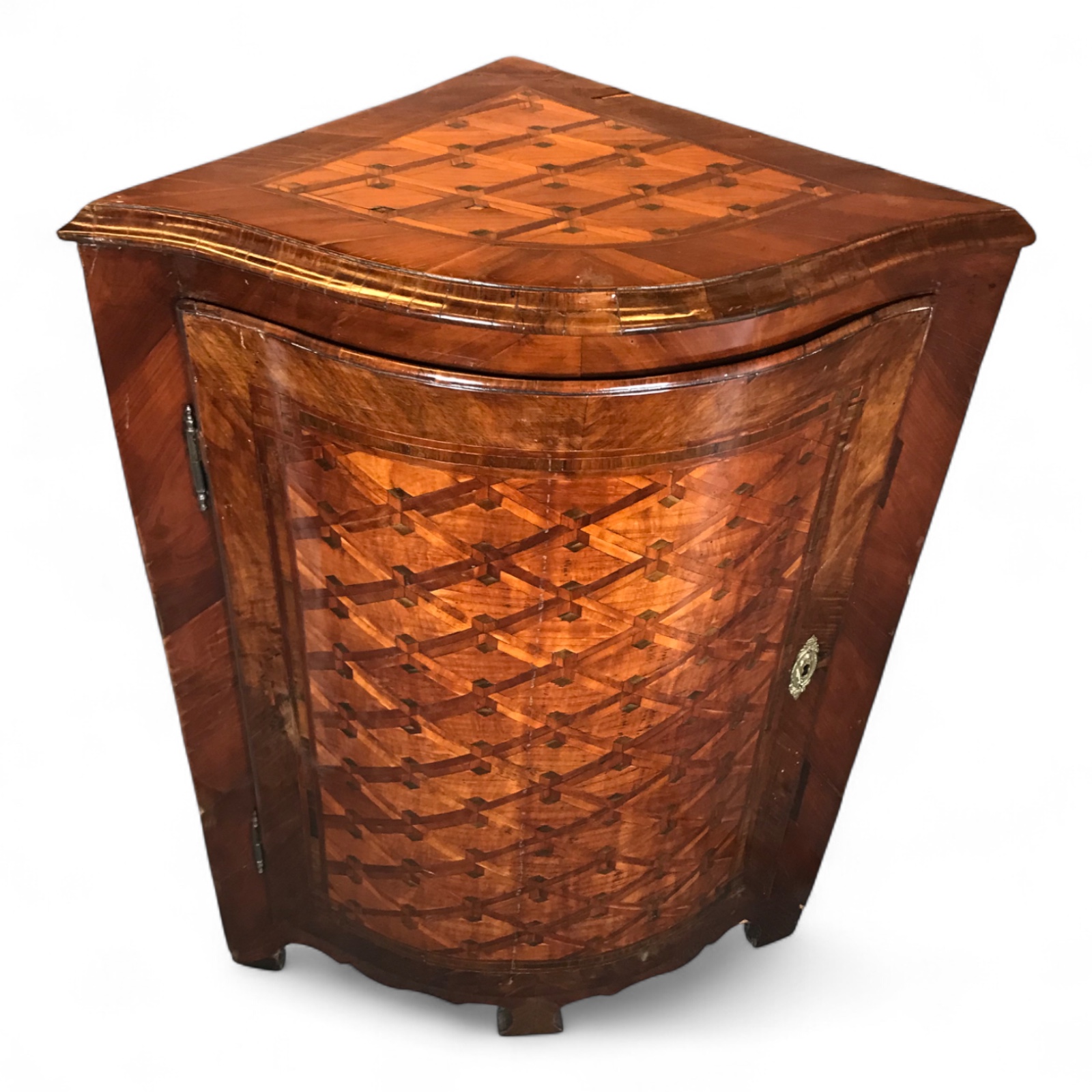
With the arrival of Neoclassicism and the Louis XVI style, geometry became more important. Straight lines, symmetry, architectural details, geometric veneer patterns, and restrained gilt-bronze decoration replaced much of the exuberance of the Rococo.
The function of the corner cabinet remained essentially unchanged, but its visual language became quite different.
This is one reason corner cabinets are so fascinating to study. Their basic purpose remained consistent while their appearance changed with almost every major shift in taste.
Corner Cabinets Across Europe
The corner cabinet was by no means exclusively French.
In Britain, corner cupboards became familiar features of Georgian interiors. Some were wall-mounted, leaving the floor beneath them free. Others were tall standing cupboards, often used to store or display ceramics, glassware, and other household objects.
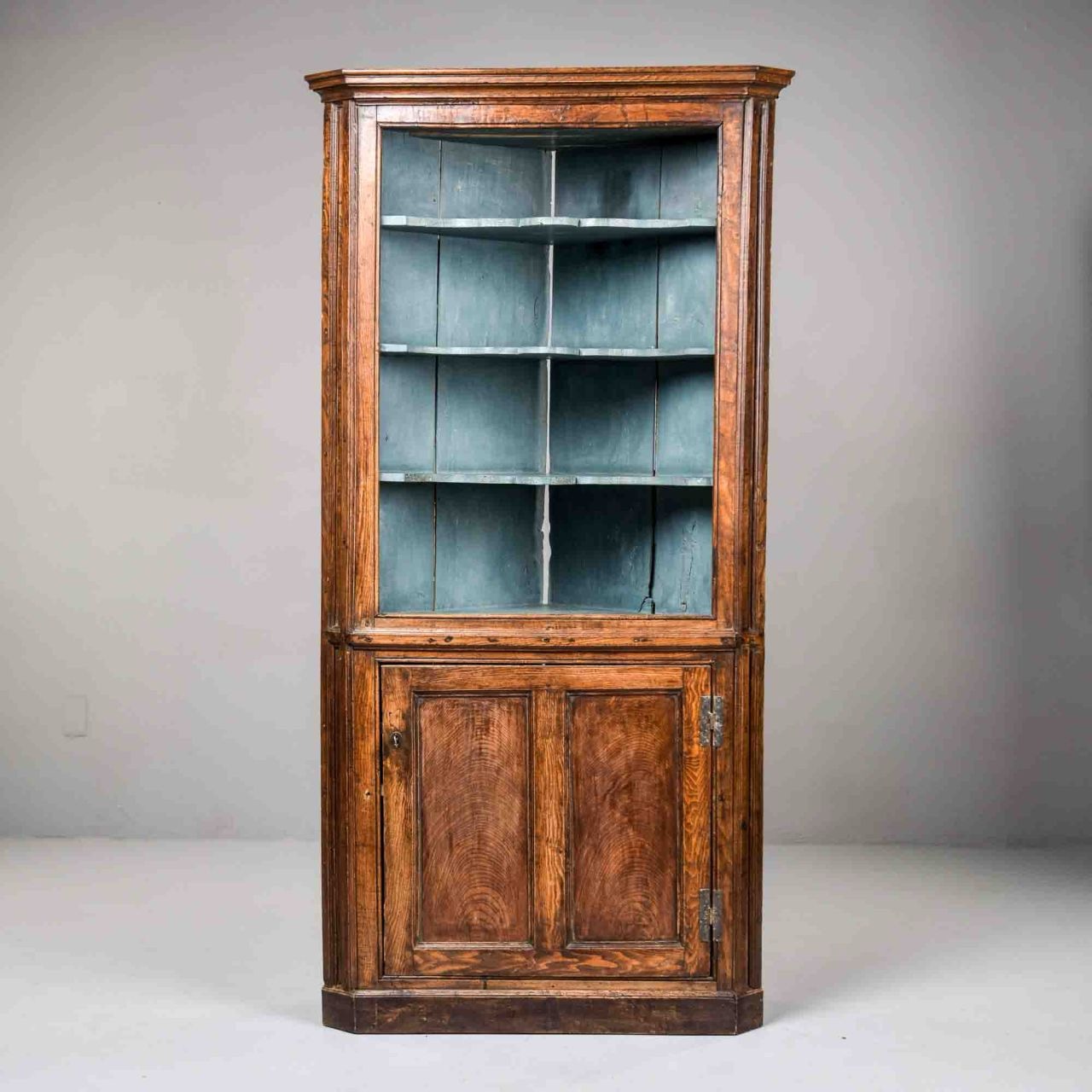
Bow-fronted examples could be particularly elegant. Fine mahogany, decorative inlay, glazing, and shaped cornices elevated the practical cupboard into a sophisticated piece of furniture.
German and Central European cabinetmakers developed their own interpretations.
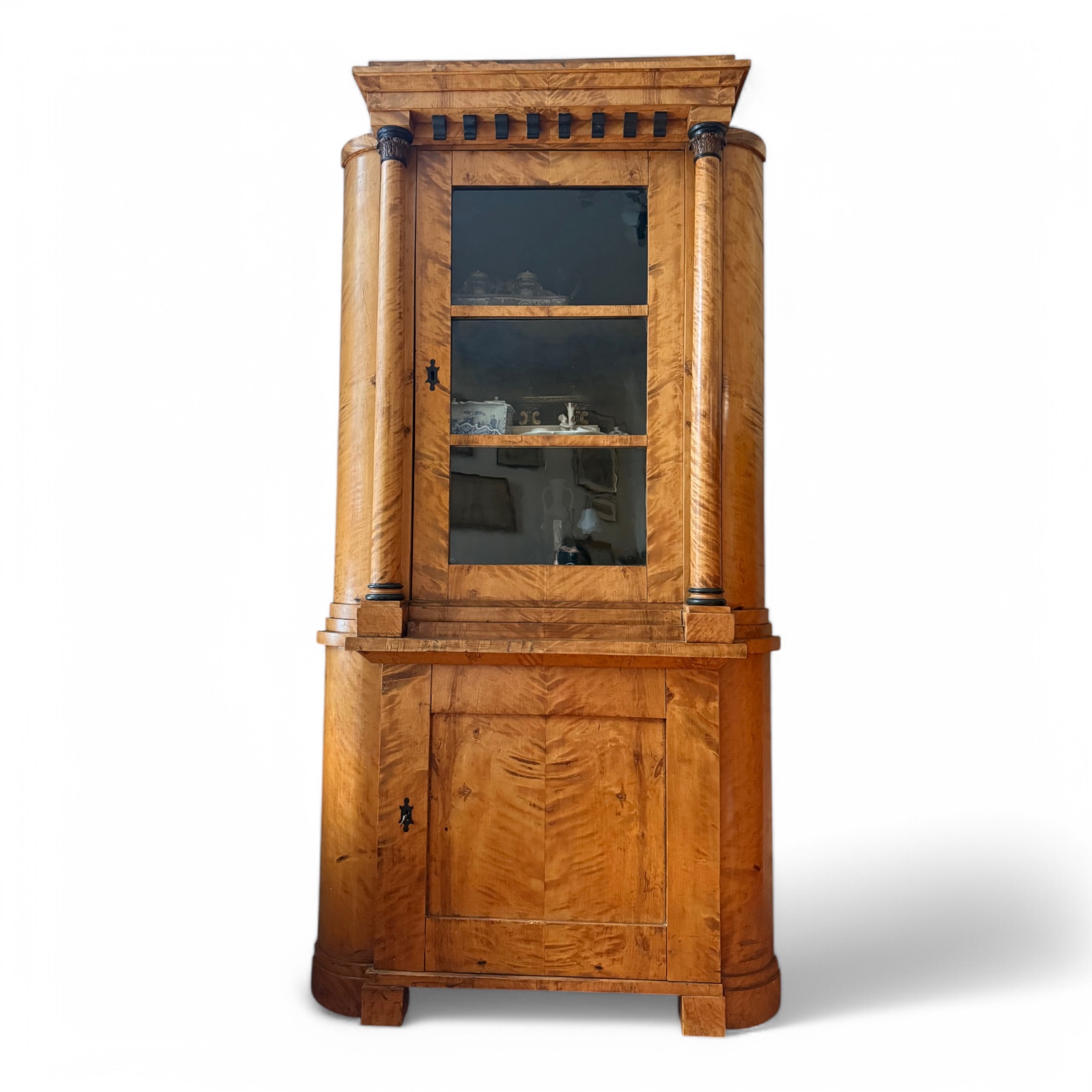
Here, corner cabinets could assume a much more architectural character. Columns, pilasters, cornices, pediments, and carefully organized façades reflected the strong architectural tradition found throughout German furniture design.
Some examples rise dramatically upward rather than spreading across a wall. Others incorporate elaborate upper structures or display sections.
The result can be very different from the relatively low French encoignure, even though both pieces were created to solve exactly the same spatial problem.
One Purpose, Many Shapes
Perhaps the most interesting thing about corner furniture is that the term describes a function rather than a single shape.
Viewed from above, many corner cabinets have a triangular or roughly triangular footprint, with two sides following the walls. Yet the visible front gave cabinetmakers enormous freedom.
A façade could be straight, bowed outward, concave, serpentine, or divided into several planes.
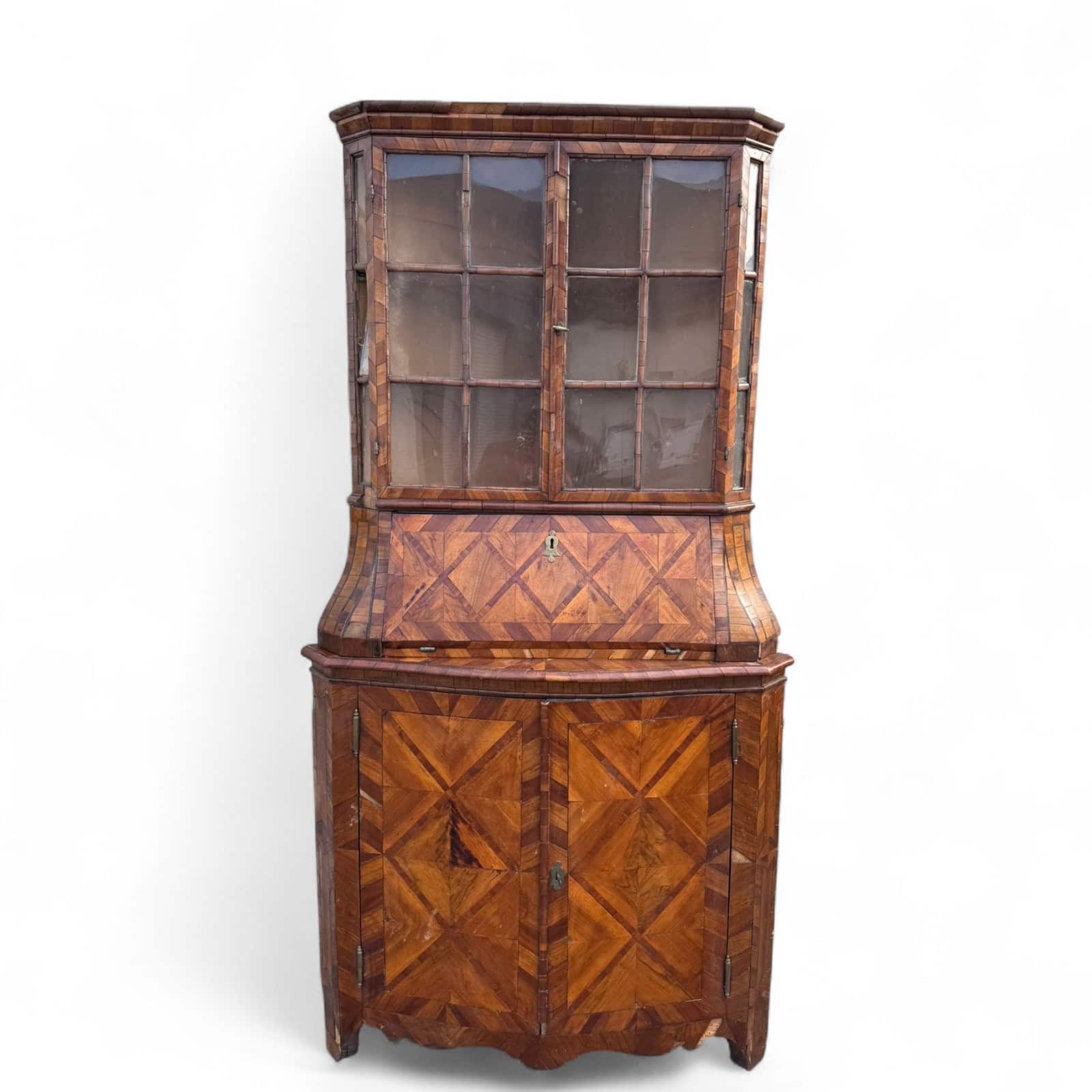
Low corner cabinets might stand on elegant legs and support marble tops. Tall examples could include lower storage combined with an upper cupboard. Others incorporated glass doors to display porcelain, books, glass, or collections.
Wall-mounted corner cupboards offered yet another solution, providing storage while preserving floor space.
There were also pairs of matching corner cabinets designed as part of a larger decorative scheme.
This extraordinary variety is one reason the corner cabinet is such an interesting furniture type: its shape constantly adapts to period, place, function, and architecture.
The Corner Cabinet in the 19th Century
Corner furniture remained popular throughout the 19th century, but its role gradually changed.
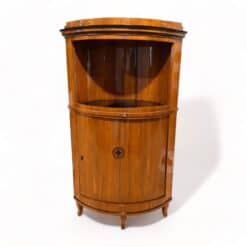
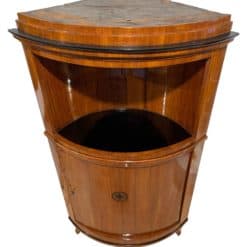
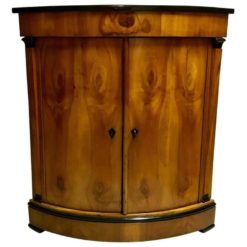
Neoclassical and Empire examples often emphasized architectural lines, rich mahogany, and contrasting decorative elements. During the Biedermeier period, cabinetmakers favored cleaner forms and beautiful wood surfaces, allowing proportion and grain to provide much of the decoration.
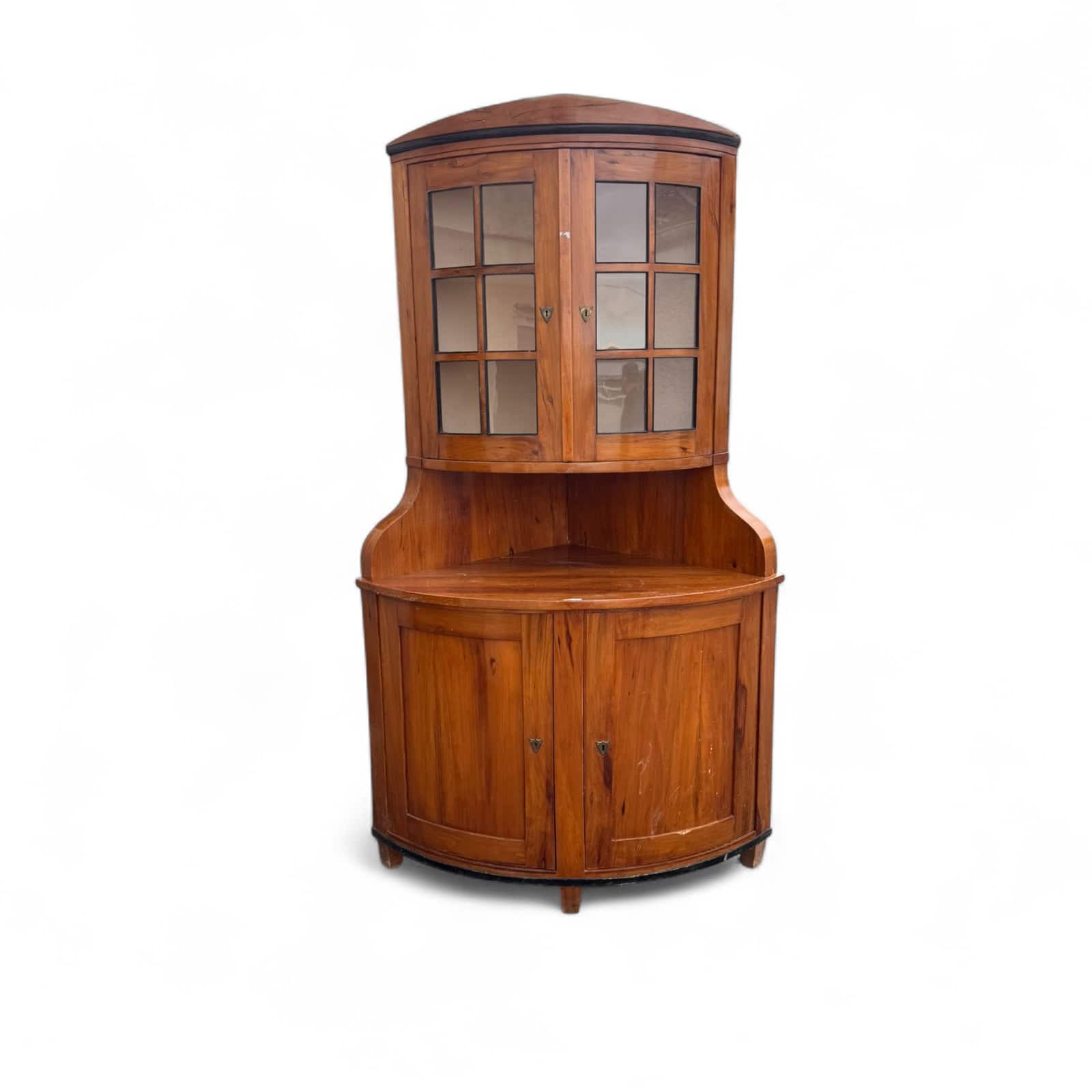
Later in the century, historicism revived earlier styles. Corner cabinets could therefore incorporate Gothic, Renaissance, Baroque, Rococo, or Neoclassical elements depending on contemporary fashion.
The expansion of the middle class also changed furniture production and domestic interiors. A corner cabinet no longer had to be a costly piece conceived as part of an aristocratic room scheme. It could become a practical addition to a dining room, parlor, study, or library.
Tall glazed corner cabinets became particularly useful for displaying porcelain and collectibles. In this form, the cabinet served not only as storage but as a frame for the objects its owner wished to show.
The concept had become less aristocratic, but its fundamental advantage remained unchanged: it made intelligent use of an otherwise difficult space.
The Corner Cabinet Enters the 20th Century
The 20th century changed the way furniture related to architecture.
Rooms became less formal, and furniture increasingly moved away from fixed arrangements along the walls. Nevertheless, designers continued to recognize the possibilities of the corner.
During the Art Deco period, corner furniture could take on striking geometric and curved forms. Rich veneers, lacquer, glass, metal, and other luxurious materials transformed practical storage into a sculptural statement.
The curved forms favored by Art Deco designers were particularly well suited to corners. Instead of trying to disguise an awkward space, designers could make it part of the visual drama of the room.
By the Mid-Century period, the concept evolved again.
Furniture became lighter and more flexible. Modular shelving systems, wall-mounted storage, corner bookcases, and adaptable cabinet units responded to smaller homes and changing lifestyles.
The rise of home entertaining also encouraged another particularly 20th-century interpretation: the corner bar or cocktail cabinet. Once again, a difficult part of the room became both useful and decorative.
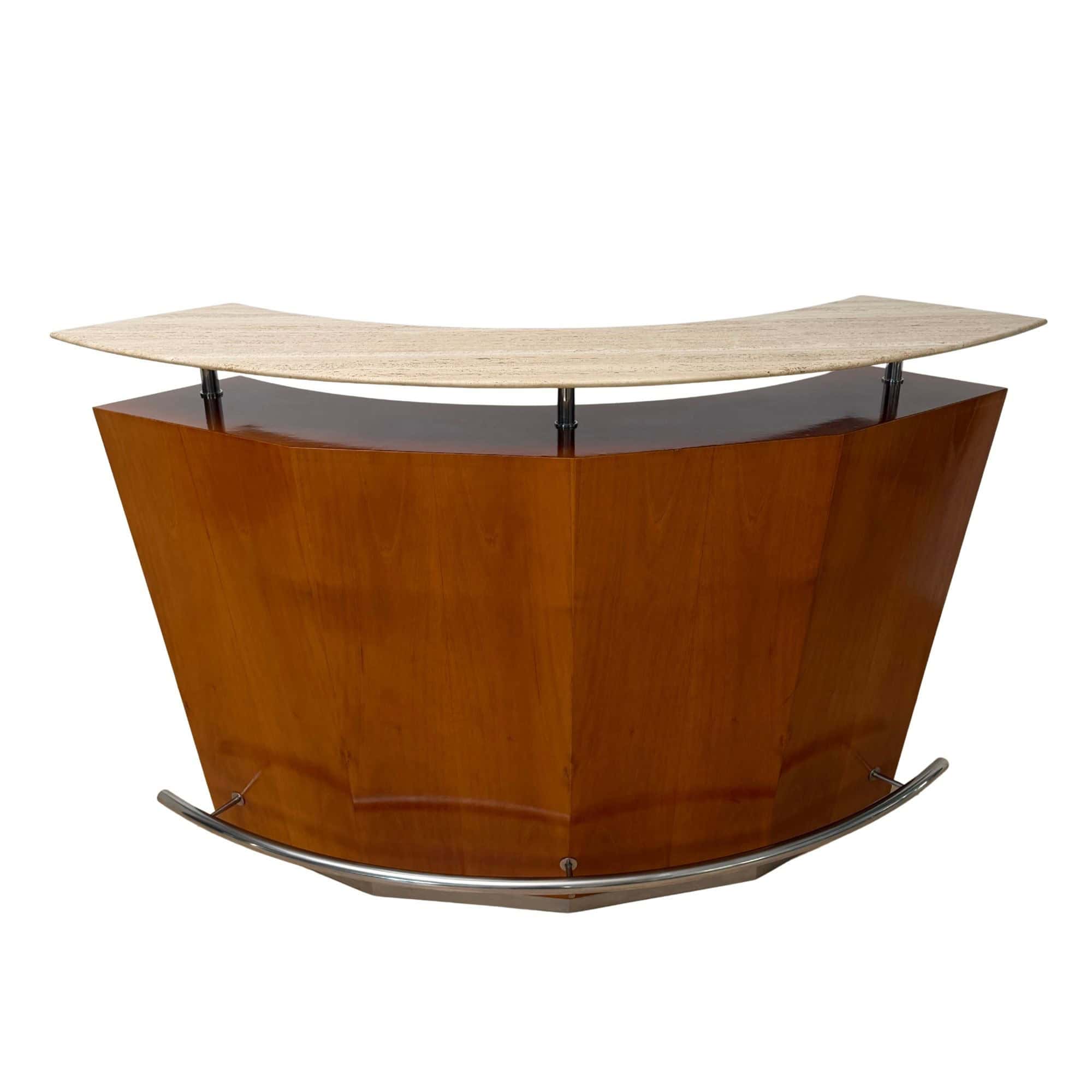
The appearance had changed dramatically since the 18th-century French encoignure, but the design problem remained surprisingly similar.
From Stand-Alone Cabinet to Built-In Furniture
The history of corner furniture also reveals another important development: the boundary between furniture and architecture gradually became less distinct.
An 18th-century encoignure was generally a movable piece, even when designed to harmonize closely with a particular interior.
By the 20th century, architects and designers increasingly incorporated storage directly into buildings. Built-in corner cupboards, shelving, banquettes, and cabinetry could become part of the architecture itself.
At the same time, modular furniture offered the opposite solution: units that could be rearranged as the needs of a room changed.
Both ideas grew from the same fundamental question that had occupied cabinetmakers centuries earlier:
What should we do with the corner?
Why Antique Corner Cabinets Still Work Today
The question remains surprisingly relevant.
Corners are still difficult to furnish, especially in rooms where doors, windows, fireplaces, or limited wall space restrict conventional furniture placement.
An antique corner cabinet can therefore be remarkably practical in a contemporary home.
A low encoignure can provide storage while leaving the walls visually open. Its top offers a surface for a lamp, sculpture, or other decorative object.
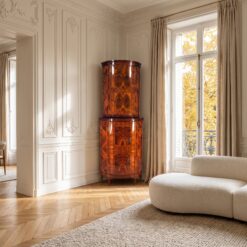
A tall corner cabinet can transform an empty corner into a focal point while providing substantial storage or display space.
Corner cabinets are also particularly useful in dining rooms, where they can hold tableware, glassware, or linens without requiring the long wall space of a traditional sideboard.
Yet perhaps their greatest appeal today is visual.
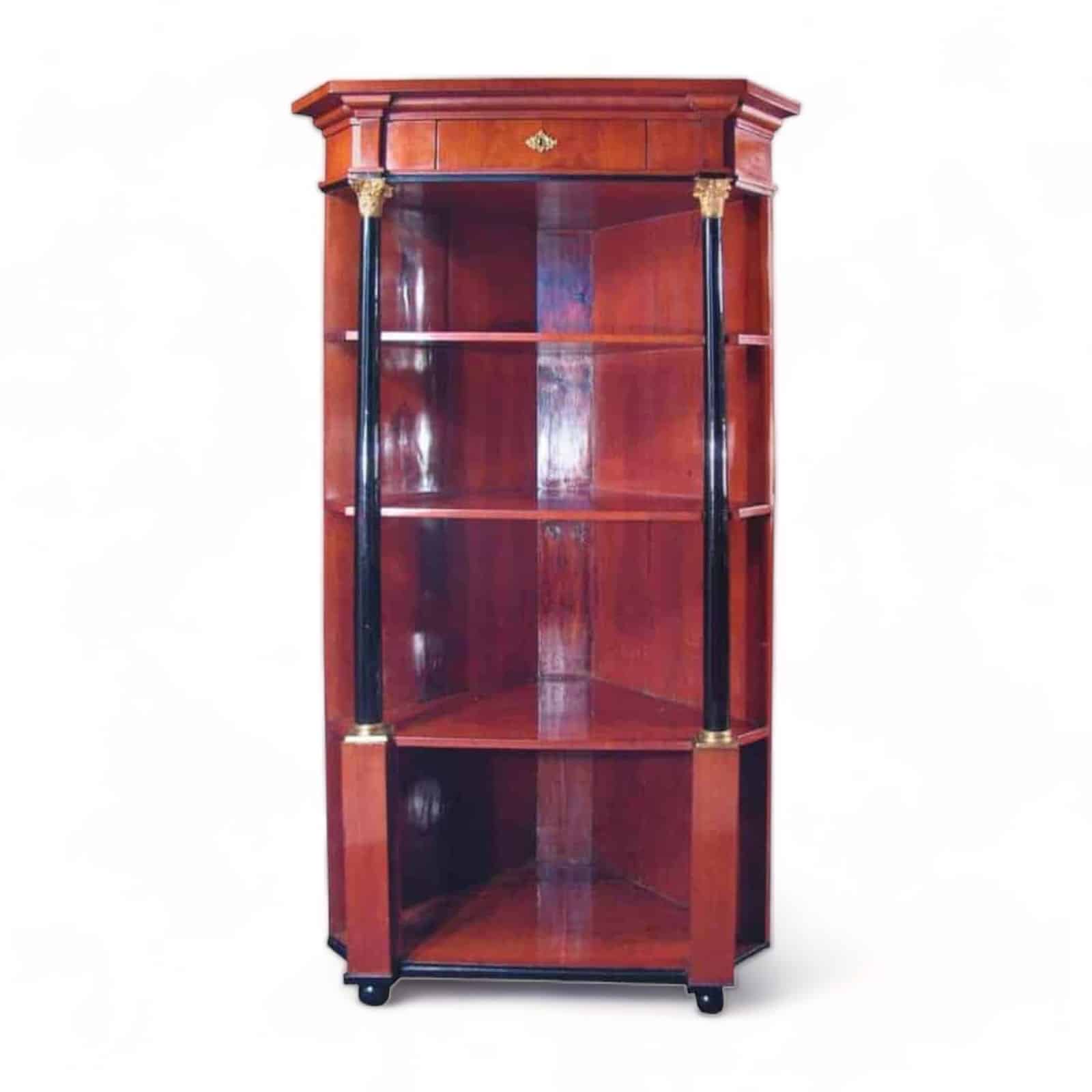
Most furniture is based on rectangles. Tables, chests, sideboards, and cabinets generally sit parallel to a wall. A piece designed specifically for a corner introduces a completely different geometry into the room.
A Clever Idea That Survived Centuries
The history of the corner cabinet demonstrates how a practical idea can inspire extraordinary design.
What began as a way to use otherwise wasted space developed into a furniture form interpreted by generations of European cabinetmakers and designers.
The French transformed it into the elegant encoignure. British cabinetmakers developed practical and refined corner cupboards. German and Central European craftsmen explored more architectural forms. The 19th century adapted it for changing domestic interiors, while Art Deco and Mid-Century designers reinvented the corner for modern life.
The materials, shapes, and decorative styles changed dramatically.
The idea did not.
That may be the most fascinating aspect of the corner cabinet. The architectural problem it solved centuries ago still exists—and the solution remains as clever today as it was in the 18th century.

Silke Berlinghof
People also buy
Antique Furniture and Decor
Antique Furniture and Decor
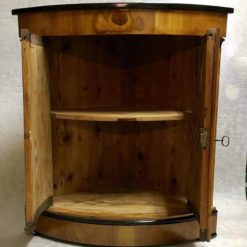
Biedermeier Corner Cabinet, Cherry Veneer, Ebony, South Germany circa 1820
Corner Cabinets
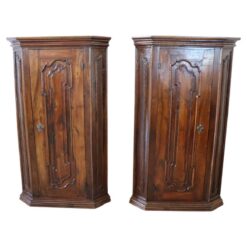
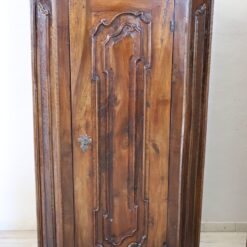
Antique Furniture and Decor