Best Sellers
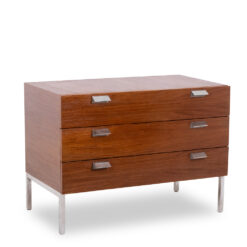
Chests of Drawers, Dressers, Commodes
Chests of Drawers, Dressers, Commodes
Antique and Vintage Seating
Dining Chairs

Contemporary Furniture and Decor


Console Tables
Dining room tables
Armchairs
Rustic Decor
Furniture, Mid-century
The Rise of Stainless Steel Furniture in 1970s French Design
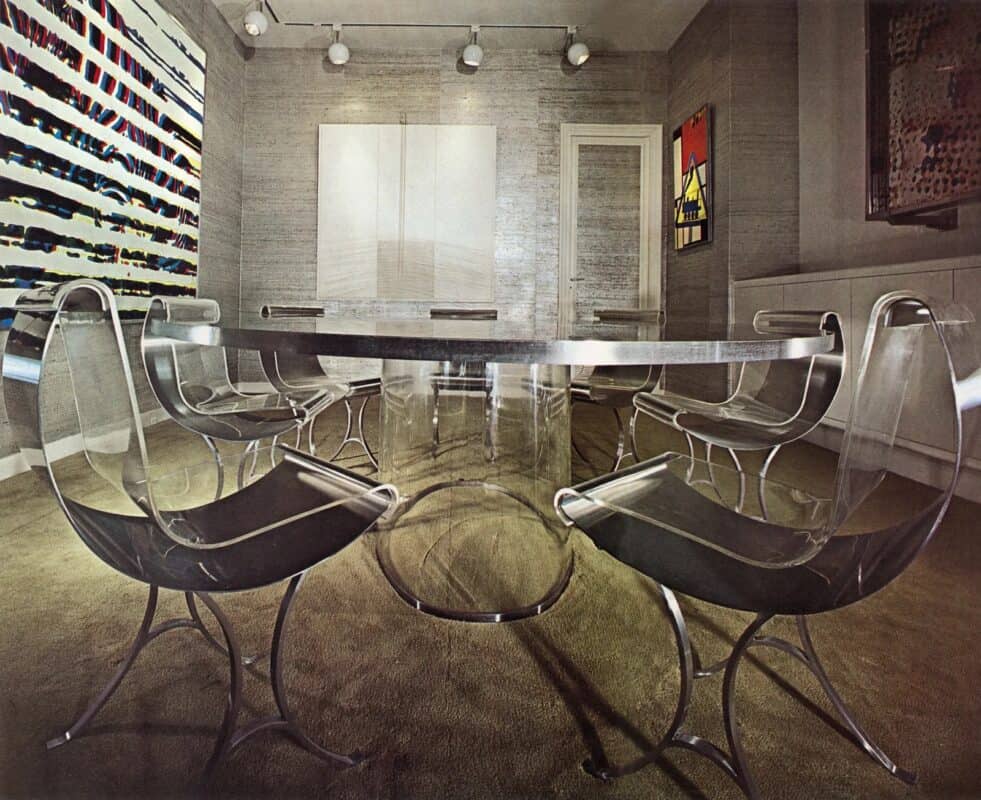
Few materials transformed furniture design as dramatically as stainless steel. During the 1970s, French designers embraced its cool, reflective surface and exceptional durability to create furniture that was both architectural and luxurious. While chrome had dominated much of the postwar period, brushed stainless steel introduced a quieter, more sophisticated aesthetic. It offered precision without excessive ornament and became the material of choice for a new generation of designers who balanced industrial innovation with refined craftsmanship.
Today, French stainless steel furniture from the 1970s has become highly collectible. Its clean lines, sculptural forms, and timeless elegance make it equally at home in contemporary interiors and carefully curated spaces filled with antiques. Designers such as Maria Pergay, Michel Boyer, Guy Lefèvre, and Paul Geoffroy helped define this remarkable period, each bringing a distinct vision to one of the twentieth century’s most enduring materials.
Why Stainless Steel Became the Material of the 1970s
Although stainless steel had been developed decades earlier for industrial and architectural applications, designers began to appreciate its aesthetic qualities during the late 1960s and 1970s. Unlike polished chrome, which reflects its surroundings like a mirror, brushed stainless steel has a softer, satin finish. It diffuses light, highlights the purity of a form, and ages beautifully.
Several factors contributed to its popularity. Advances in metal fabrication made it easier to bend, weld, and finish stainless steel with remarkable precision. At the same time, architects and interior designers increasingly favored minimalist spaces with clean lines and high-quality materials. Stainless steel complemented this new architectural language perfectly.
French designers, however, rarely approached the material with cold industrialism. Instead, they combined its technical qualities with luxurious upholstery, rich textiles, glass, and brass. The result was furniture that felt elegant rather than austere.
French Modernism with a Sculptural Identity
French furniture of the 1970s occupied a unique position between strict modernism and decorative sophistication. While Italian Radical Design explored bold experimentation and American designers often emphasized large-scale functionality, French makers pursued balance and proportion.
Stainless steel became a medium for sculpture as much as furniture. Chairs appeared to float on elegant metal frames. Coffee tables combined brushed steel with smoked glass or polished stone. Cabinets featured crisp geometric silhouettes softened by carefully selected materials.
Rather than overwhelming a room, these pieces introduced a quiet architectural presence. They reflected light without dominating the space and paired naturally with traditional materials such as walnut, marble, travertine, and leather.
Maria Pergay: The Poet of Stainless Steel
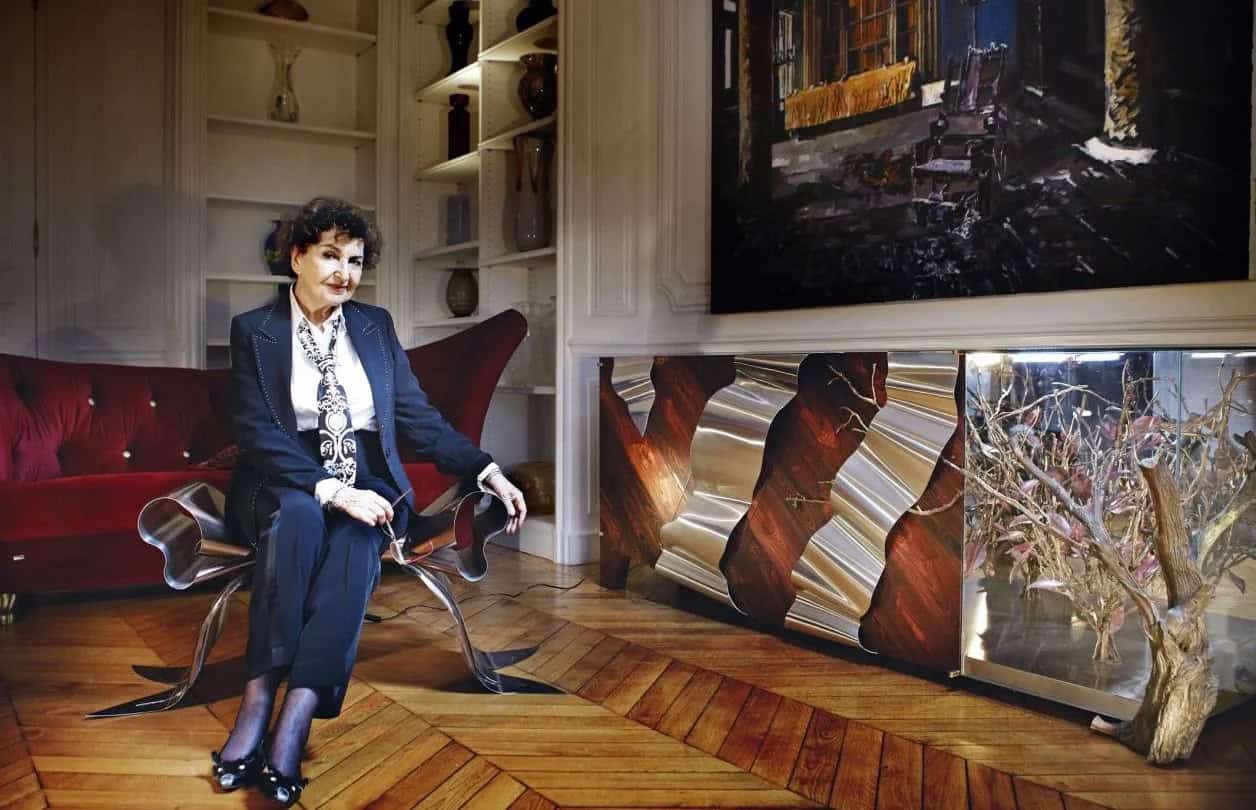
No discussion of French stainless steel furniture is complete without Maria Pergay. Born in Moldova and active in Paris, Pergay revolutionized the use of stainless steel in furniture during the late 1960s.
Instead of treating the material as rigid, she explored its surprising flexibility. Folded, curved, and sculpted into organic forms, her furniture challenged conventional ideas about metal. Chairs appeared to flow like fabric, while tables balanced dramatic curves with structural precision.
Pergay collaborated closely with skilled metalworkers to push the technical limits of stainless steel. Today, her work is represented in major museums and regularly commands exceptional prices at international design auctions.
Her influence extended far beyond her own studio. Many French designers adopted stainless steel not simply as an industrial material but as a medium capable of elegance and artistic expression.
Paul Geoffroy and Uginox
Among the designers working with stainless steel during the 1970s, Paul Geoffroy deserves greater recognition. His collaboration with Uginox, the French manufacturer renowned for high-quality stainless steel production, resulted in furniture that combined engineering precision with understated refinement.
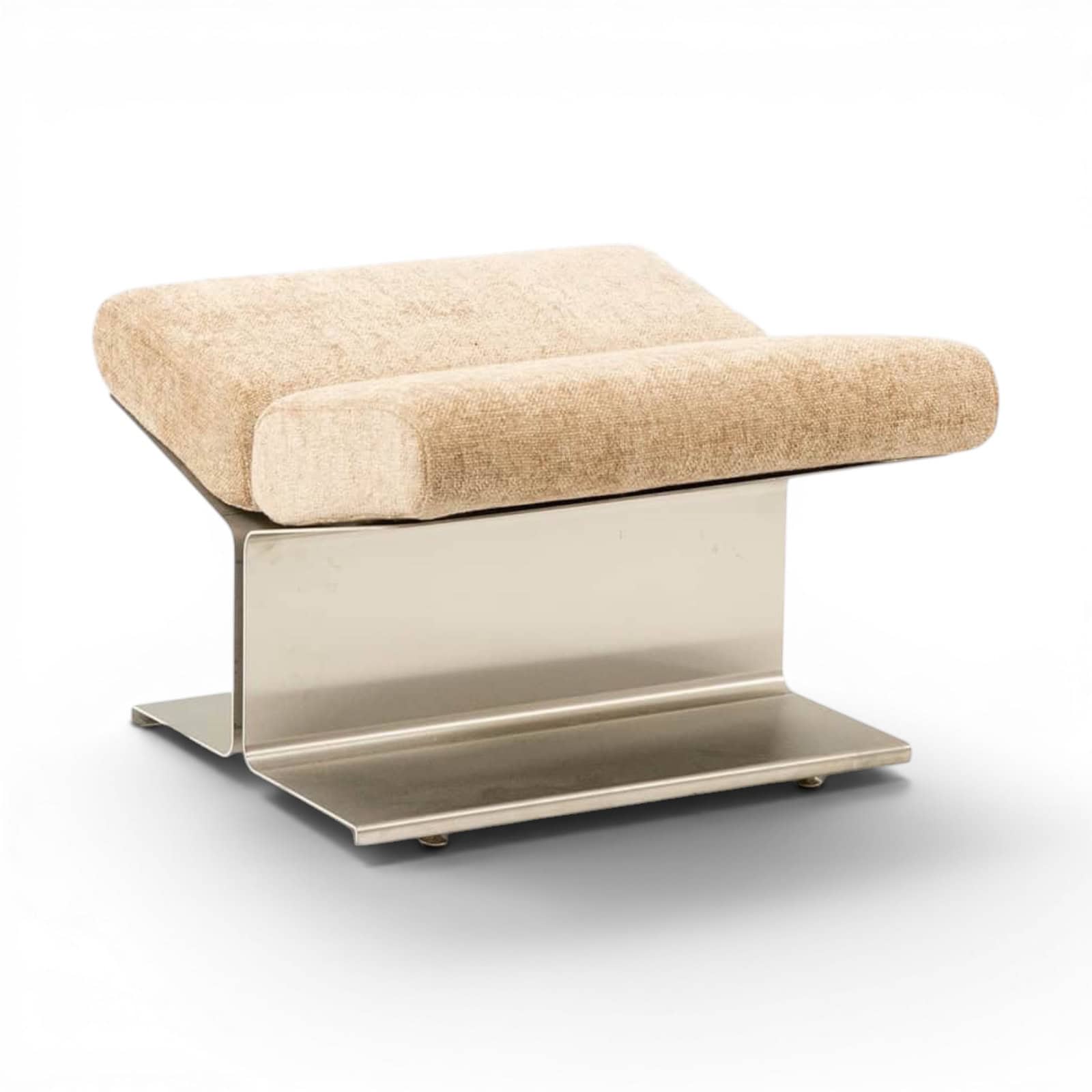
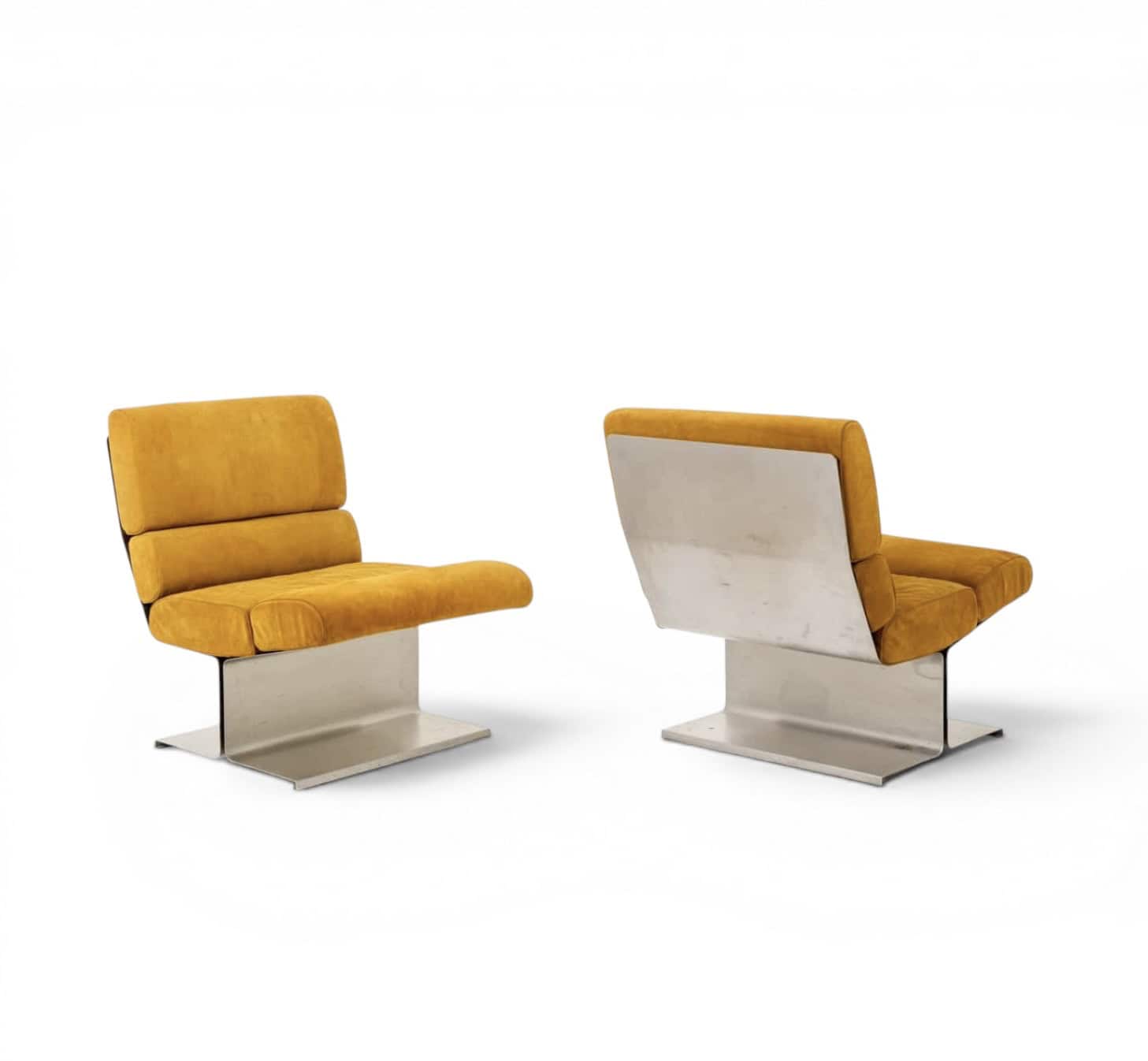
Geoffroy’s seating designs demonstrate the qualities that made French stainless steel furniture so distinctive. Rather than relying on decorative ornament, he emphasized carefully proportioned forms and seamless construction. Brushed stainless steel frames flow into gently reclined backrests and sculptural supports, creating furniture that appears both light and remarkably stable.
Many examples feature upholstered cushions in vibrant velvets or fine leather. The contrast between the cool metal and warm textiles creates visual depth while ensuring exceptional comfort.
Although Paul Geoffroy remains less widely known than some of his contemporaries, collectors increasingly appreciate his work for its sophisticated simplicity and outstanding craftsmanship.
Michel Boyer and Luxury Modernism
Another influential figure was Michel Boyer, whose interiors defined French luxury during the 1970s. Boyer frequently combined stainless steel with smoked glass, polished brass, lacquer, and plush upholstery.
His furniture reflects the glamour associated with prestigious hotels, private residences, and executive interiors of the era. Every material serves a purpose, yet the overall effect remains restrained rather than ostentatious.
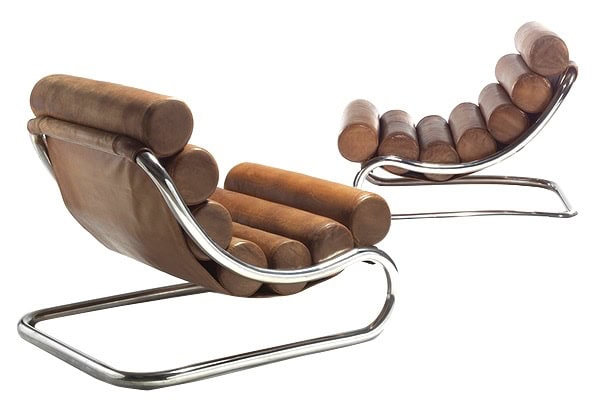
Today, Boyer’s work continues to influence contemporary designers seeking a balance between minimalism and luxury.
Guy Lefèvre and Maison Jansen
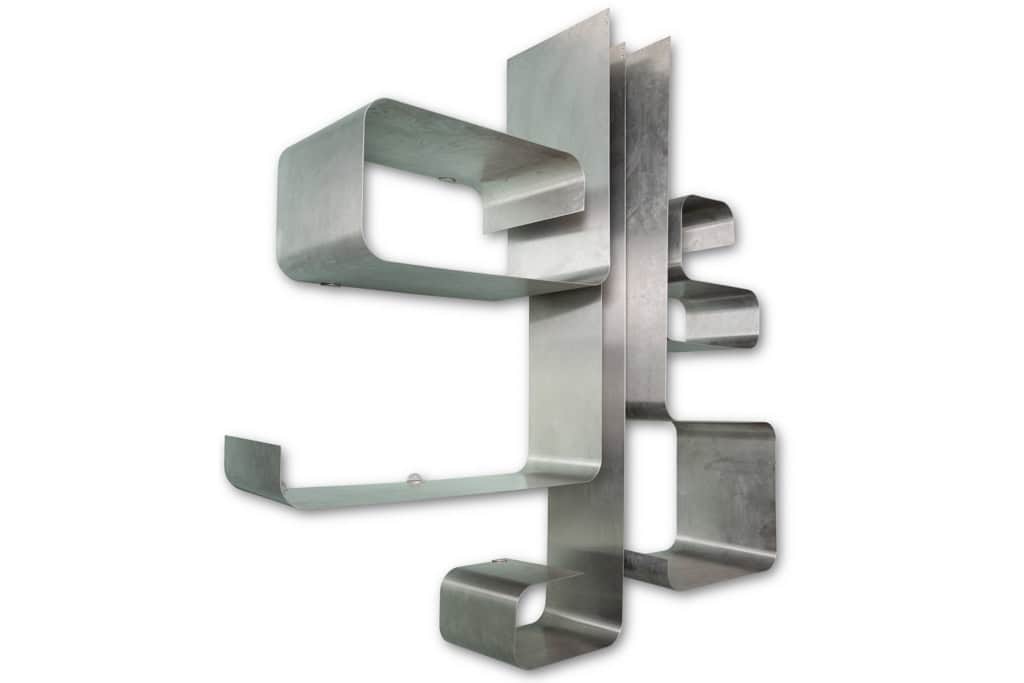
Working with the legendary Maison Jansen, Guy Lefèvre created furniture that combined classical proportions with modern materials. His coffee tables, consoles, desks, and shelving systems frequently incorporated brushed stainless steel alongside brass and glass.
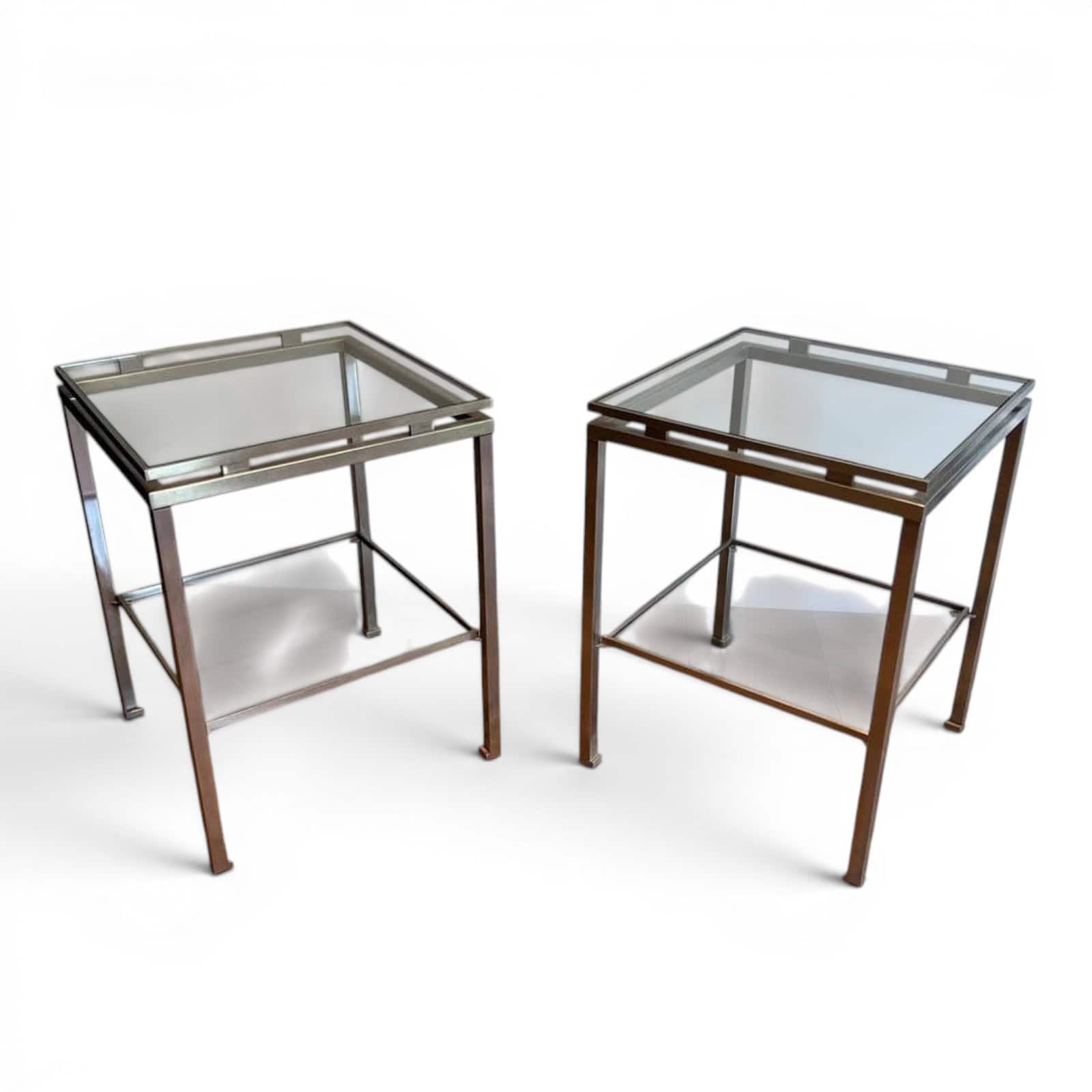
These pieces demonstrate the remarkable versatility of stainless steel. It could feel crisp and architectural in one design or warm and luxurious when paired with polished brass and richly colored stone.
Maison Jansen‘s international clientele helped spread this refined French aesthetic across Europe and the United States, establishing stainless steel as a material suitable for elegant residential interiors rather than purely commercial settings.
Why Collectors Continue to Love Stainless Steel Furniture
Several qualities explain the growing demand for French stainless steel furniture from the 1970s.
First, the material is exceptionally durable. Unlike plated metals, stainless steel resists corrosion and maintains its appearance for decades with minimal maintenance.
Second, its neutral color complements almost any interior. Whether combined with antique furniture, Scandinavian design, contemporary architecture, or Mid-Century Modern pieces, brushed stainless steel integrates effortlessly.
Finally, these designs possess a timeless sculptural quality. They never rely on fashionable decoration. Instead, proportion, craftsmanship, and material define their beauty.
As appreciation for twentieth-century French design continues to grow, collectors increasingly recognize the importance of designers beyond the most famous names. Furniture by Paul Geoffroy, Guy Lefèvre, Michel Boyer, and their contemporaries offers exceptional design quality while remaining comparatively accessible.
Stainless Steel in Contemporary Interiors
One of the greatest strengths of 1970s French stainless steel furniture is its versatility. A sculptural stainless steel armchair can sit comfortably beside an eighteenth-century commode, while a brushed steel coffee table pairs beautifully with contemporary sofas and abstract art.
Interior designers often use these pieces to introduce contrast. The cool satin finish of stainless steel highlights the warmth of wood, the richness of velvet, and the texture of natural stone. This dialogue between materials creates interiors that feel layered, sophisticated, and timeless.
Rather than belonging exclusively to modern interiors, French stainless steel furniture has become an important bridge between historical craftsmanship and contemporary design.
Enduring Icons of French Design
The rise of stainless steel furniture in 1970s France represents far more than a change in materials. It reflects a moment when designers embraced industrial innovation without sacrificing elegance, craftsmanship, or artistic ambition.
From Maria Pergay’s sculptural masterpieces to the refined creations of Paul Geoffroy for Uginox, Michel Boyer, and Guy Lefèvre, these designers transformed stainless steel into one of the defining materials of modern French furniture.
More than fifty years later, their work continues to inspire collectors, architects, and interior designers around the world. Combining technical excellence with timeless design, French stainless steel furniture remains as relevant today as it was in the 1970s—a lasting testament to the enduring power of exceptional craftsmanship and thoughtful design.

Silke Berlinghof
People also buy
Floor and Table Lamps`
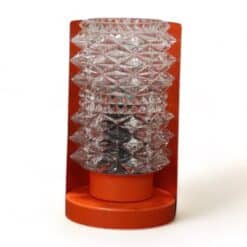
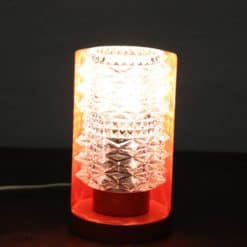
Italian Design Murano Glass and Orange Metal Table Lamp by Barovier, 1950s
Coat Racks
Chandeliers
Floor and Table Lamps`
Rustic Decor
Accent chairs

Sideboards, Credenzas and Buffets