Best Sellers
Antique Furniture and Decor
Antique Furniture and Decor
Antique and Vintage Seating
Antique Furniture and Decor
Antique Furniture and Decor
Antique Furniture and Decor
Antique Furniture and Decor
Antique Furniture and Decor
Antique Furniture and Decor
Antique Furniture and Decor
Antique Furniture and Decor
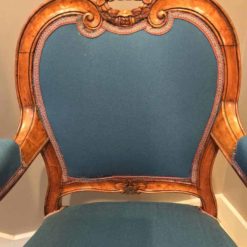
Baroque, Furniture, Style, Styylish History
Hollywood Regency and the Influence of 18th-Century European Furniture Styles
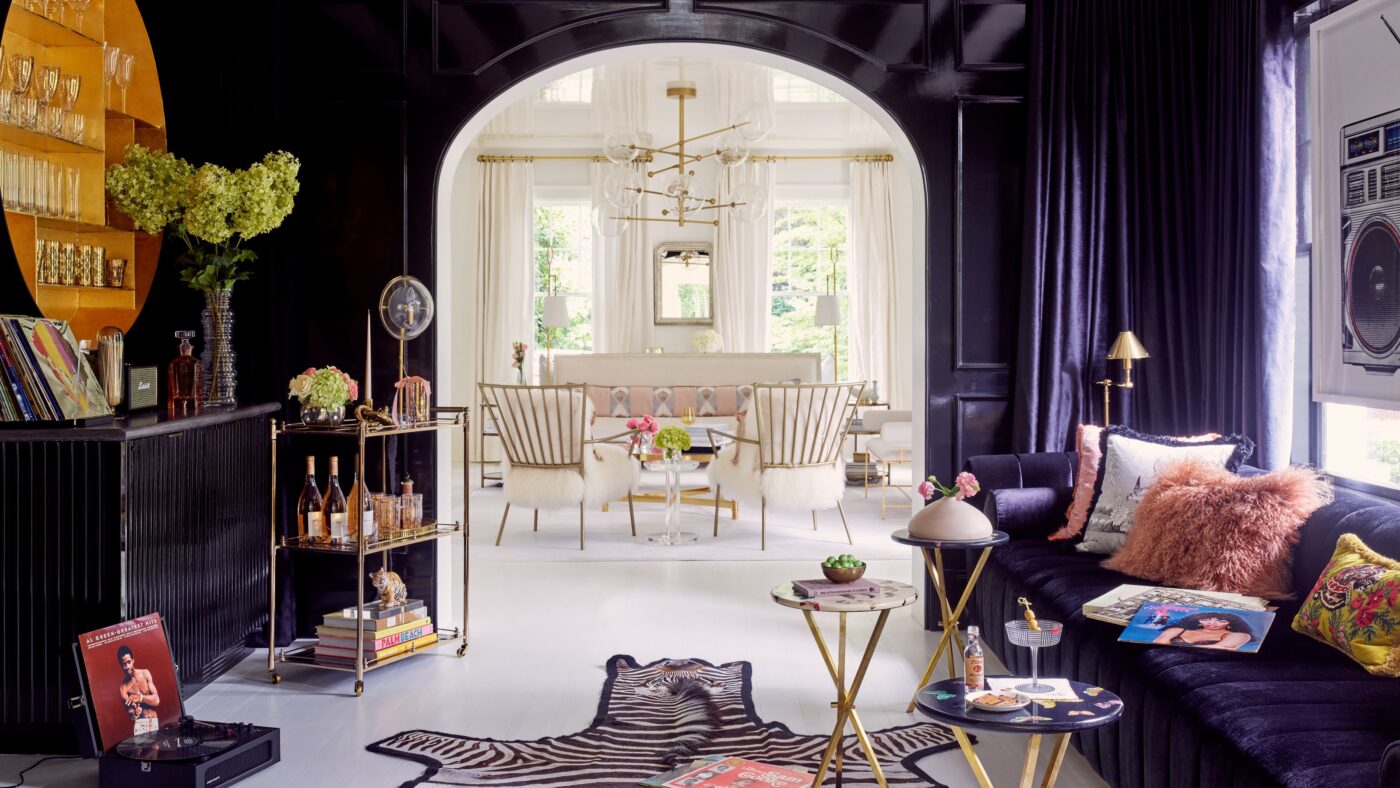
Hollywood Regency style is synonymous with glamour, drama, and unapologetic elegance. Defined by gilded finishes, mirrored surfaces, sculptural silhouettes, and luxurious materials, the style emerged during Hollywood’s Golden Age in the 1930s and flourished through the 1950s and 1960s.
Yet behind its cinematic sparkle lies a rich historical foundation. Hollywood Regency is deeply rooted in 18th-century European furniture styles, particularly French Rococo, Louis XV, Louis XVI, and Italian Baroque design.
Understanding this lineage reveals why Hollywood Regency interiors feel both theatrical and timeless — and why antique European furniture continues to shape contemporary luxury interiors today.
The Birth of Hollywood Regency Style
Hollywood Regency developed during a period when film studios constructed lavish sets designed to evoke wealth, romance, and fantasy. The private residences of stars such as Joan Crawford and Gloria Swanson became laboratories of glamour. Designers including Dorothy Draper, William Haines, and Maison Jansen crafted interiors that felt dramatic yet sophisticated.
Key characteristics of Hollywood Regency furniture include:
-
High-gloss lacquered finishes
-
Giltwood and gold leaf details
-
Mirrored and glass tabletops
-
Bold contrasts in black, white, and jewel tones
-
Curved silhouettes and sculptural forms
-
Luxurious textiles such as silk, velvet, and satin
While these elements feel distinctly 20th century, they were heavily inspired by the craftsmanship and ornamentation perfected in 18th-century Europe.
French Rococo (Louis XV): Curves, Asymmetry, and Ornament
The Louis XV style, often associated with Rococo design, flourished in mid-18th-century France. It introduced an aesthetic centered on movement and fluidity, characterized by:
-
Cabriole legs
-
Asymmetrical decoration
-
Flowing, organic carvings
-
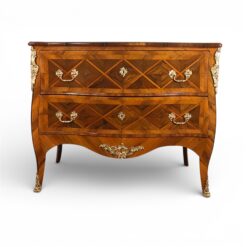
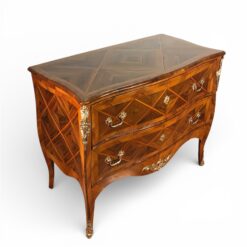
Bombe commodes
-
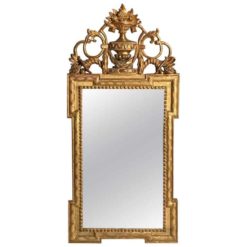
Giltwood mirrors and consoles
Rococo interiors were intimate yet opulent, designed for aristocratic salons rather than grand ceremonial halls.
Hollywood Regency revived these Rococo elements but simplified and exaggerated them for dramatic effect. Cabriole legs appeared on cocktail tables and chairs. Giltwood mirrors were scaled up and used as focal points. Curvilinear furniture softened modernist architecture.
The result was a Rococo revival filtered through 20th-century glamour — less delicate, more theatrical.
Today, authentic Louis XV furniture and Rococo giltwood pieces remain essential anchors in Hollywood Regency–inspired interiors.
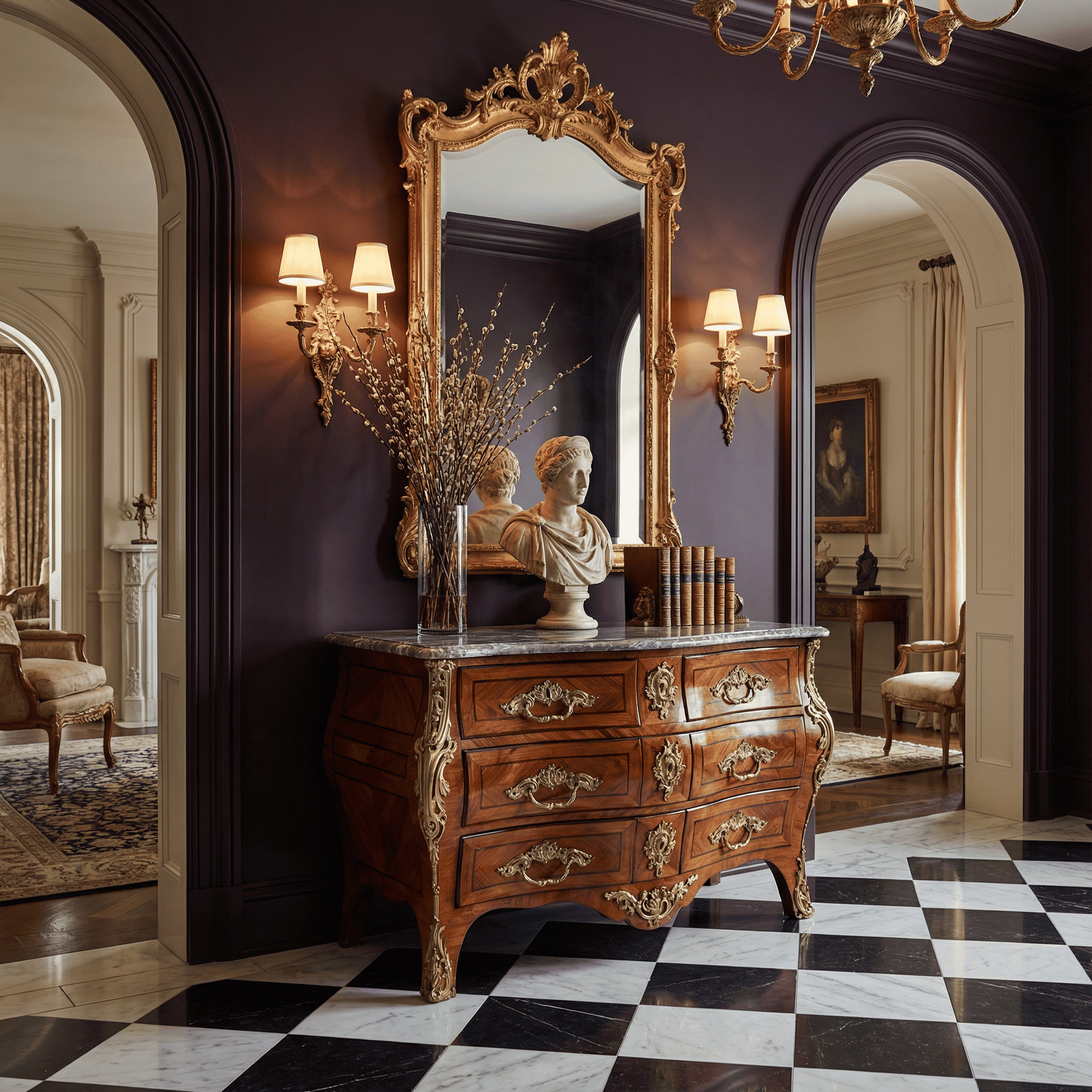
Louis XVI and Neoclassical Influence: Structure and Symmetry
In contrast to Rococo’s movement, Louis XVI furniture embraced neoclassical order. Inspired by ancient Greece and Rome, this late 18th-century style introduced:
-
Fluted, tapered legs
-
Symmetry and clean geometry
-
Carved rosettes and laurel wreaths
-
Refined, architectural proportions
-
Marble tops paired with gilt or painted frames
Hollywood Regency designers admired this structure. It provided a disciplined framework that could be modernized through bold finishes and textiles.
For example, a Louis XVI fauteuil might be lacquered in black or white and upholstered in vibrant velvet. A neoclassical console table could be paired with a dramatic mirrored wall. The classical silhouette remained intact, while the presentation became unmistakably glamorous.
This reinterpretation explains why 18th-century French neoclassical furniture integrates seamlessly into modern interiors — its proportions are timeless.
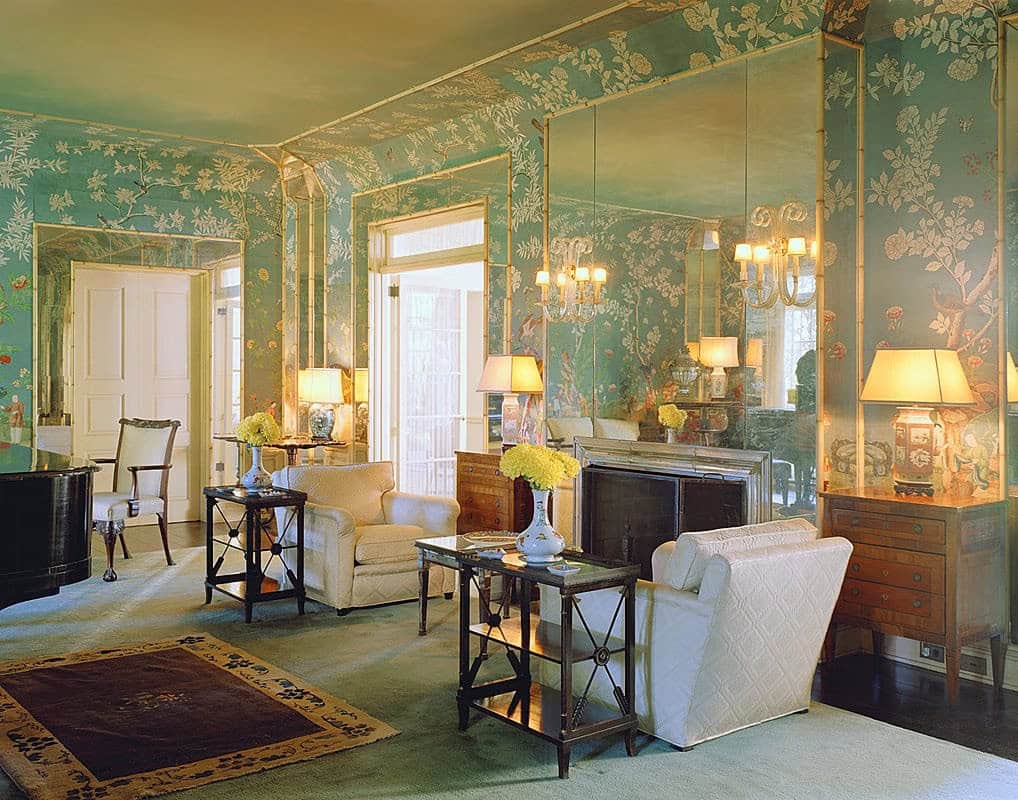
Italian Baroque: Monumentality and Drama
Another significant influence on Hollywood Regency was Italian Baroque furniture of the 17th and early 18th centuries. Baroque design embraced grandeur, contrast, and movement on a monumental scale.
Key characteristics include:
-
Deeply carved wood
-
Heavy gilding
-
Dramatic scrollwork
-
Architectural scale mirrors
-
Rich interplay of light and shadow
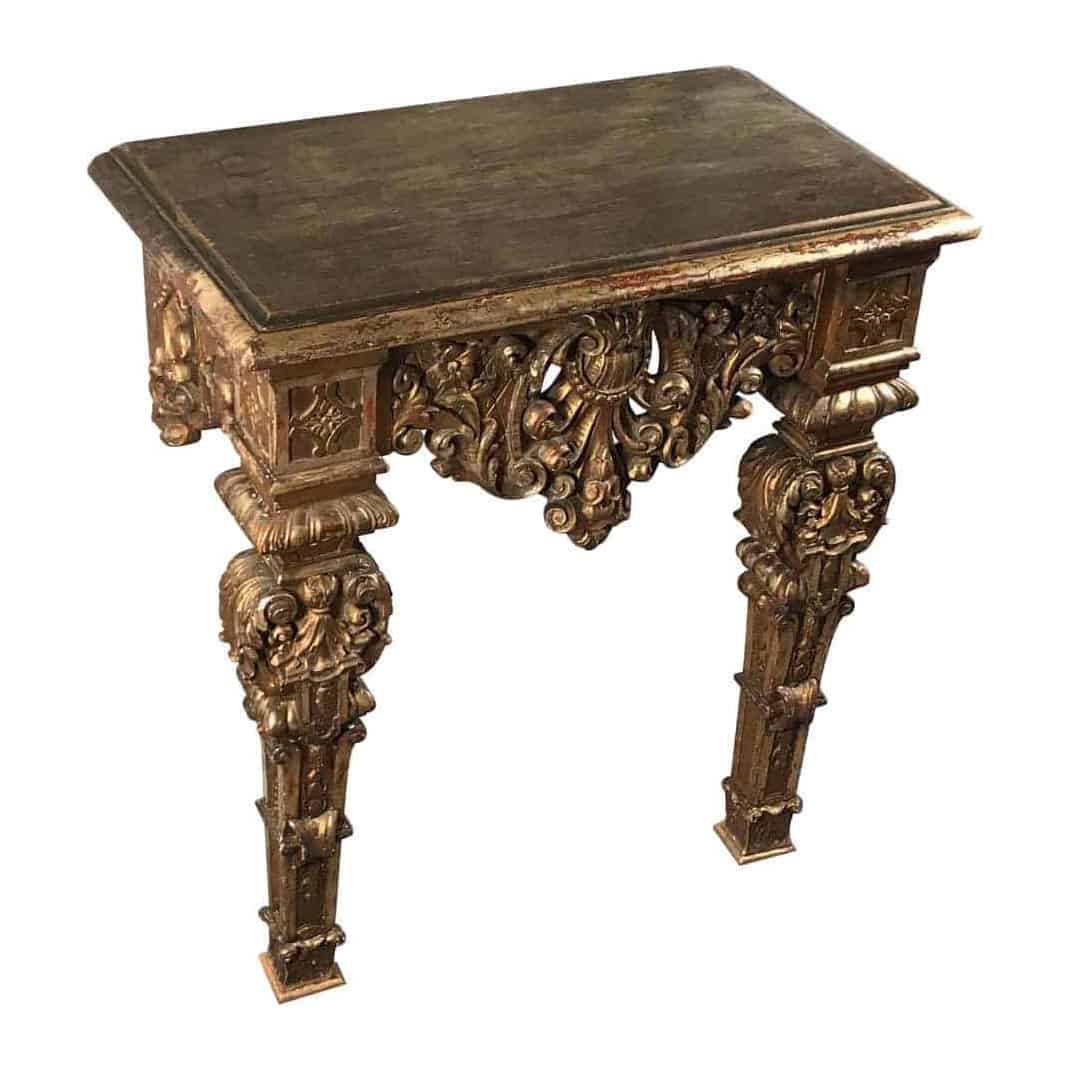
Hollywood Regency borrowed this sense of spectacle. Large carved mirrors, bold coffee tables with sculptural bases, and dramatic consoles all echo Baroque principles.
The use of mirrors and gold leaf in Hollywood Regency interiors reflects Baroque strategies for amplifying light and creating visual drama. In both styles, furniture is not merely functional — it is performative.
Maison Jansen and the European Connection
No discussion of Hollywood Regency would be complete without mentioning Maison Jansen, the legendary Paris-based decorating firm founded in 1880. Jansen worked internationally, blending French 18th-century styles with contemporary tastes.
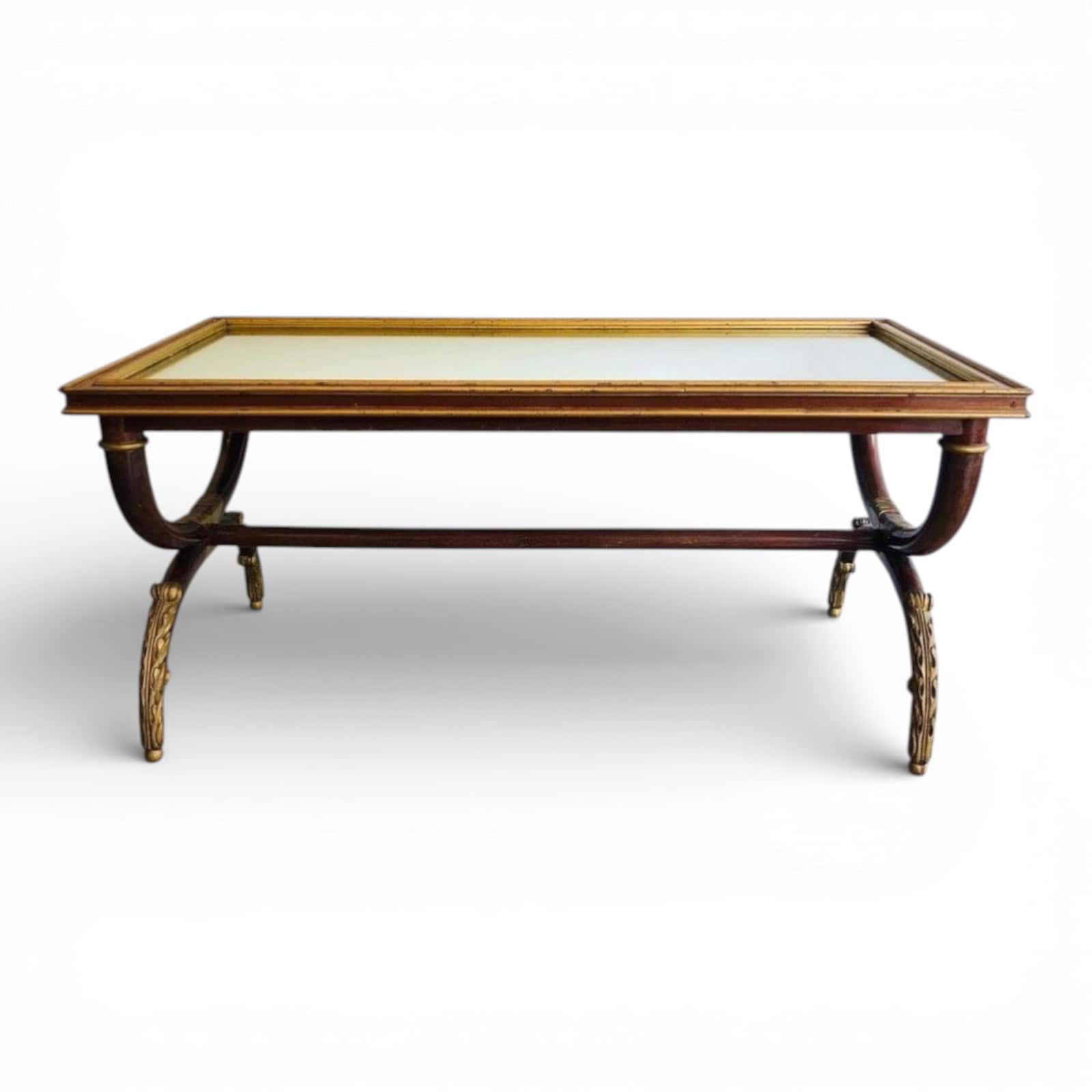
By the mid-20th century, Maison Jansen had become synonymous with glamorous interiors for royalty, socialites, and Hollywood elites. Their work demonstrated how French antique furniture, neoclassical forms, and modern materials could coexist beautifully.
This fusion solidified the connection between Hollywood Regency and authentic European decorative arts.
Why 18th-Century European Furniture Remains Relevant Today
One reason Hollywood Regency continues to resonate is that it validated the mixing of periods. It showed designers that:
-
Antique giltwood complements minimalist architecture
-
Rococo mirrors add softness to modern interiors
-
Neoclassical consoles ground contemporary rooms
-
European craftsmanship enhances modern luxury spaces
Today’s most compelling interiors are layered rather than uniform. Designers combine antique European furniture, Italian Baroque mirrors, and modern upholstery to create collected, timeless environments.
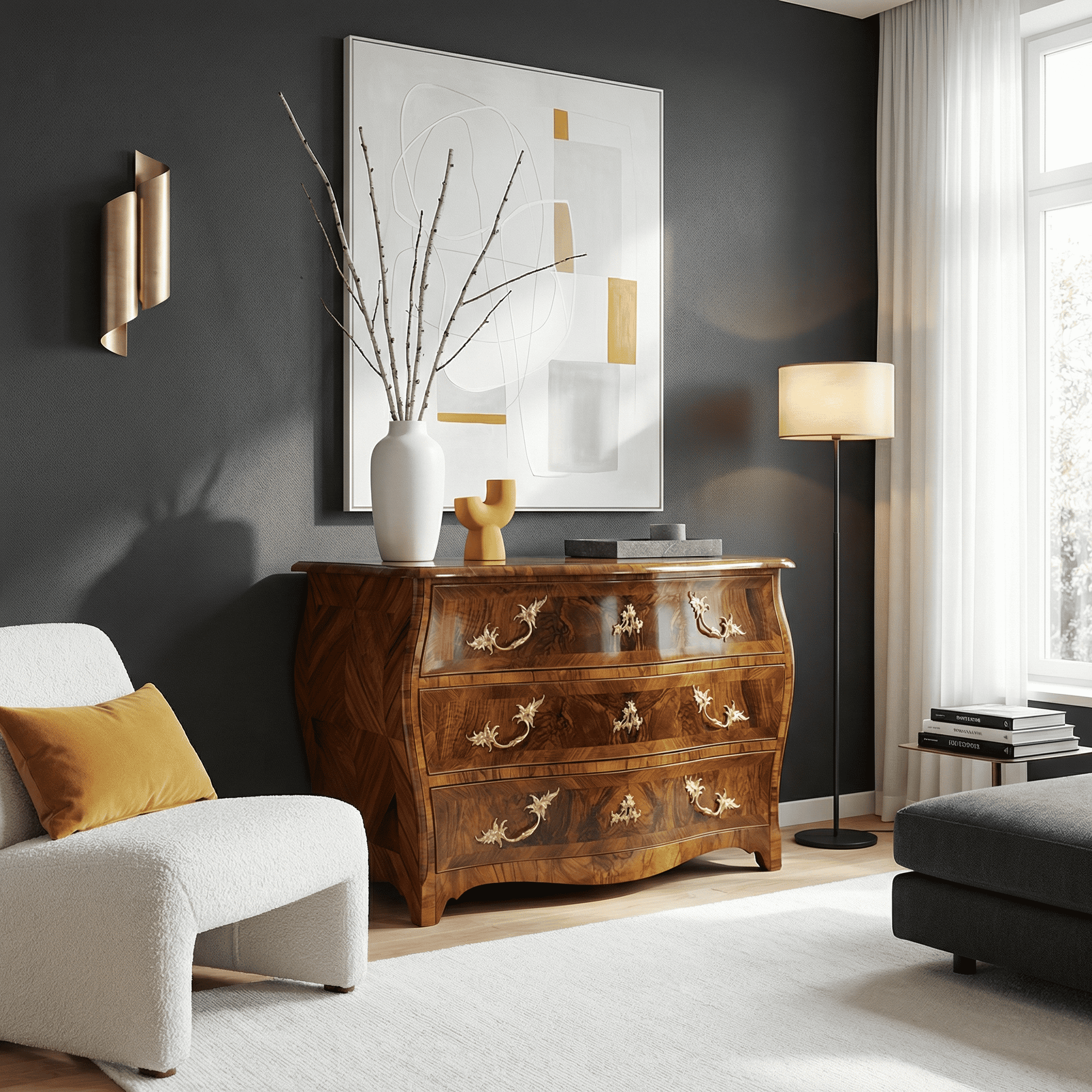
For collectors and interior designers sourcing through platforms like Styylish, this approach aligns perfectly with the growing demand for authenticity, craftsmanship, and sustainability.
Investing in 18th-century European furniture is not merely decorative — it is cultural and enduring.
Key Pieces That Bridge Hollywood Regency and 18th-Century Style
To incorporate Hollywood Regency glamour with historical authenticity, consider:
-
Louis XV giltwood mirrors as statement pieces
-
Bombe commodes with marble tops
-
Louis XVI console tables with fluted legs
-
Italian Baroque carved mirrors
-
Giltwood coffee tables inspired by French neoclassicism
-
Antique fauteuils reupholstered in bold contemporary fabrics
These pieces create dialogue between centuries while maintaining strong decorative presence.
The Enduring Allure of Glamour and Craftsmanship
At its core, Hollywood Regency is not simply about luxury — it is about reinterpretation. It celebrates the carving techniques, gilding traditions, and refined proportions developed in 18th-century Europe.
The style reminds us that true elegance is cyclical. Trends evolve, but craftsmanship endures.
Whether sourcing an antique French mirror, a Louis XVI console, or a carved giltwood coffee table, collectors continue to rediscover how 18th-century European furniture influences modern design.
Hollywood Regency may have been born in the film studios of Los Angeles, but its heart remains firmly rooted in the palaces and ateliers of Europe.
And that is precisely why it still captivates us today.

Silke Berlinghof
People also buy
Antique Furniture and Decor
Chests of Drawers, Dressers, Commodes

Clocks and Technical Instruments
Chests of Drawers, Dressers, Commodes
Antique Furniture and Decor
Antique Furniture and Decor
Antique Furniture and Decor
Antique Furniture and Decor
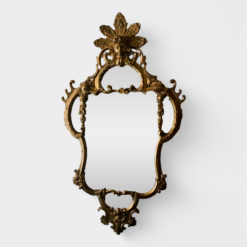
Antique Furniture and Decor
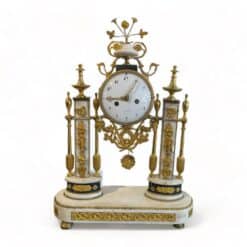
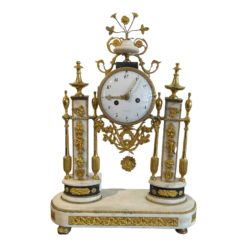
Clocks and Technical Instruments