
Best Sellers

Antique Furniture and Decor

Antique Furniture and Decor
Antique Furniture and Decor

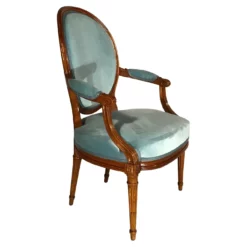
Antique and Vintage Seating
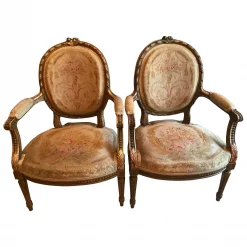
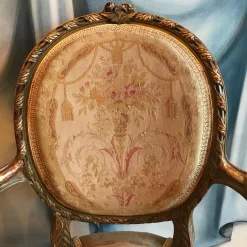
Accent chairs
Antique Furniture and Decor
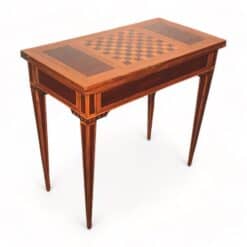
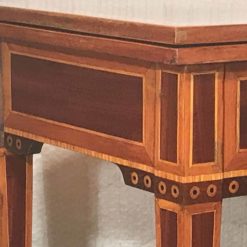
Neoclassical Louis XVI Game Table, South German 1780, Antique

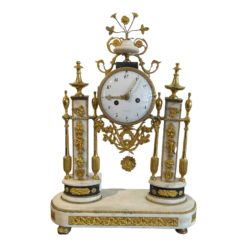
Clocks and Technical Instruments
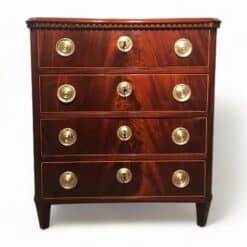
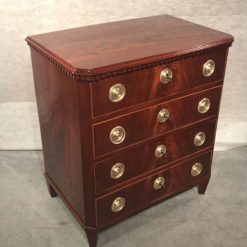
Antique Furniture and Decor
Antique Furniture and Decor


Antique Furniture and Decor
Antique Furniture and Decor
Antique Furniture and Decor
Antique Furniture Guide, Furniture, Styylish History
18th Century European Furniture Styles and Their Influence on America
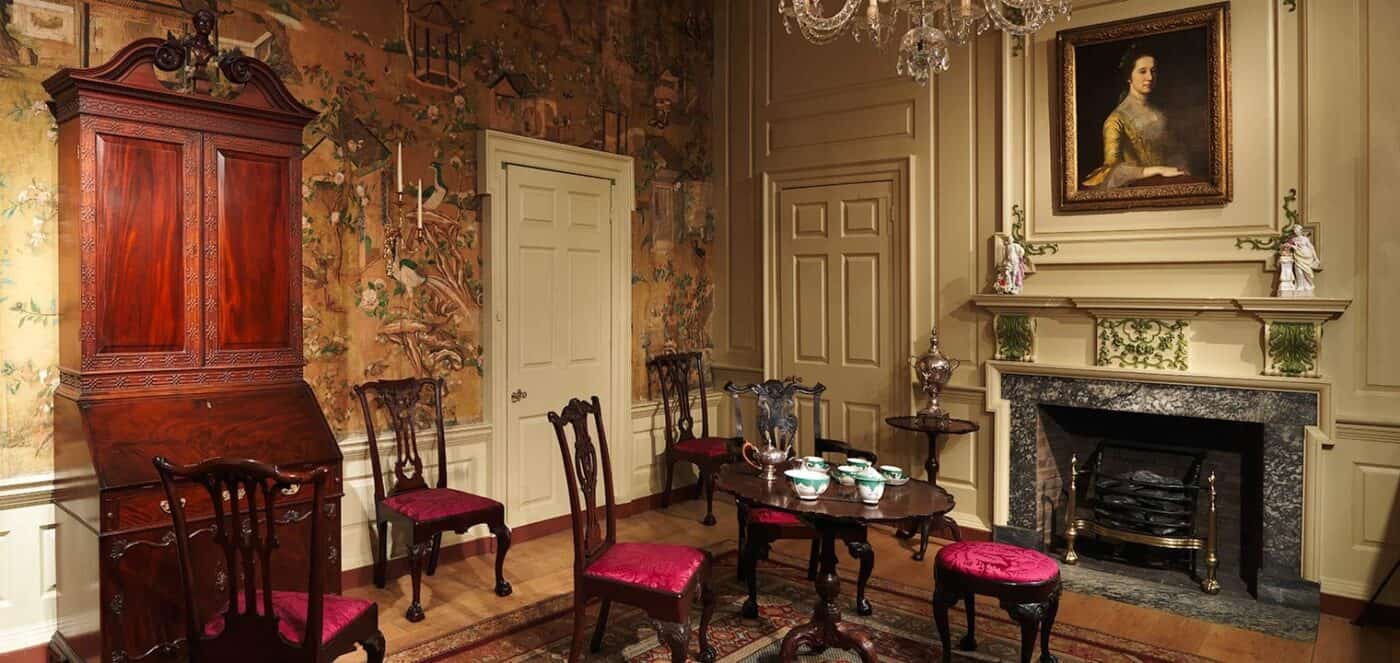
American furniture is often described through familiar labels such as Colonial, Queen Anne, Chippendale, or Federal. Behind these distinctly American styles lies a far more layered story. During the 18th century, multiple European furniture traditions and 18th century furniture styles converged in the colonies
Immigrants, craftsmen, merchants, and ideas crossed the Atlantic continuously throughout the century. As a result, cabinetmakers blended English structure, French refinement, German craftsmanship, Dutch practicality, and Scandinavian restraint into something entirely new.
Rather than copying European models directly, American artisans adapted them to local materials, regional tastes, and the realities of colonial life. The result was a uniquely American decorative language rooted in Europe yet transformed by the New World.
English 18th Century Furniture Styles in America
English styles established the structural foundation of early American furniture, but French design introduced elegance and refinement.
During the mid-18th century, wealthy colonial households embraced the influence of the Louis XV Rococo style. Curved cabriole legs, scrolling forms, carved ornament, and fluid silhouettes appeared in imported furnishings as well as American interpretations.
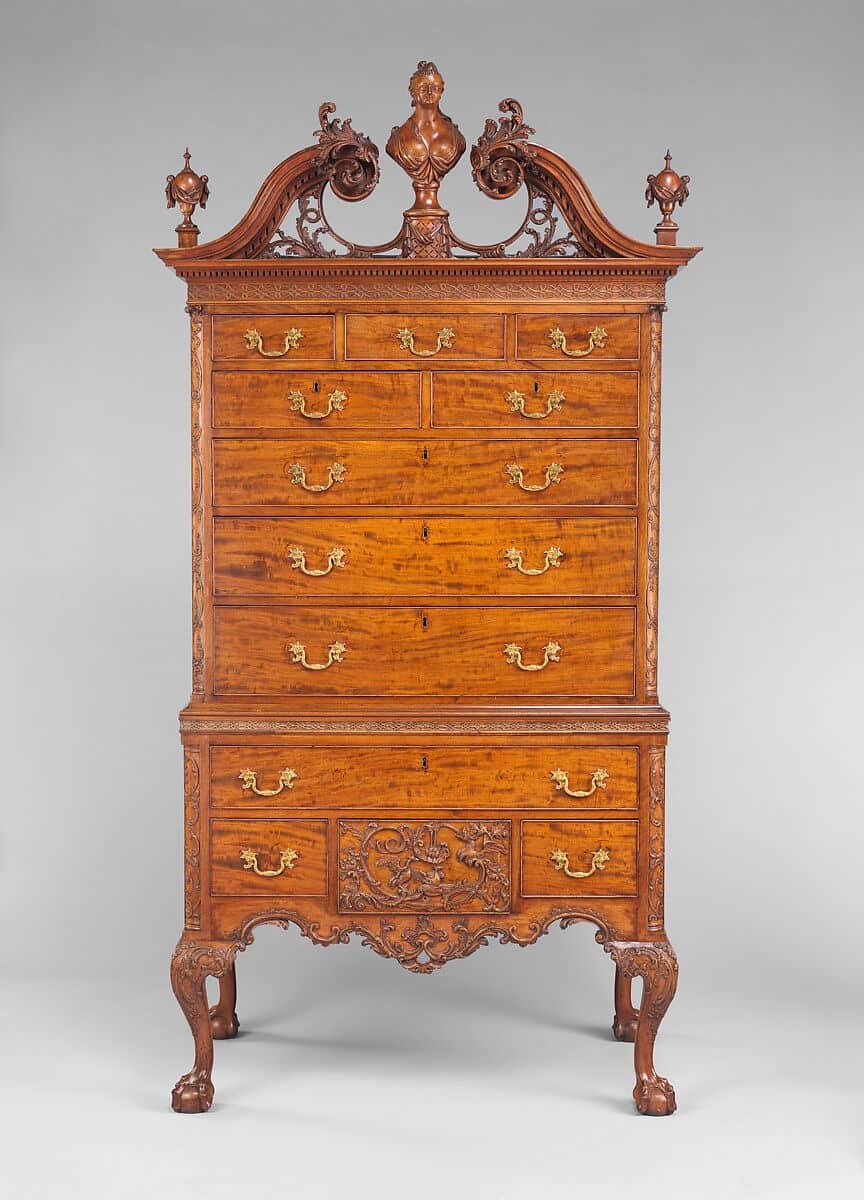
Following the American Revolution, French Neoclassicism became even more influential. The new republic admired France politically and culturally, and the restrained Louis XVI style aligned naturally with Enlightenment ideals.
Designs became lighter and more architectural. Straight fluted legs, geometric symmetry, and classical motifs defined the emerging Federal style. American makers such as Duncan Phyfe helped popularize this refined aesthetic in major cities.
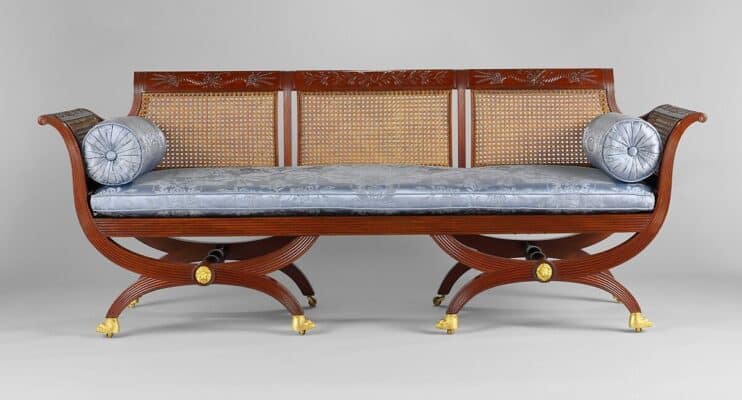
French influence elevated American furniture beyond practical craftsmanship and connected it to broader European artistic movements.
land.
French 18th Century Furniture Styles and Neoclassicism
While English styles provided structure, French furniture introduced refinement, sophistication, and a more decorative sensibility to American interiors.
In the mid-18th century, the curving asymmetry of the Louis XV Rococo style influenced wealthy colonial households, particularly through imported luxury goods. Carved cabriole legs, scrolling forms, gilt decoration, and fluid silhouettes began appearing in American interpretations of fashionable European taste.
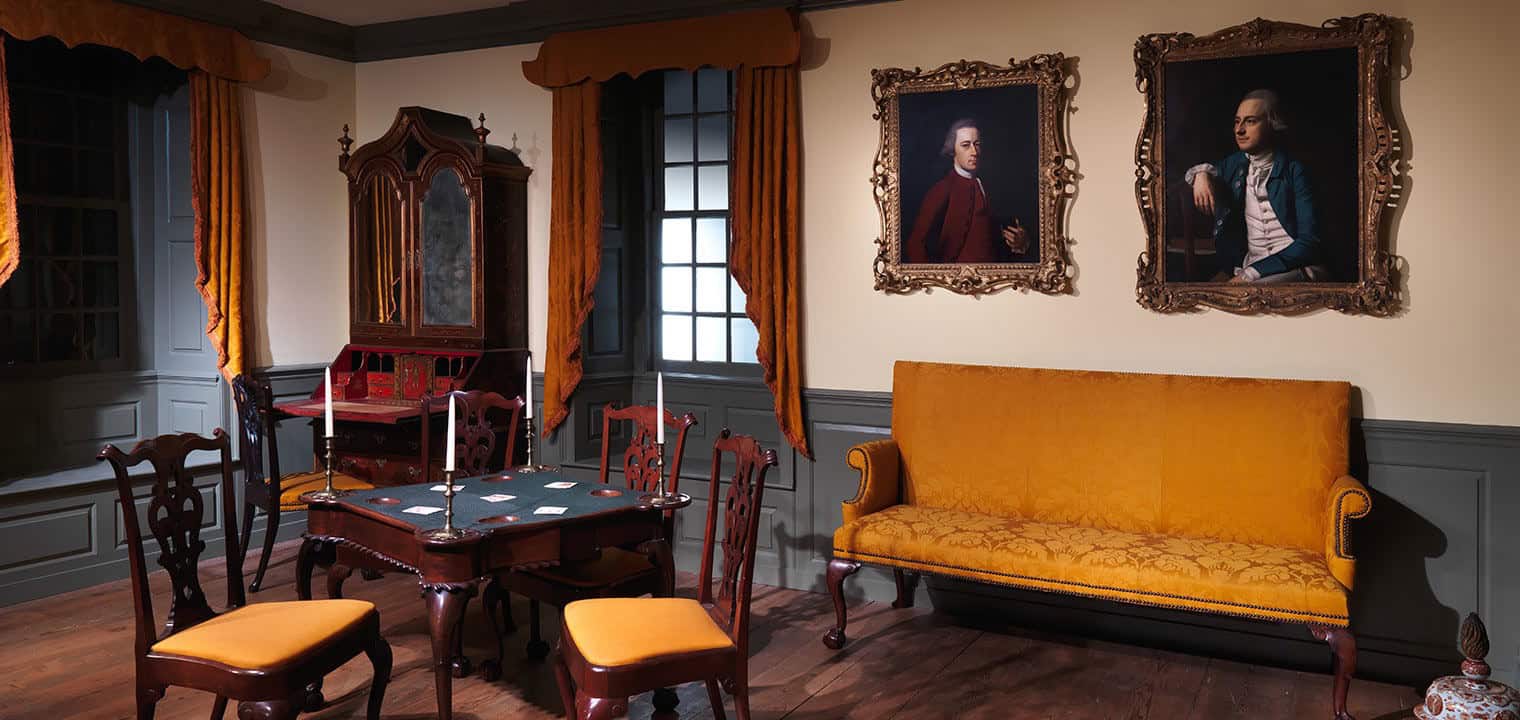
After the American Revolution, however, French Neoclassicism became especially influential. The young republic admired France not only politically, but culturally. The restrained elegance of the Louis XVI style — inspired by ancient Greece and Rome — aligned perfectly with the ideals of the Enlightenment and the emerging American identity.
Straight fluted legs, classical motifs, geometric symmetry, and lighter proportions became hallmarks of the Federal style that flourished in the late 18th century. Designers such as Duncan Phyfe helped popularize this refined aesthetic in American cities.
French influence elevated American furniture from purely practical craftsmanship into a more cosmopolitan decorative art, linking the new nation to broader European intellectual and artistic movements.
German and Austrian 18th Century Furniture Styles
German-speaking regions of Europe contributed some of the most distinctive influences to early American furniture making.
Large numbers of German immigrants settled in Pennsylvania and surrounding colonies during the 18th century. They brought strong woodworking traditions along with regional decorative styles rooted in Central European Baroque and Rococo design.
Pennsylvania German furniture became known for painted surfaces, bold carving, elaborate inlay, and highly practical forms. Chests, cupboards, and storage pieces often combined folk-inspired decoration with exceptional craftsmanship.
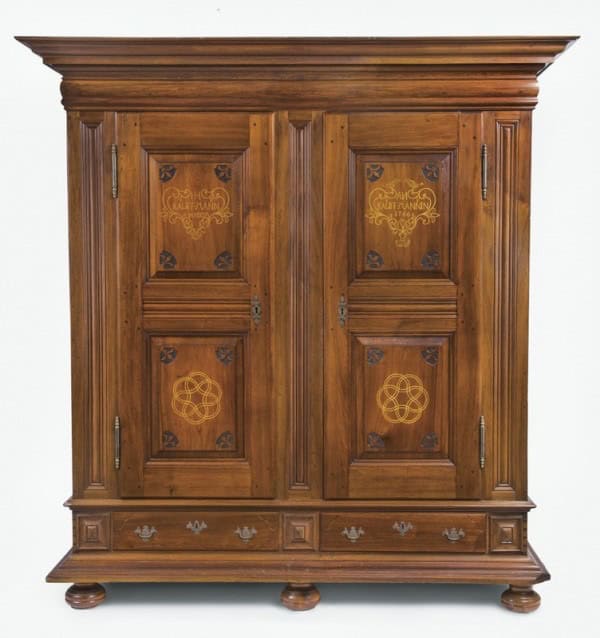
South German and Austrian traditions also introduced sophisticated veneer work and elegant proportions. Walnut veneers, marquetry, and bombe forms appeared in many regional American interpretations.
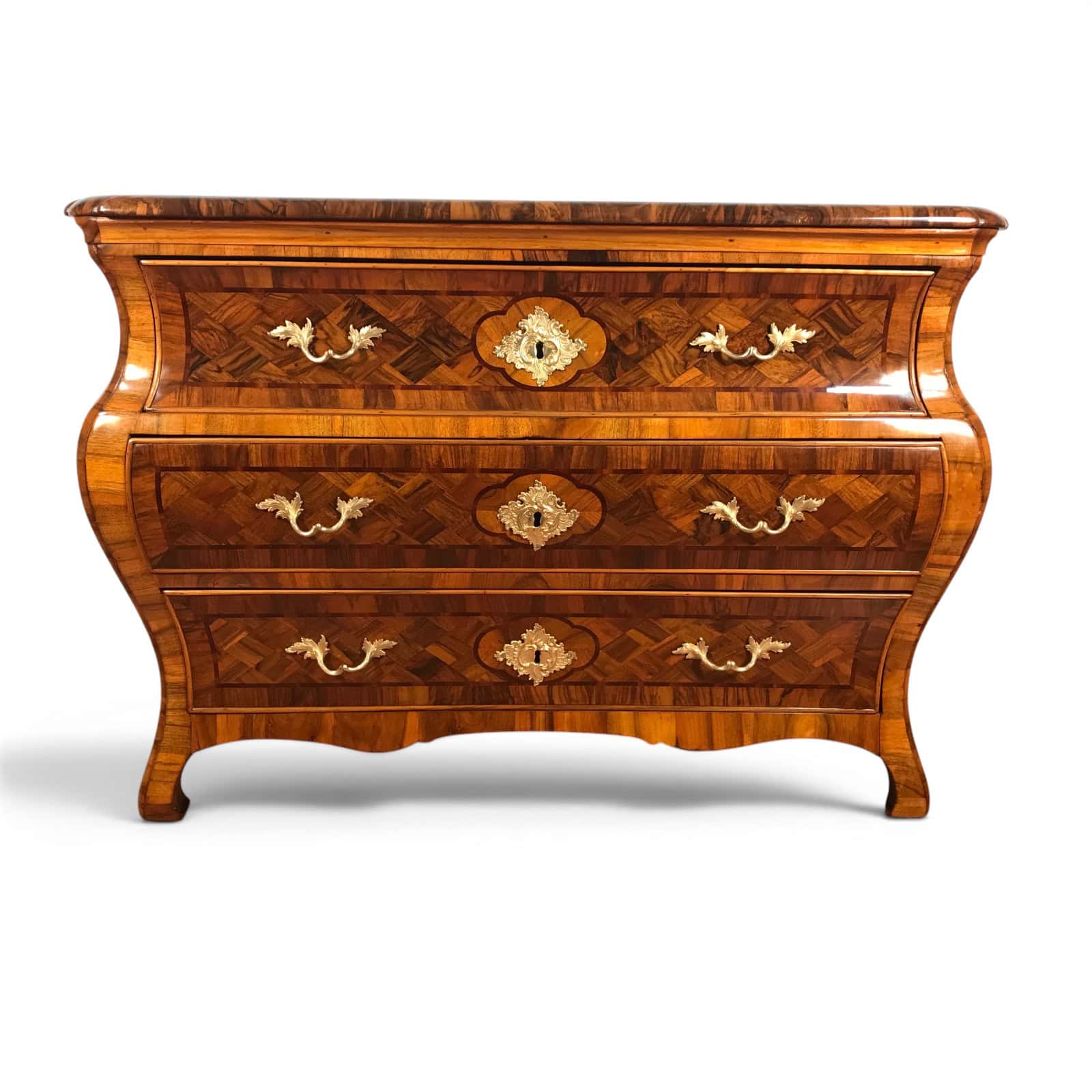
These traditions added depth and diversity to American decorative arts. Instead of producing a single unified style, immigrant craftsmen created rich regional variations throughout the colonies.
Dutch Practicality and Regional Influence
Dutch settlers also played an important role in shaping early American furniture, particularly in New York and the Hudson River Valley.
Dutch furniture traditions emphasized practicality, craftsmanship, and restrained ornamentation. Cupboards, kas cabinets, gateleg tables, and practical storage forms reflected the domestic needs of colonial households while maintaining strong ties to European precedents.
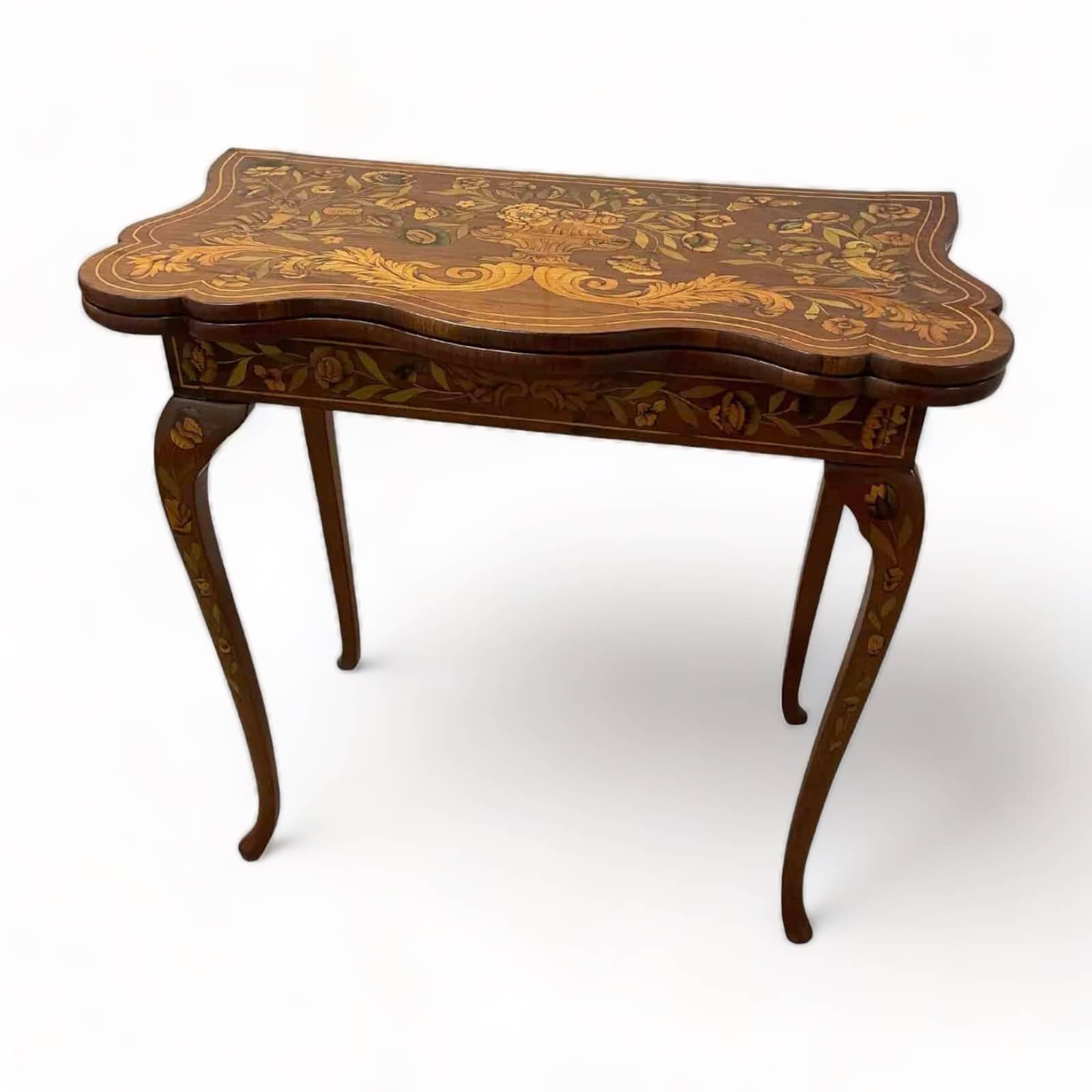
The Dutch influence is particularly visible in the emphasis on functional case furniture and robust joinery techniques. While perhaps less ornamental than French or English styles, Dutch furniture traditions helped establish the practicality and durability that became central characteristics of American furniture design.
Regional interpretations in areas influenced by Dutch settlement often blended English and Continental European ideas into highly distinctive local forms.
Swedish Gustavian Restraint
Although Swedish influence on early American furniture was less direct, the Gustavian style offers an important example of how European ideas evolved across borders before eventually shaping broader decorative tastes.
Developed during the reign of King Gustav III in late 18th-century Sweden, Gustavian furniture simplified the French Louis XVI style into something lighter, softer, and more restrained. Pale painted finishes, delicate carvings, muted ornamentation, and elegant proportions reflected Scandinavian interpretations of French Neoclassicism.
This quieter aesthetic resonates strongly with contemporary interiors today because of its timeless simplicity and understated elegance.
Gustavian furniture demonstrates how European design was never static. Ideas traveled continuously across the continent before crossing the Atlantic, creating layers of reinterpretation that ultimately contributed to the evolution of American taste.
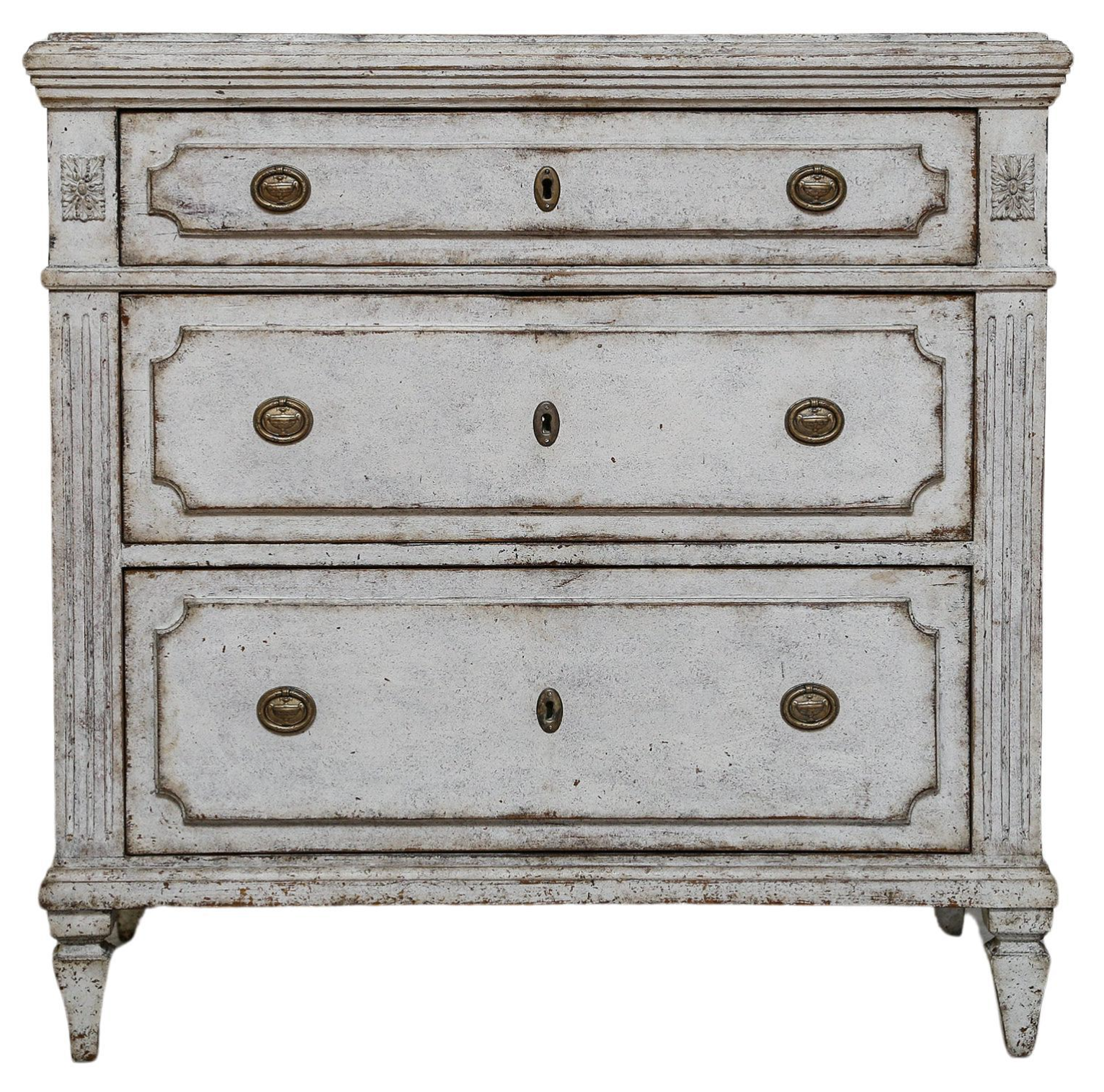
Together, these European 18th century furniture styles shaped the visual language of early American interiors.
The American Synthesis
What makes early American furniture so compelling is not simply its European origins, but the way those influences were transformed through adaptation.
American cabinetmakers rarely copied European furniture exactly. Imported styles were modified according to:
- local materials,
- regional craftsmanship traditions,
- economic realities,
- and the practical needs of colonial life.
The abundance of native woods such as cherry, maple, walnut, and pine influenced both construction and appearance. Ornamentation was often simplified. Proportions became lighter and more restrained. Furniture needed to function within a rapidly changing society that valued both craftsmanship and practicality.
At the same time, immigrant artisans from multiple European regions worked side by side in American cities and rural communities. Their combined knowledge produced furniture that reflected a uniquely transatlantic exchange of ideas.
By the end of the 18th century, American furniture had evolved into something distinct — neither entirely European nor entirely separate from it.
A Lasting Legacy
The influence of these European traditions still shapes interiors and furniture design today. Federal symmetry, French Neoclassical elegance, Pennsylvania German craftsmanship, and Gustavian restraint all remain remarkably relevant in contemporary interiors.
Viewing early American furniture through its European influences reveals a far richer story. The history of American furniture is not one of imitation alone. It is a story of adaptation, exchange, and creative reinterpretation across borders and generations.
The enduring appeal of 18th century European furniture styles lies in their craftsmanship, proportion, and cultural exchange. Every piece reflects not only craftsmanship, but also the movement of ideas, materials, and traditions across the Atlantic world.

Silke Berlinghof
People also buy
Antique Furniture and Decor
Antique Furniture and Decor
Accent chairs
Antique Furniture and Decor
Antique Furniture and Decor
Antique Furniture and Decor
Antique Furniture and Decor

Chests of Drawers, Dressers, Commodes
Antique Furniture and Decor
Antique Furniture and Decor
Antique Furniture and Decor
Antique Furniture and Decor