
Best Sellers


Rugs and Carpets
Chests of Drawers, Dressers, Commodes

Clocks and Technical Instruments
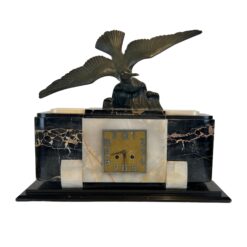
French Art Deco Mantel Clock with Albatross Sculpture, Circa 1930


Sideboards, Credenzas and Buffets
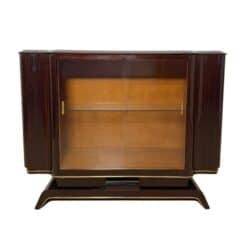
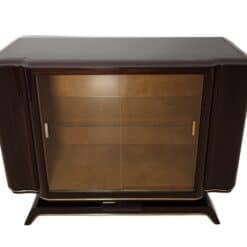
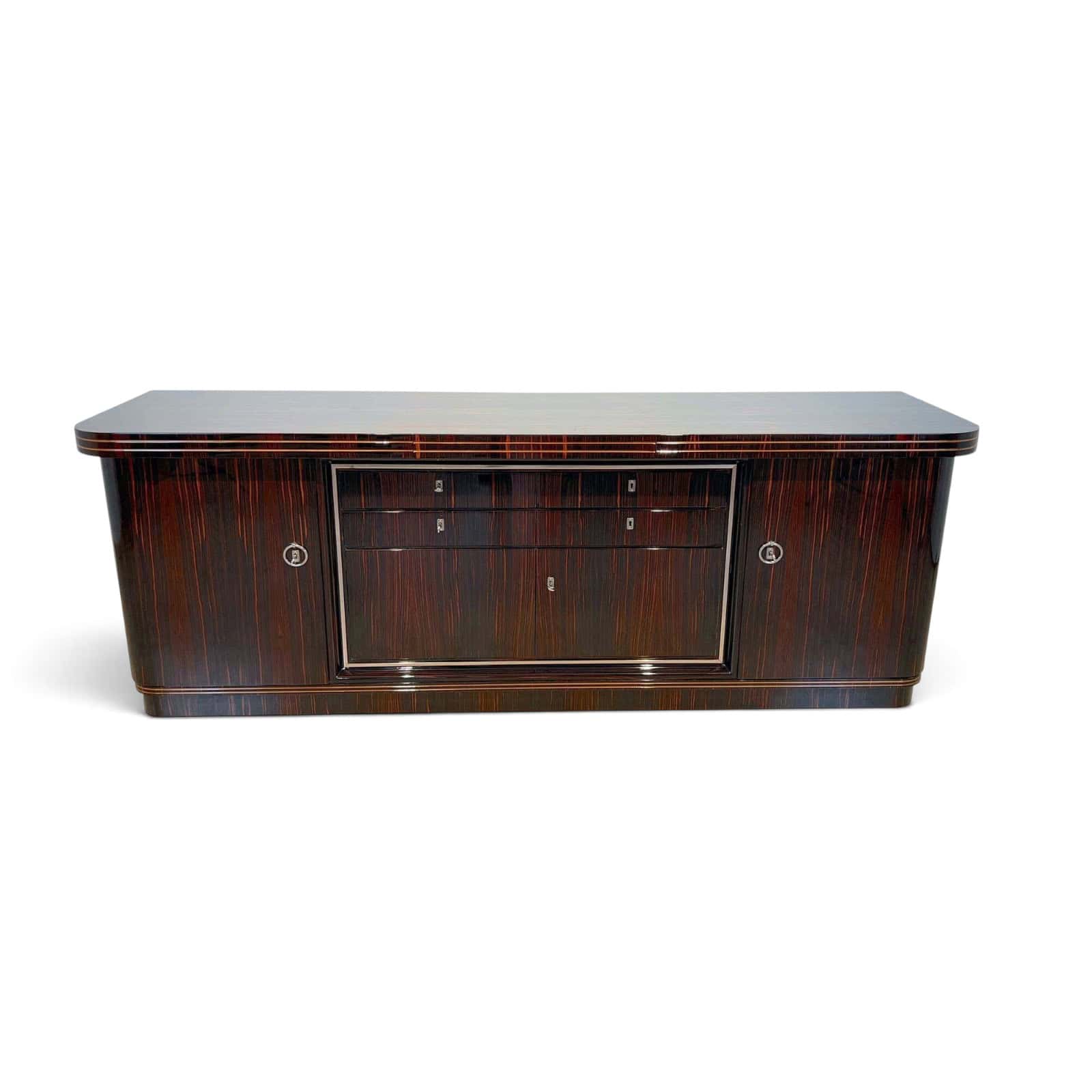
Art Deco Vitrine Sideboard, Macassar Ebony, Maple, Brass, Paris circa 1930





Bar Carts and Bar Furniture
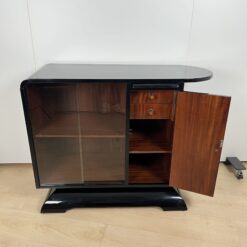
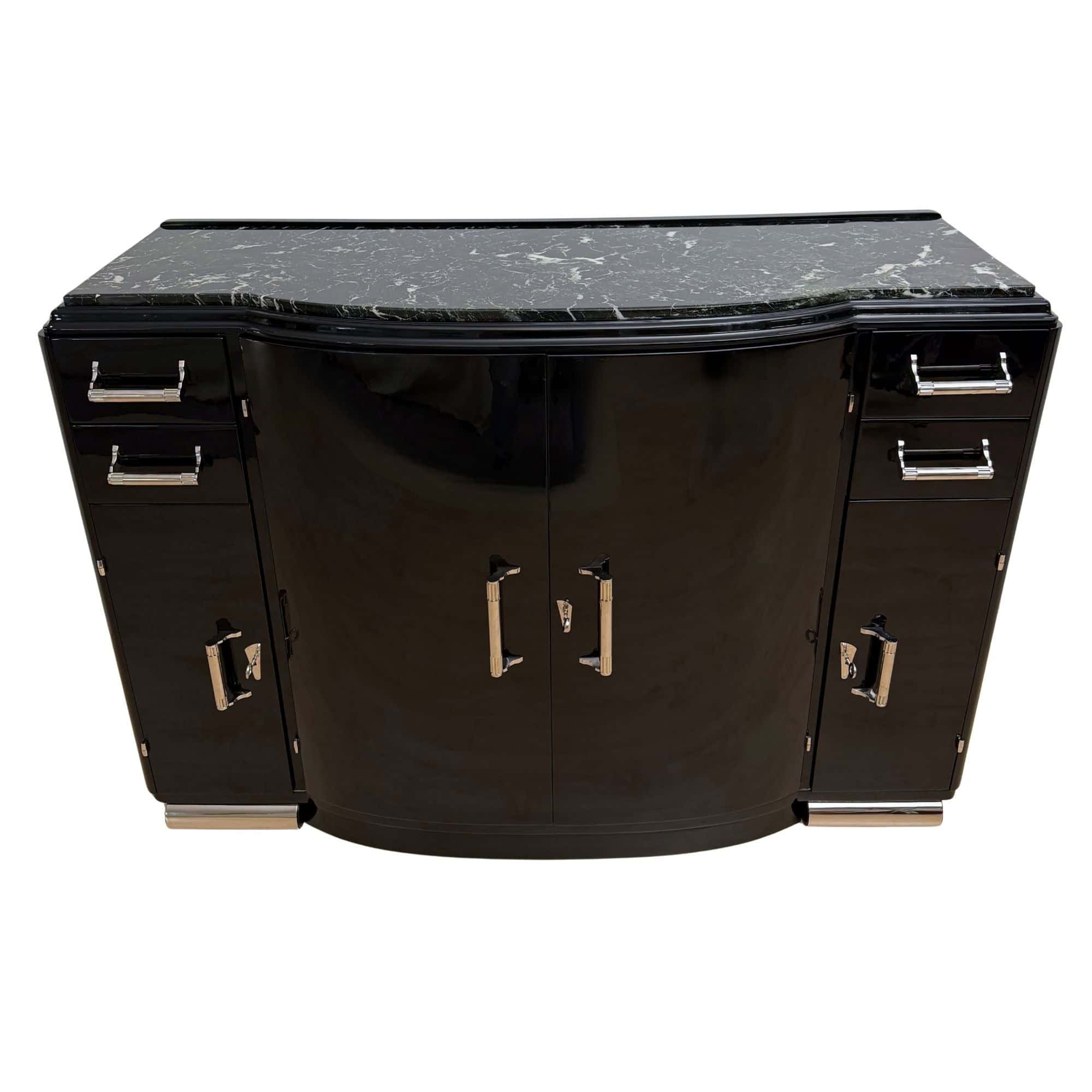
Art Deco Half Cabinet, Black Lacquer, Mahogany, France circa 1930
Furniture, Style, Styylish History
Beyond Art Deco: The Return of Classical Elegance in 1930s and 1940s France
French Art Deco: Beyond the Jazz Age
Walk through any antiques fair or browse an online marketplace, and you’ll quickly notice a familiar pattern. Elegant French furniture, refined lighting, sophisticated mirrors, and beautifully crafted decorative objects from the 1930s and 1940s are almost invariably described as Art Deco. While the label is not incorrect, it often tells only part of the story.
By the middle of the 1930s, French decorative arts had entered a fascinating new chapter. The exuberance that had defined the Jazz Age was giving way to something quieter, more architectural, and arguably more enduring. Luxury was no longer expressed through elaborate ornament alone, but through exceptional materials, impeccable craftsmanship, and perfectly judged proportions. Rather than abandoning Art Deco, many of France’s finest designers refined it, creating interiors that remain remarkably contemporary nearly a century later.
Understanding this evolution not only enriches our appreciation of French design but also explains why so many pieces from this period feel as comfortable in today’s interiors as they did in the grand Parisian apartments for which they were originally conceived.
Art Deco Was Never One Style
The term Art Deco is itself something of a simplification. It derives from the Exposition Internationale des Arts Décoratifs et Industriels Modernes, held in Paris in 1925, an exhibition that celebrated modern craftsmanship and established France once again as the world’s leading centre for luxury decorative arts. Despite its later reputation as a single, clearly defined style, the exhibition showcased a remarkably diverse range of artistic approaches, united less by appearance than by a shared commitment to originality and modern design.
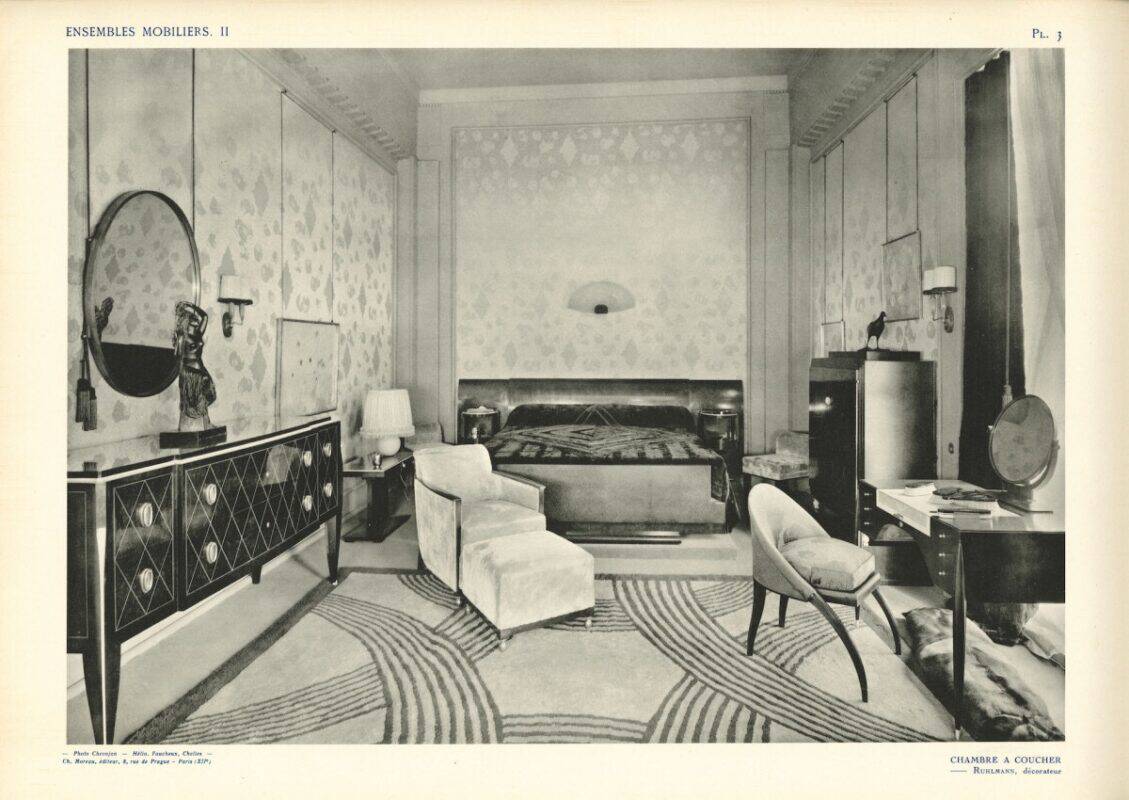
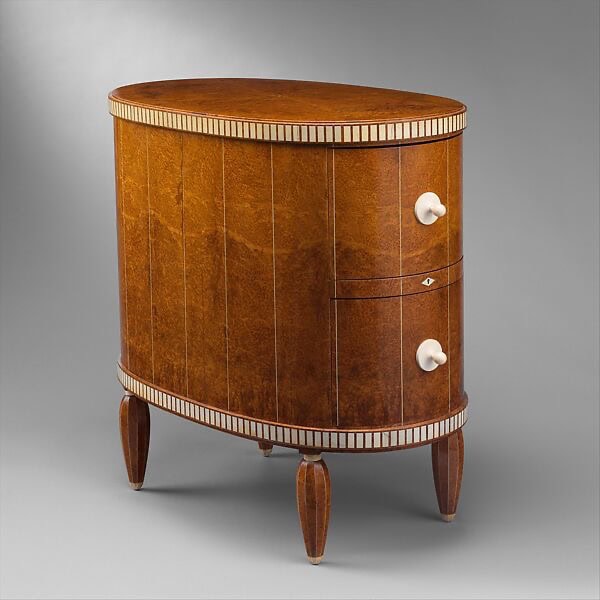
The furniture of Émile-Jacques Ruhlmann, the glass of René Lalique, the metalwork of Edgar Brandt, and the interiors created by countless French designers demonstrated that modernity could take many forms. Rich tropical woods, lacquer, ivory, chrome, parchment, bronze, and geometric decoration all coexisted within the same creative movement.
What united them was not a single visual language, but an ambition to redefine luxury for the twentieth century.
A Changing World
The optimism of the 1920s could not last indefinitely. The economic consequences of the Great Depression, combined with changing ideas about architecture, domestic life, and modern living, encouraged designers to reconsider the meaning of elegance.
Ornament became more restrained.
Interiors became lighter.
Furniture became more architectural.
Decoration increasingly emerged from the quality of materials and the precision of craftsmanship rather than applied embellishment.
This was not a rejection of luxury but a redefinition of it.
French designers remained committed to exceptional cabinetmaking and artisanal excellence, yet many began looking beyond the decorative exuberance that had characterised the previous decade.
Looking Back to Move Forward
One of the most fascinating developments of the late 1930s was the renewed appreciation for French classicism.
Rather than reproducing eighteenth-century furniture, designers revisited the principles that had made it timeless: symmetry, proportion, balance, and architectural clarity. Inspiration came particularly from the Directoire and Empire periods, whose restrained geometry and disciplined compositions offered an elegant counterpoint to the more decorative tendencies of the 1920s.
The result was furniture that felt both historic and unmistakably modern.
Columns reappeared, but stripped of unnecessary ornament.
Bronze mounts became more discreet.
Lacquer was used to create luminous surfaces rather than dramatic contrasts.
Classical proportion replaced visual spectacle.
This subtle transformation explains why many French interiors from the late 1930s and 1940s possess an enduring serenity that continues to resonate with contemporary designers.
The Designers Who Defined a New Luxury
No discussion of this evolution would be complete without Jean-Michel Frank.
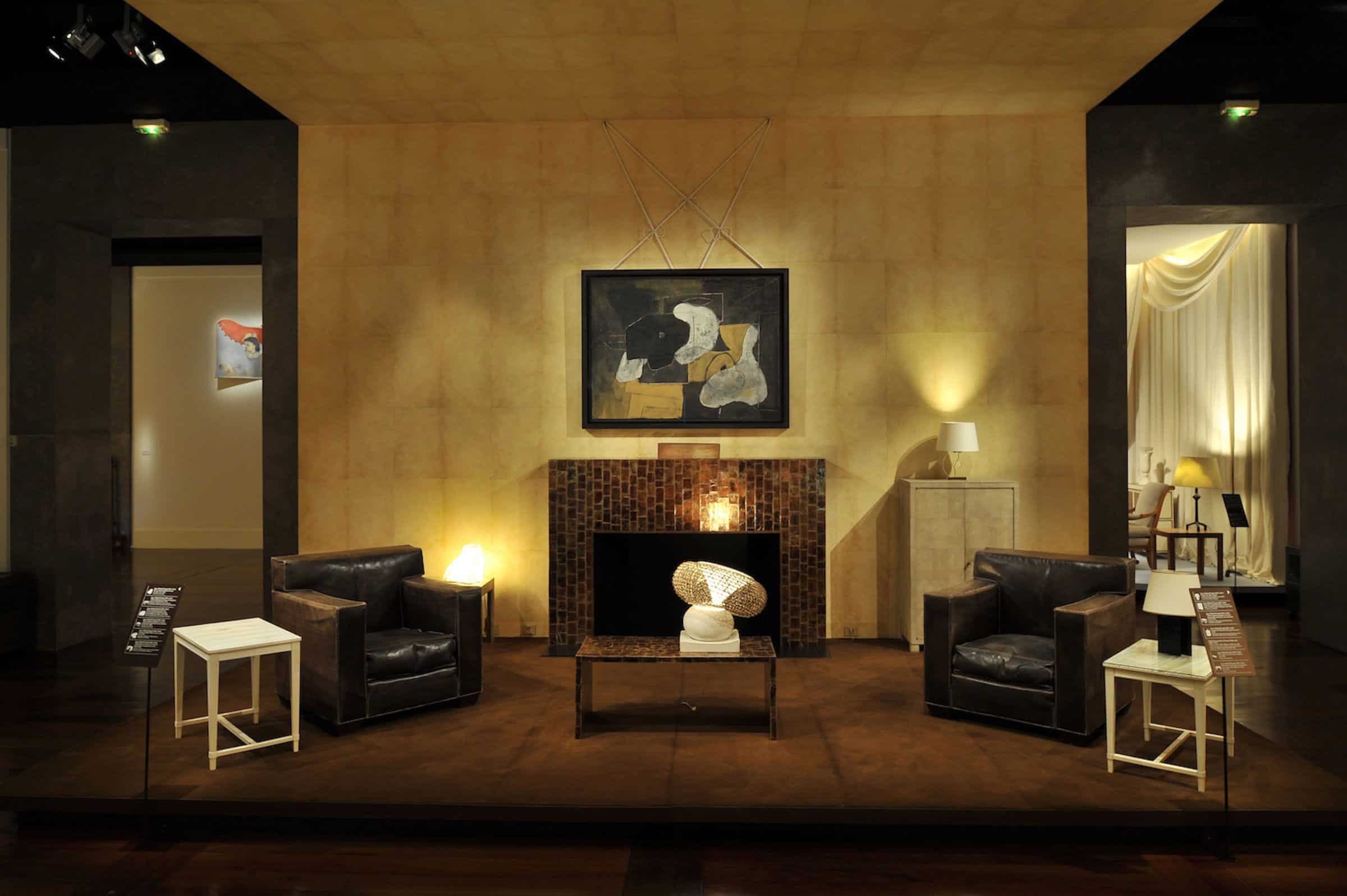
Frank famously believed that true luxury resided in restraint. His interiors rejected unnecessary decoration in favour of exquisite materials such as parchment, shagreen, pale oak, plaster, and lacquer. Every object was carefully considered, every proportion meticulously refined. His influence reached far beyond furniture, helping redefine what sophisticated modern living could look like.
At the same time, André Arbus pursued a different but equally compelling vision. Trained in a family of cabinetmakers and educated at the École des Beaux-Arts in Toulouse, Arbus combined classical scholarship with exceptional craftsmanship. By the mid-1930s, he had become one of the leading advocates of what critics described as a return to French tradition and quality, reinterpreting historical forms with remarkable elegance rather than simply copying them.
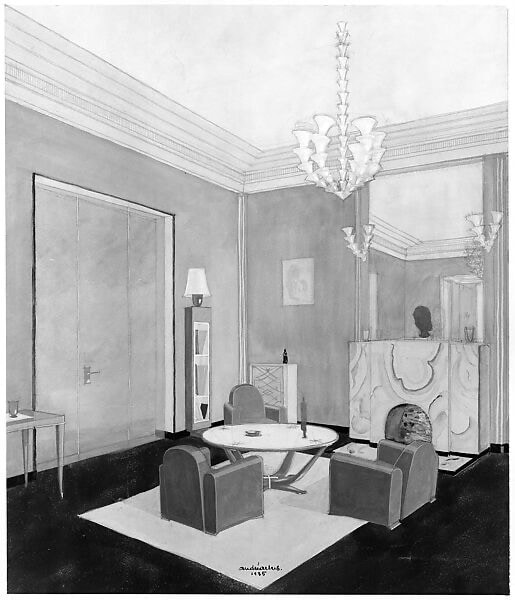
Other influential figures—including Jacques Adnet, Gilbert Poillerat, and the celebrated decorating house Maison Jansen—likewise demonstrated that modern interiors could embrace classical proportion without sacrificing innovation. Their work blurred the boundaries between Art Deco, French Modern, and the emerging neoclassical revival, creating interiors that remain among the most admired of the twentieth century.
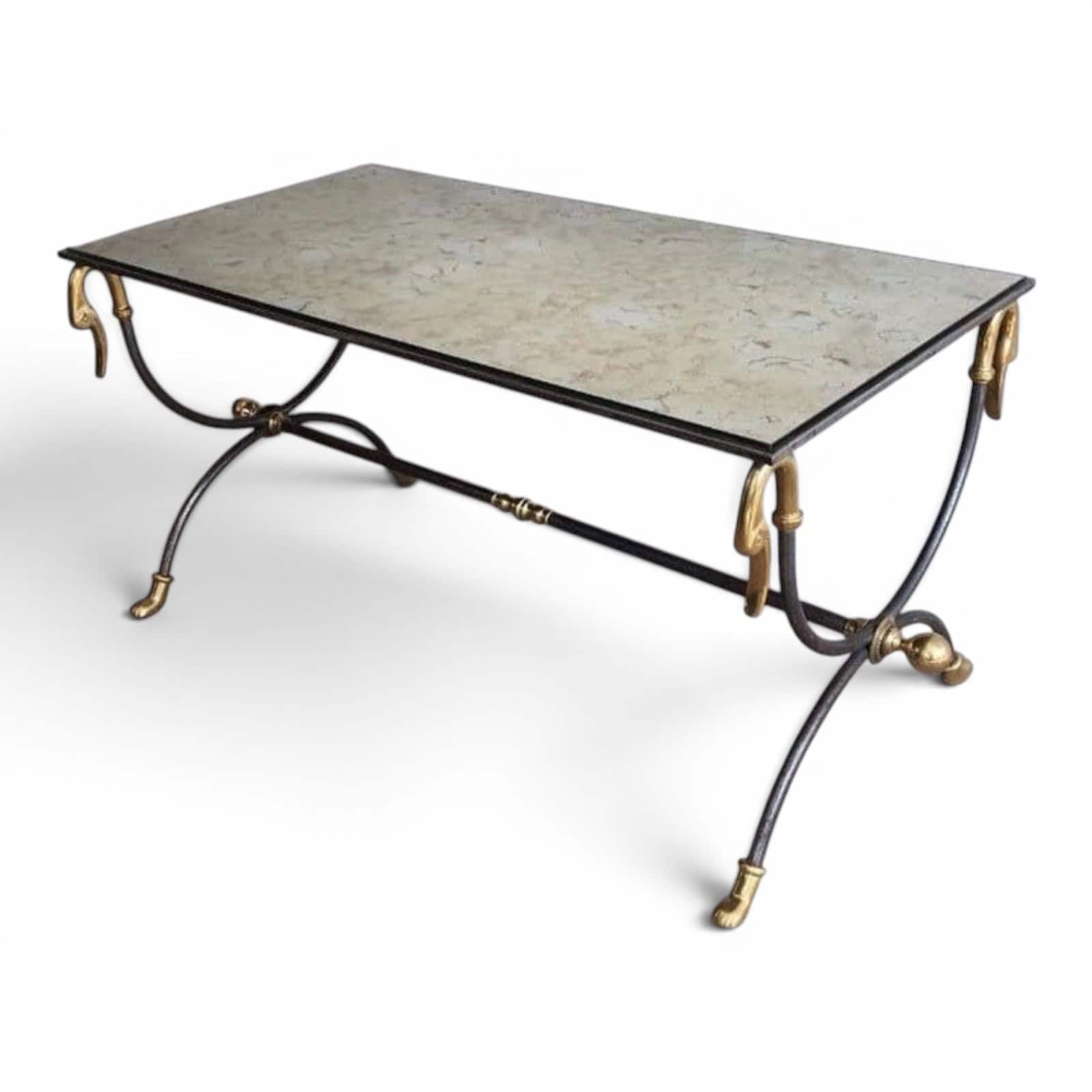
Why We Still Call It Art Deco
Today, auction houses, galleries, and dealers frequently describe these works simply as Art Deco. From a practical perspective, the term is understandable. It is widely recognised and helps place objects within a familiar historical framework.
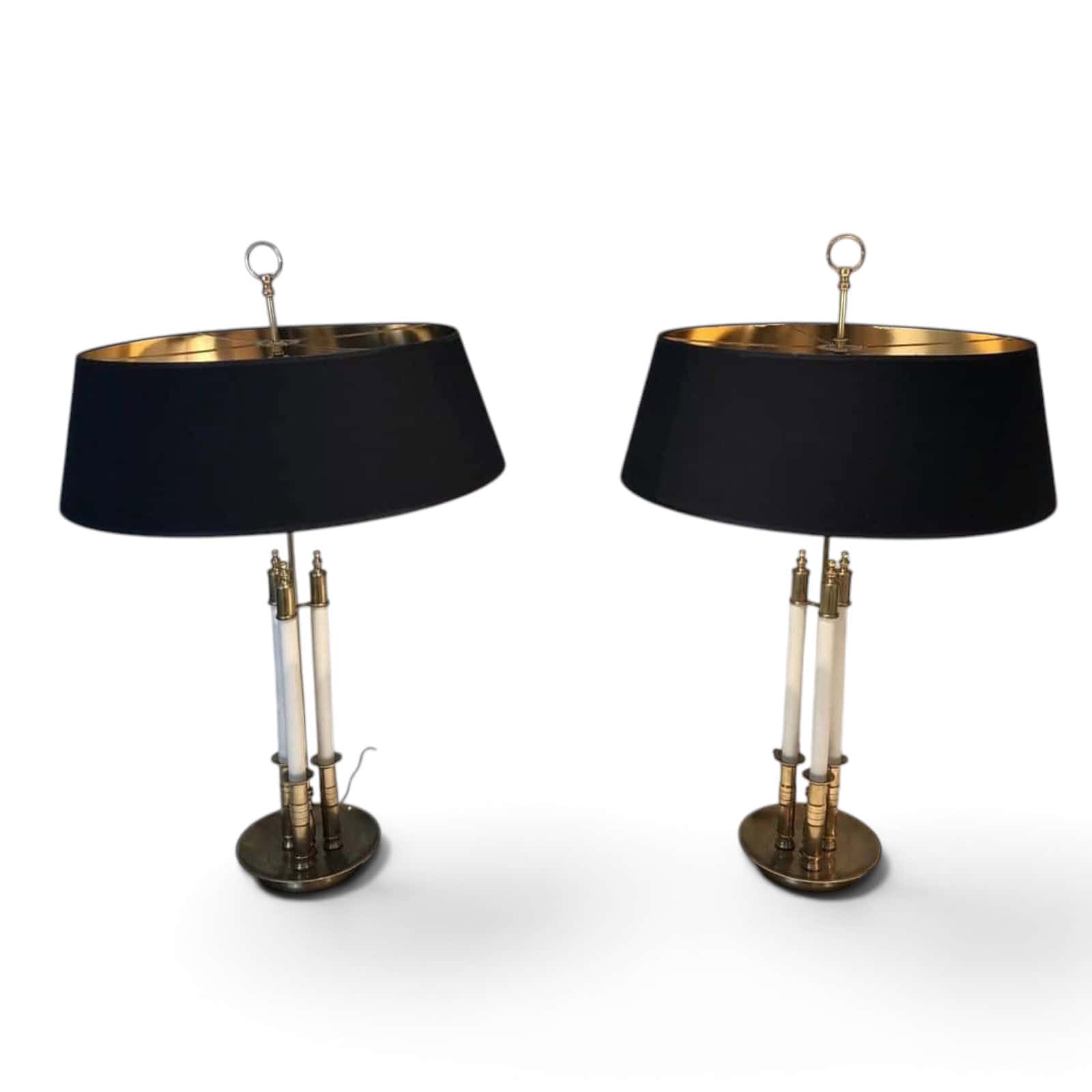
Yet it can also obscure important distinctions.
A polished brass table lamp with restrained white lacquer columns communicates a very different design philosophy from the dramatic chrome-and-glass lighting associated with the late 1920s. Likewise, a console inspired by Directoire architecture reflects different ideals from the tropical wood veneers and bold geometric ornament that first made Art Deco internationally famous.
Recognising these differences does not diminish the Art Deco label. Instead, it enriches our understanding of how French design evolved throughout the interwar period.
The Origins of Quiet Luxury
Long before “quiet luxury” became a contemporary design trend, French decorators had already discovered its essential principles.
Rather than relying on conspicuous display, they trusted proportion, craftsmanship, and carefully selected materials to create beauty. White lacquer reflected light with extraordinary softness. Polished brass introduced warmth without overwhelming a room. Fine woods, parchment, bronze, and subtle architectural forms replaced visual excess with understated confidence.
It is no coincidence that today’s leading interior designers continue to draw inspiration from Jean-Michel Frank, André Arbus, and Maison Jansen. Their interiors demonstrate that genuine elegance rarely depends on fashion. Instead, it emerges from timeless principles executed with extraordinary skill.
Looking Beyond the Label
Perhaps the greatest reward of studying French decorative arts is discovering that history is rarely as simple as the labels attached to it.
Art Deco did not suddenly disappear in the 1930s, nor was it replaced by a single new movement. Instead, French designers adapted to changing tastes, economic realities, and cultural influences, creating objects that combined modern living with centuries of classical tradition.
Among the finest examples are elegant brass and lacquer lighting, restrained architectural furniture, and beautifully proportioned decorative objects whose sophistication lies not in ornament but in balance.
Looking beyond the familiar Art Deco label reveals a richer story—one of continuity rather than rupture, evolution rather than replacement. It is a story that continues to shape the finest interiors today and reminds us that the most enduring forms of luxury are often the quietest.

Silke Berlinghof
People also buy
Antique Furniture and Decor


Fine Art and Sculptures
Rugs and Carpets
Dining room tables
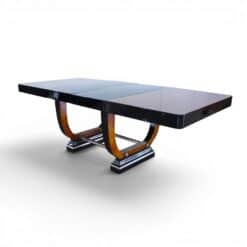
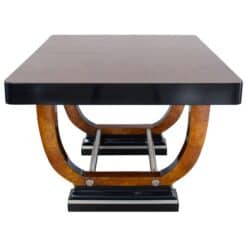
Expandable Art Deco Dining Table, Thuja Roots, Lacquered, France, circa 1930
Armchairs
Bar Carts and Bar Furniture
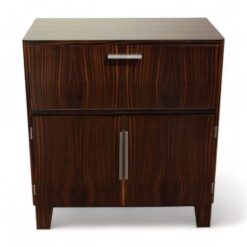
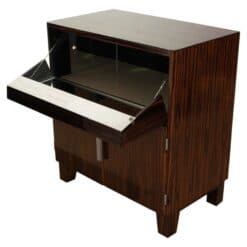
Small Art Deco Bar Cabinet, Macassar Veneer, France, circa 1930

Side tables