

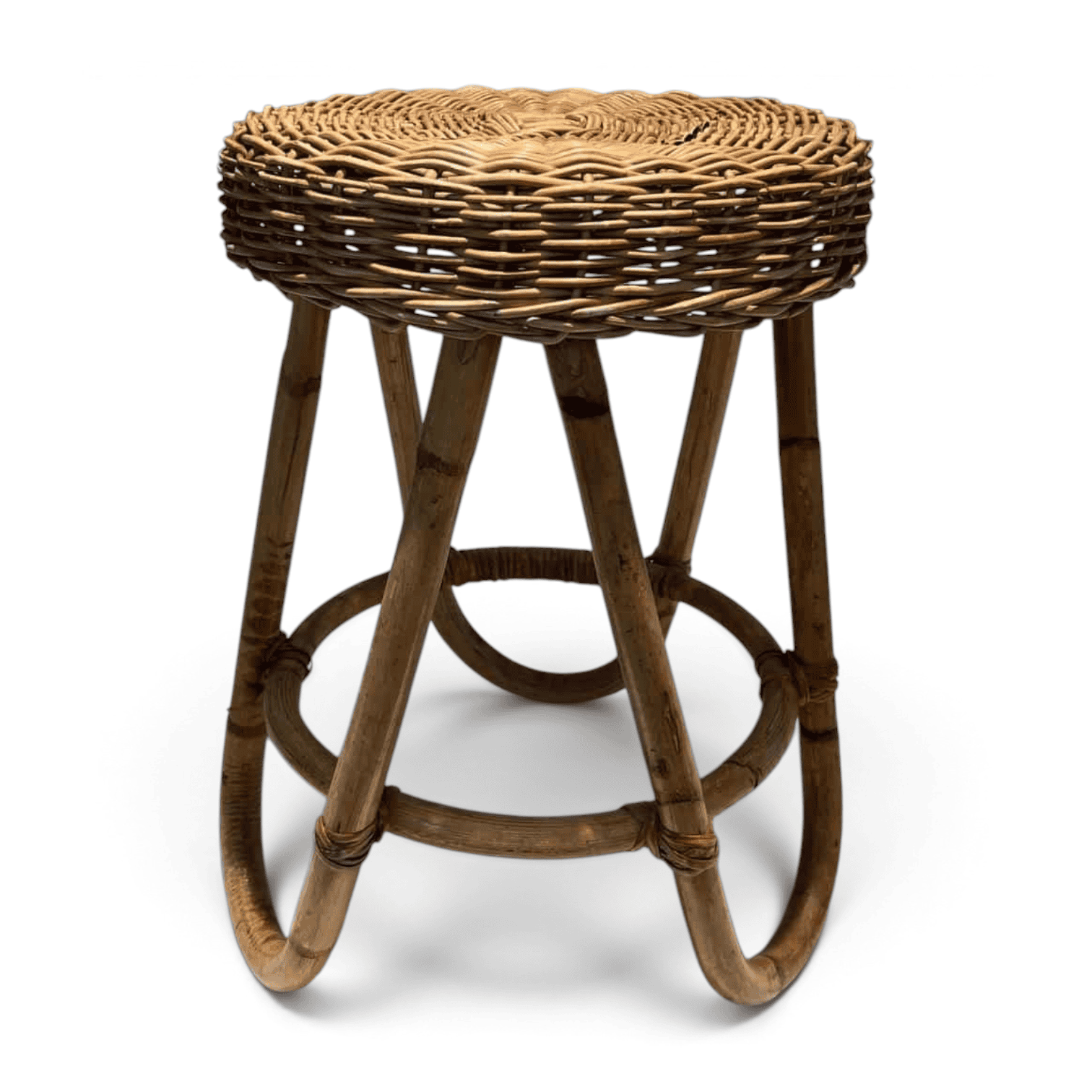
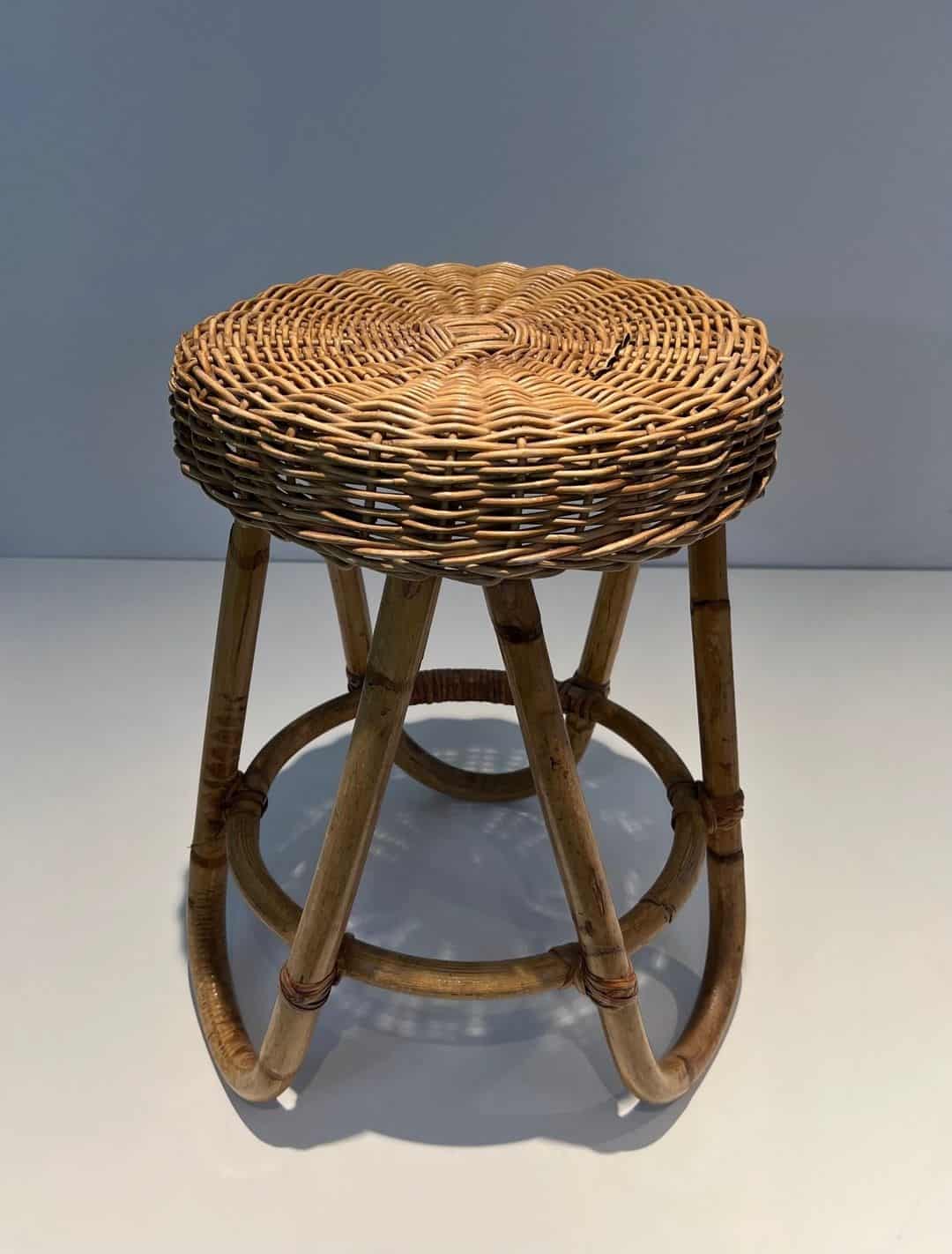
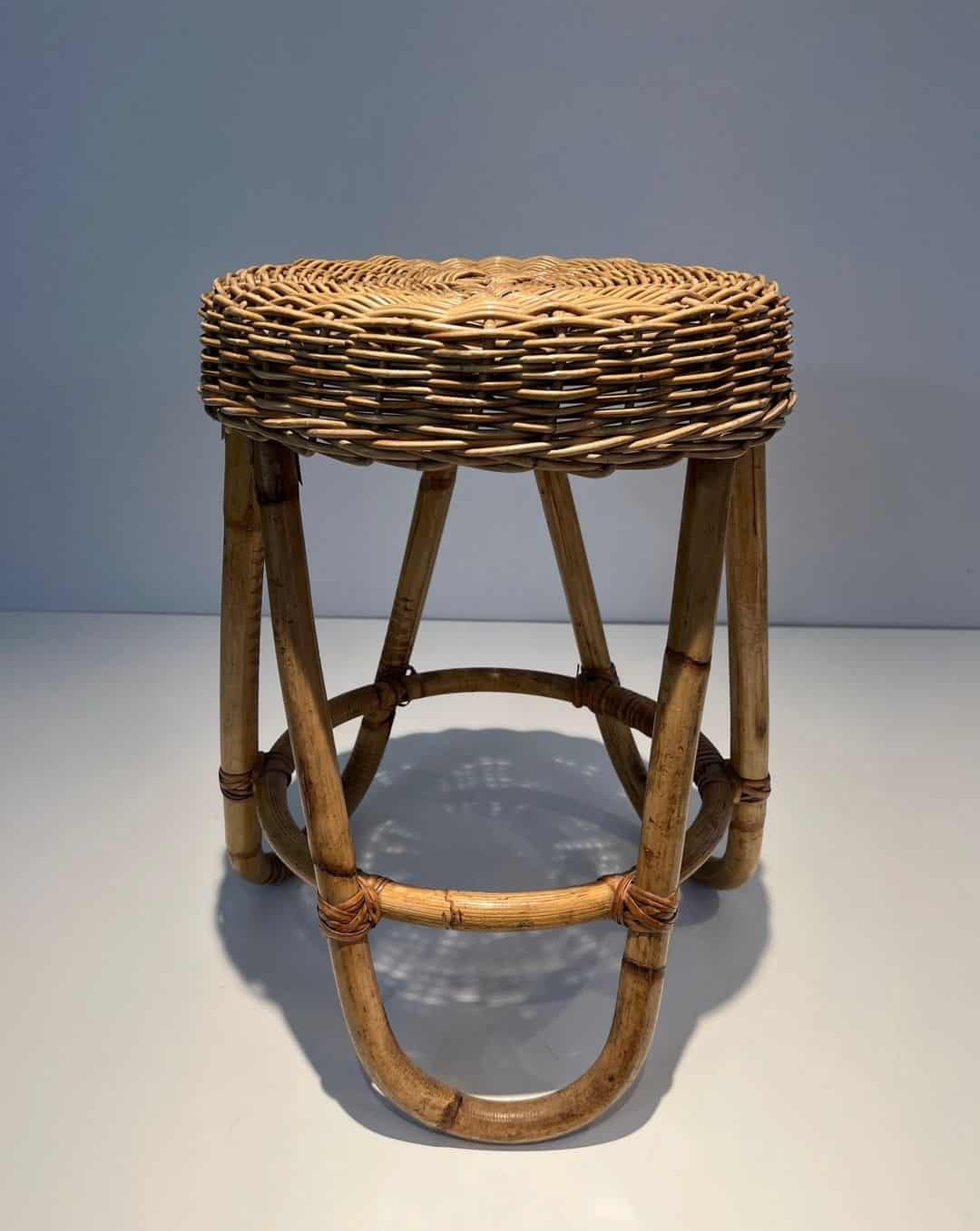
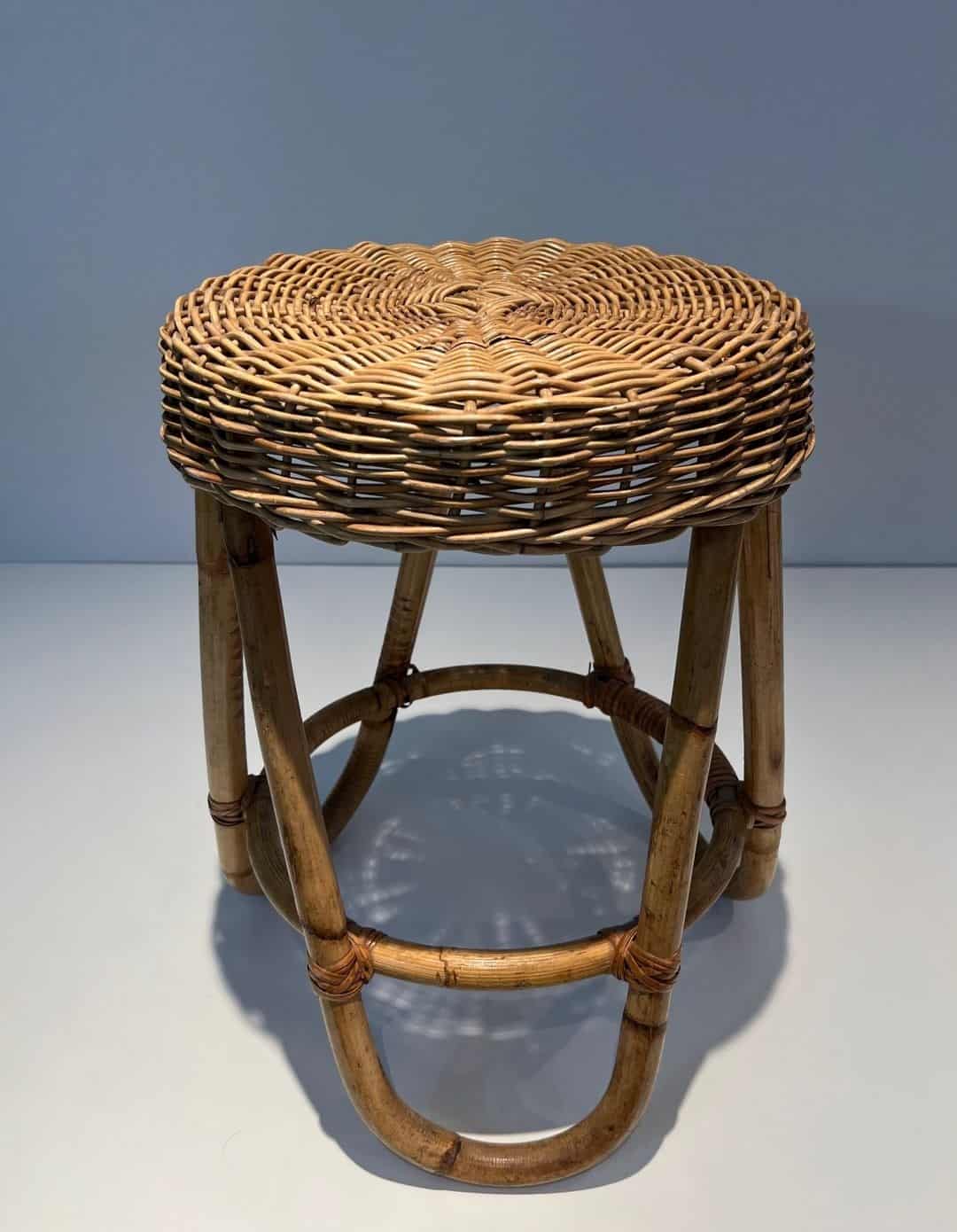
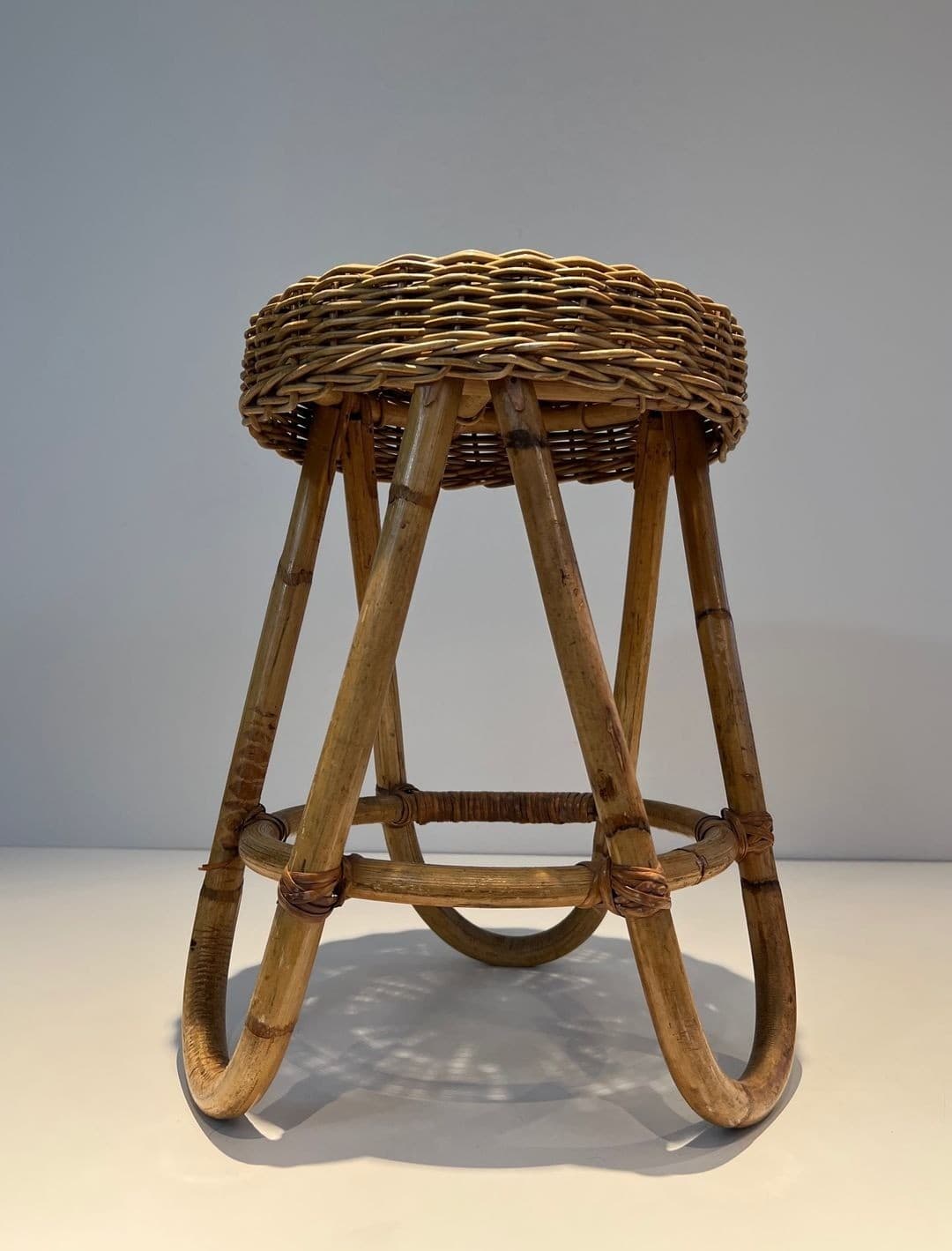
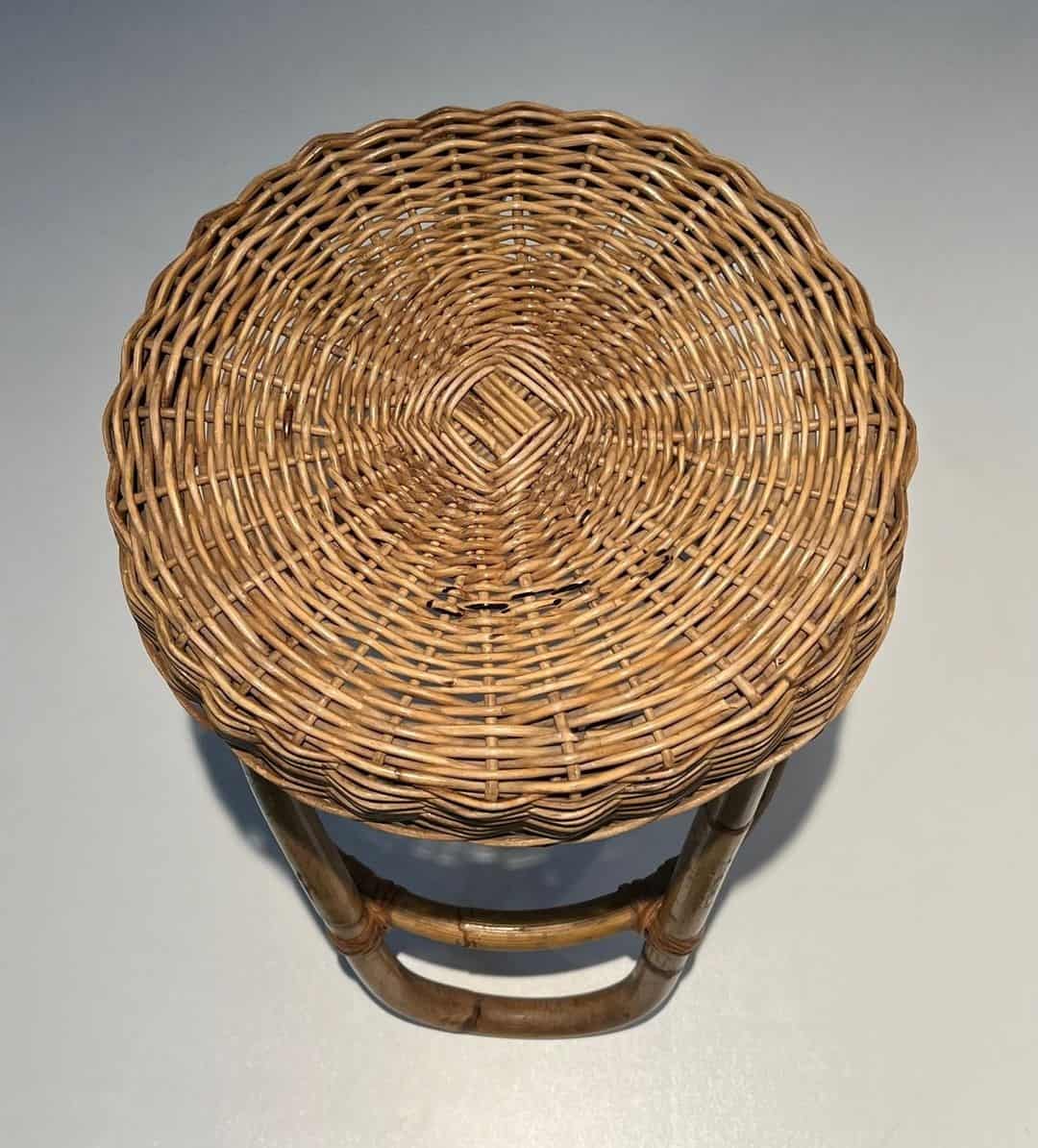
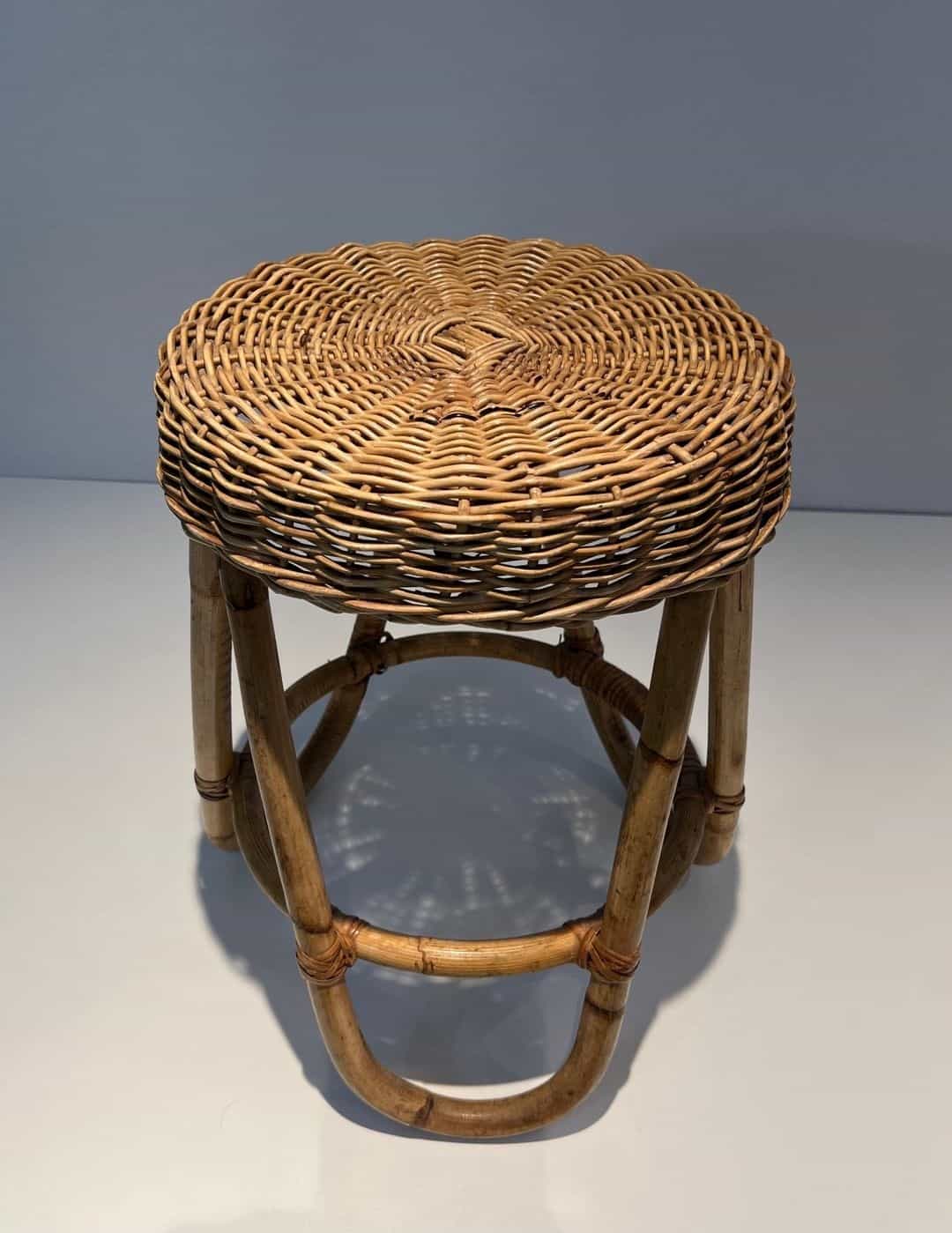
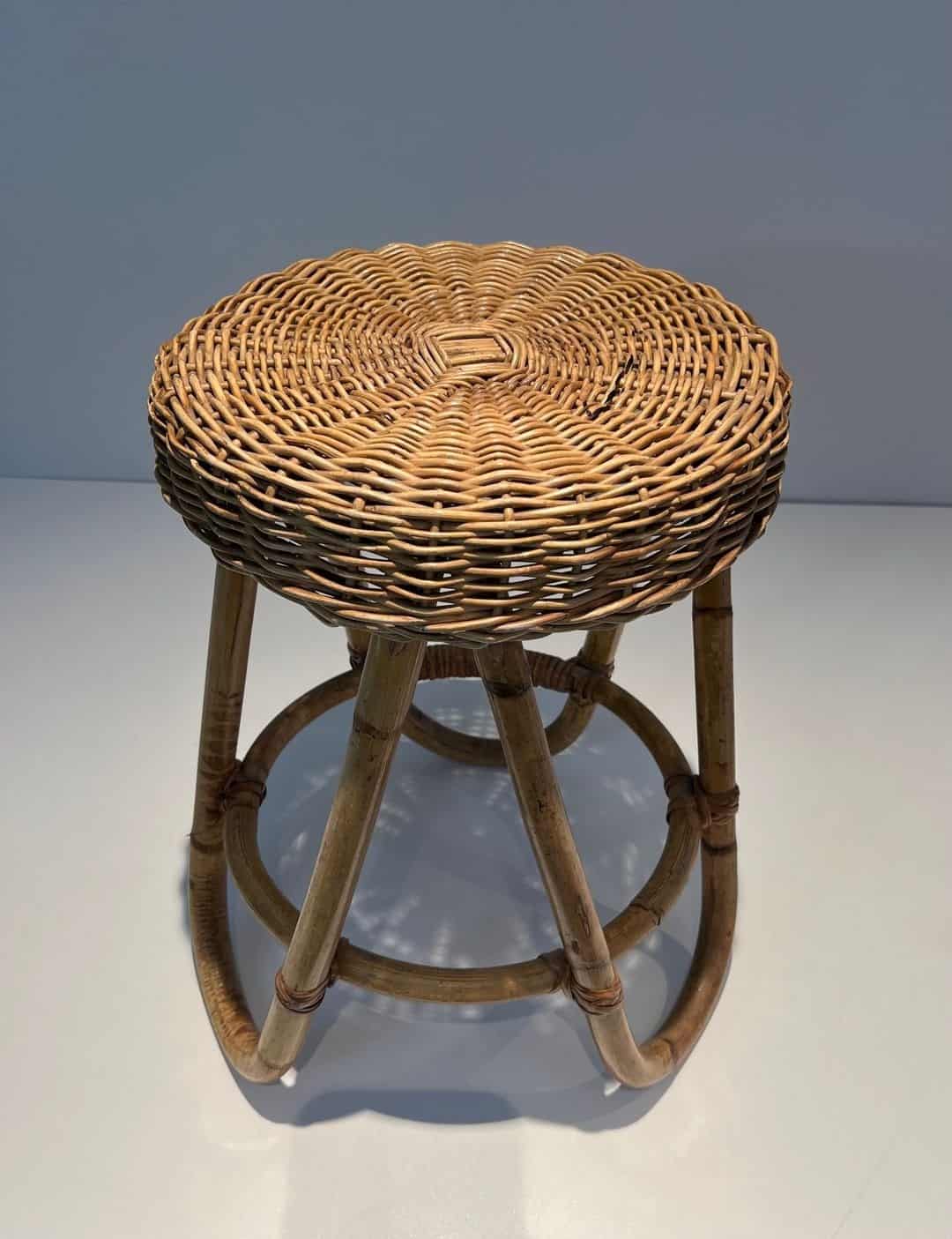
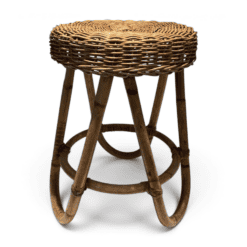
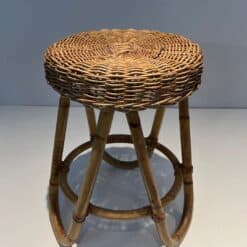
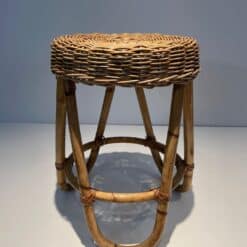
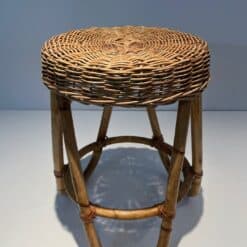
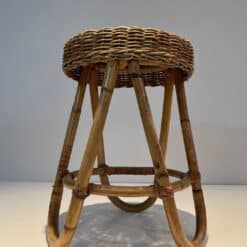
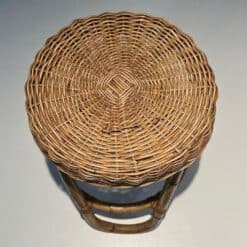
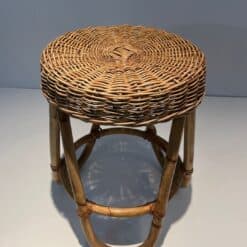
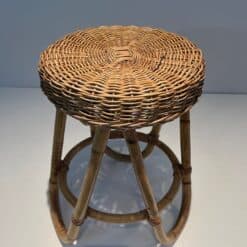
Franco Albini Style Rattan Stool
- Height: 47 cm / 18.5 in
- Width: 37 cm / 14.6 in
- Length: 37 cm / 14.6 in
Franco Albini Style Rattan Stool
Rationalist Rattan Stool Design
This Franco Albini style rattan stool reflects the Italian designer’s distinctive approach to natural materials: treating rattan not simply as a decorative surface, but as an integral part of the structure. The result is a remarkably disciplined piece in which material, geometry, and function are closely connected.
The compact square form measures 37 cm in both width and length and rises to 47 cm in height. Its proportions create a near-cubic volume, while the slightly greater height maintains a comfortable seating profile. At the same time, the clean geometry gives the stool a strong architectural presence despite its small scale.
Rattan as Structure and Surface
Franco Albini’s celebrated rattan furniture for Bonacina, including the Margherita and Gala chairs of 1950–51, demonstrated how woven natural materials could achieve exceptional structural and visual clarity. This stool, made in the style of that body of work, follows the same principle.
Here, the woven rattan defines the stool’s shape while providing its visual character. Rather than relying on upholstery or elaborate ornament, the design allows the material and its construction to remain fully visible. Consequently, the stool has a light, open quality while maintaining a distinctly architectural silhouette.
Italian Rationalist Influence
The stool’s restrained geometry recalls the rationalist tradition that shaped much of postwar Italian design. Its square footprint, straightforward proportions, and absence of unnecessary elements create an understated sense of order.
Albini’s work demonstrated that natural materials could be handled with the same formal discipline associated with industrial materials such as steel and glass. This stool expresses that idea in a particularly direct way. Its compact dimensions also make it easy to use as additional seating, a footrest, or a small occasional table.
Franco Albini and Bonacina
Franco Albini (1905–1977) was one of the leading figures of twentieth-century Italian architecture and design. His collaboration with Bonacina produced some of the period’s most influential rattan furniture, notably the Margherita and Gala chairs. He received the Compasso d’Oro in 1955 for his Luisa chair and also designed important postwar museum interiors in Genoa.
This stool should be understood as an example in the manner of Franco Albini, rather than as a confirmed Albini or Bonacina production. Its value lies in the clarity of the design language it evokes: square geometry, structural rattan, and a purposeful absence of ornament.
Details
- Type: Rattan stool / occasional table
- Style: Franco Albini style / Italian Rationalist
- Period: Mid-20th century
- Place of origin: Italy
- Material: Rattan
- Form: Square, near-cubic construction
- Design: Minimal geometric silhouette with structural woven rattan
- Function: Stool, footrest, or occasional table
- Attribution: In the style of Franco Albini; not definitively attributed
Dimensions
- Height: 47 cm / 18.5 in
- Width: 37 cm / 14.6 in
- Length: 37 cm / 14.6 in
| Product Dimensions: | |
|---|---|
| Height | 47.0 cm (18.5 in) |
| Width | 37.0 cm (14.57 in) |
| Depth | 37.0 cm (14.57 in) |
| Date of Manufacture | 1950 |
| Restoration | No |
| Condition | Minor Losses |
| Color | Brown |
| Country Of Origin | Italy |
| Item Condition | Excellent |
| Material | Rattan |
| Period | Mid 20th century |
| Techniques | handmade |
| Product style | Mid-Century |
| Shipping measurement: | |
| Height | 47 cm (18.5 in) |
| Width | 37 cm (14.57 in) |
| Depth | 37 cm (14.57 in) |
| Weight | 8.8 lbs (3.99 kgs) |
Be the first to review “Franco Albini Style Rattan Stool”
Styylish has a huge network of shipping companies and can negotiate competitive quotes for worldwide shipping for you. Please ask us for a shipping quote before your purchase. We will make sure that you get a fair rate and do not pay too much!
Local Pick up
Local pickup allows customers to inspect an item at the time of pickup and avoid shipping costs.
White Glove Shipping
Item is delivered inside your home and placed in the room of your choice (installation and hookup are not included).
Local Deliveries
Local rates are available on most items where the delivery location is within 30 miles.
Shipping charges start at $150, depending on product type, size, location of the buyer. Local deliveries typically take up to 2 weeks.
Shipping within the Continental US
Flat rate shipping costs between $450-$750, depending on your location and the size of the item. The delivery usually takes between 3-5 weeks.
Express delivery can be organized but is subject to additional fees.
Overseas, Alaska and remote areas please ask for a shipping quote.
Parcel Delivery
Shipment is arranged through recognized carriers such as UPS, FedEx, and DHL.
Only pieces that can be safely packed in a box or envelope may be shipped via parcel.
Shipping charges start at $20 and vary based on the size, weight, packaging and the value of the item.
Items are typically delivered within 2 weeks of the purchase date.
The Styylish Buyer Guarantee ensures that you have complete peace of mind when making a purchase on Styylish in the event that your item:
- Does not arrive
- Is materially different than what you purchased
All sales are final on Made–to–Order items.
For all other items, sales are final 48 hours after delivery (Except Free Local Pickup and Local Delivery — see below).
To request a return, please email [email protected] and include the order number and the reason for your return request.
On approved returns, the buyer is responsible for full cost of return packing & shipping.
The items are insured during the shipping process and the shipper’s insurance will cover the cost for any damage caused by the shipper during the shipping process.
Local Pickup & Local Delivery
All sales are final once buyer or buyer’s agent takes possession of an item.
Upon inspection, if you decide not to move forward with the purchase, you or your agent must refuse the item at the time of pickup/delivery from the seller.
Once you have taken possession of the item, all sales are final.
Please contact [email protected] to let us know you did not accept the item and would like to initiate a refund.
Related products
Antique and Vintage Seating
Antique and Vintage Seating
Accent chairs
Accent chairs
Accent chairs
Accent chairs
Antique and Vintage Seating
Ask a Question
Thank you!
Your question has been sent. We’ll get back to you shortly.
Reviews
There are no reviews yet.