
Best Sellers
Antique Furniture and Decor
Accent chairs
Antique Furniture and Decor
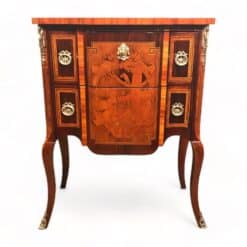
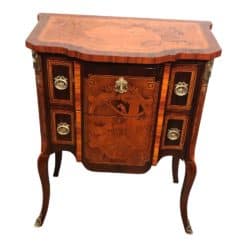
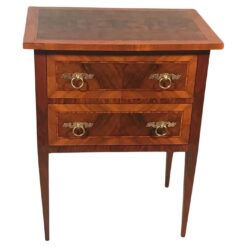
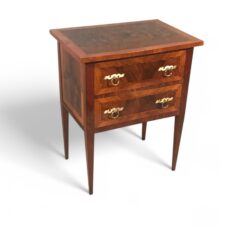
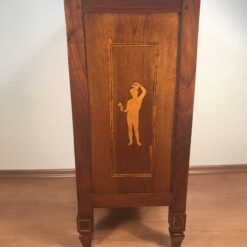
German Neoclassical Small Chest of Drawers or Nightstand, 1820
Antique Furniture and Decor

Antique Furniture and Decor
Antique Furniture and Decor
Antique Furniture and Decor
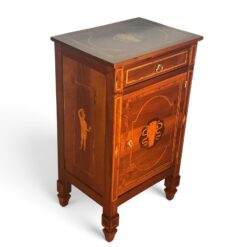
Italian Provincial Neoclassical Marquetry Cabinet, circa 1780
Furniture, Style, Styylish History
Empire, Louis XVI, or Neoclassical Furniture? Understanding the Differences
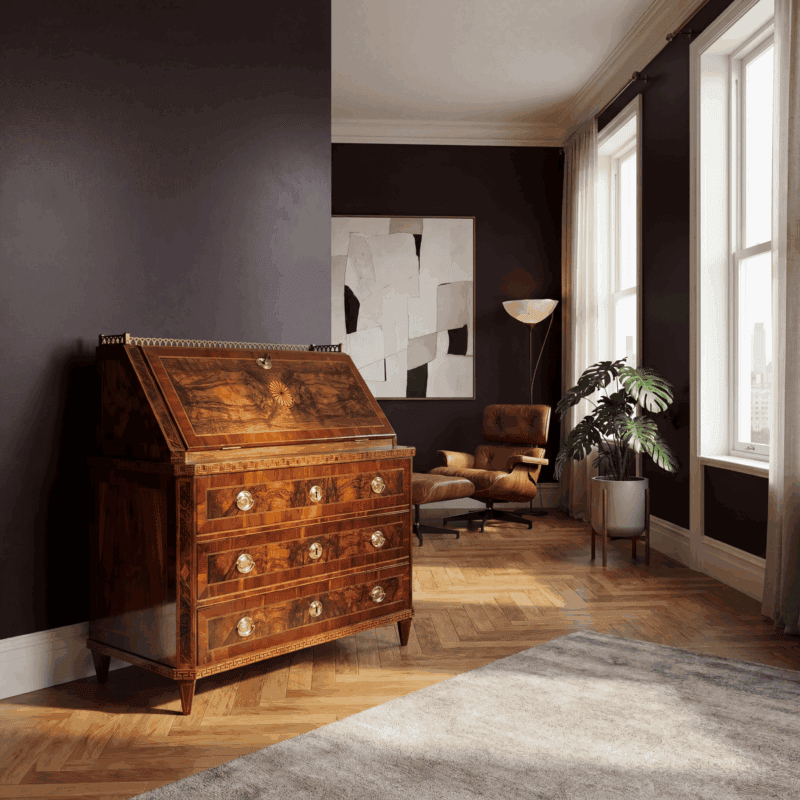
When exploring antique and vintage furniture, terms such as Louis XVI, Empire, and Neoclassical furniture are often used interchangeably. While these styles share a common heritage rooted in classical antiquity, each represents a distinct chapter in design history with its own characteristics, influences, and aesthetic appeal.
For collectors, interior designers, and discerning homeowners, understanding the differences can help identify authentic pieces, build more cohesive interiors, and make informed purchasing decisions. Whether you are sourcing a refined Louis XVI fauteuil, an imposing Empire commode, or a versatile Neoclassical console table, recognizing the nuances between these styles is essential.
What Is Neoclassical Furniture?
Neoclassical furniture emerged during the second half of the eighteenth century as part of a broader cultural movement inspired by the rediscovery of ancient Greek and Roman art and architecture. Archaeological excavations at Pompeii and Herculaneum fueled fascination with classical forms, leading artists, architects, and furniture makers to reject the excesses of the Rococo period in favor of greater symmetry, proportion, and restraint.
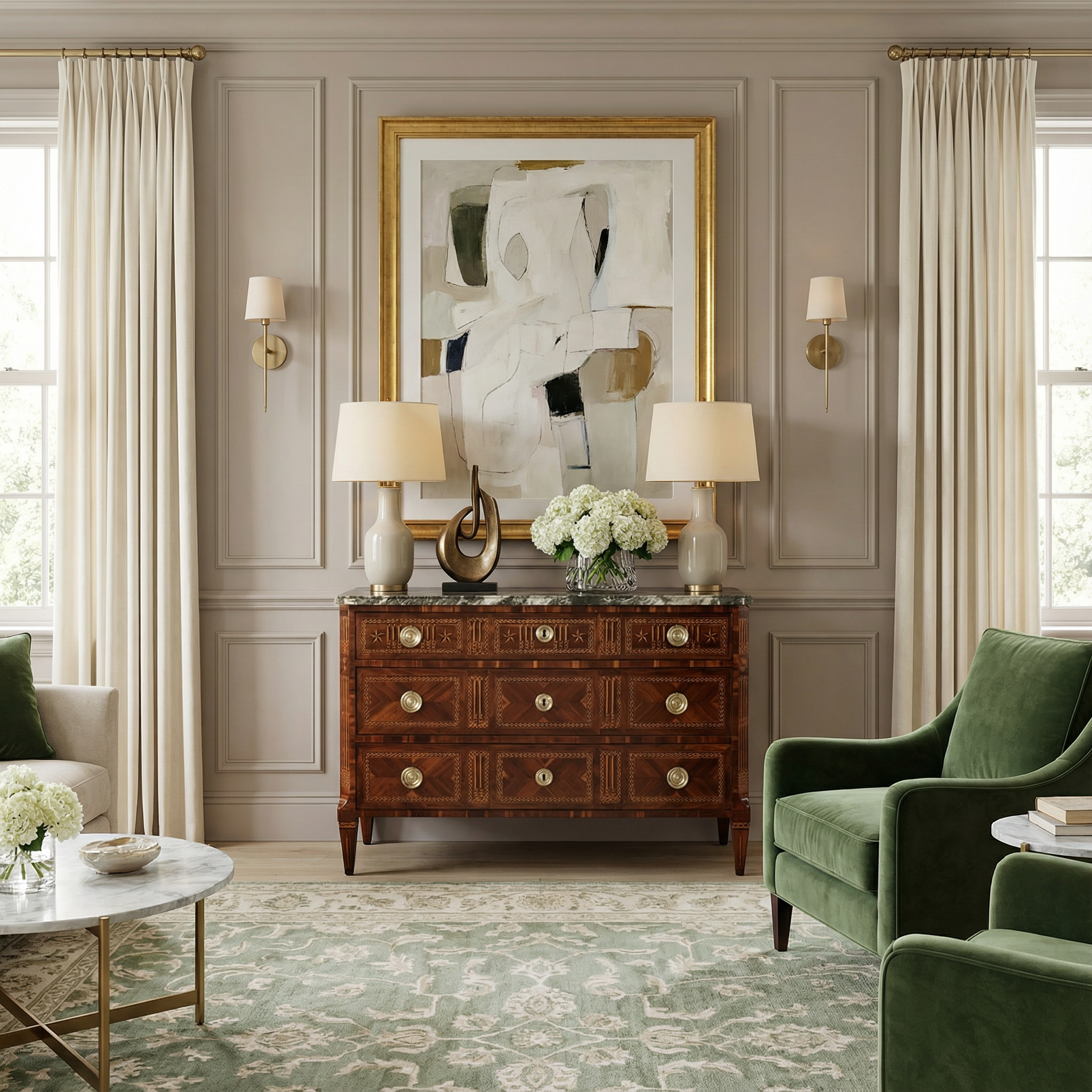
Unlike a single furniture style, Neoclassicism is best understood as a design movement encompassing several regional interpretations and periods. Louis XVI furniture in France and the later Empire style are both considered expressions of Neoclassical design.
Common characteristics of Neoclassical furniture include:
- Symmetrical forms
- Straight, architectural lines
- Classical motifs such as laurel wreaths, urns, columns, and acanthus leaves
- Refined proportions
- High-quality craftsmanship and materials
- Inspiration drawn from Greek and Roman antiquity
Today, Neoclassical furniture remains popular because it bridges traditional elegance and contemporary sophistication. Its clean lines and balanced proportions allow it to integrate surprisingly well into modern interiors.
Louis XVI Furniture: Elegant and Refined
The Louis XVI style flourished in France between approximately 1774 and 1793 during the reign of King Louis XVI. It represents one of the purest interpretations of early Neoclassicism and emerged as a reaction against the elaborate curves and ornamentation of the preceding Rococo period.
Furniture makers embraced geometric forms, symmetry, and classical ornament while maintaining an atmosphere of refinement and lightness.
Key Characteristics of Louis XVI Furniture
Louis XVI furniture is often recognized by:
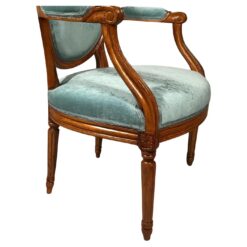
- Fluted or tapered legs
- Rectangular or oval forms
- Delicate carved decoration
- Rosettes, ribbons, and garlands
- Laurel wreath motifs
- Light and elegant proportions
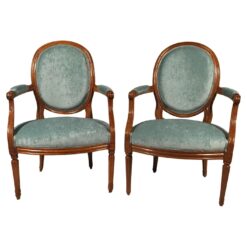
Mahogany became increasingly fashionable during this period, although painted finishes and giltwood examples were also common. Seating furniture often featured oval or medallion backs, inspired by classical architecture and archaeological discoveries.
Perhaps the defining quality of Louis XVI furniture is its sense of restraint. Decorative elements are carefully balanced rather than overwhelming. Every detail contributes to a harmonious whole.
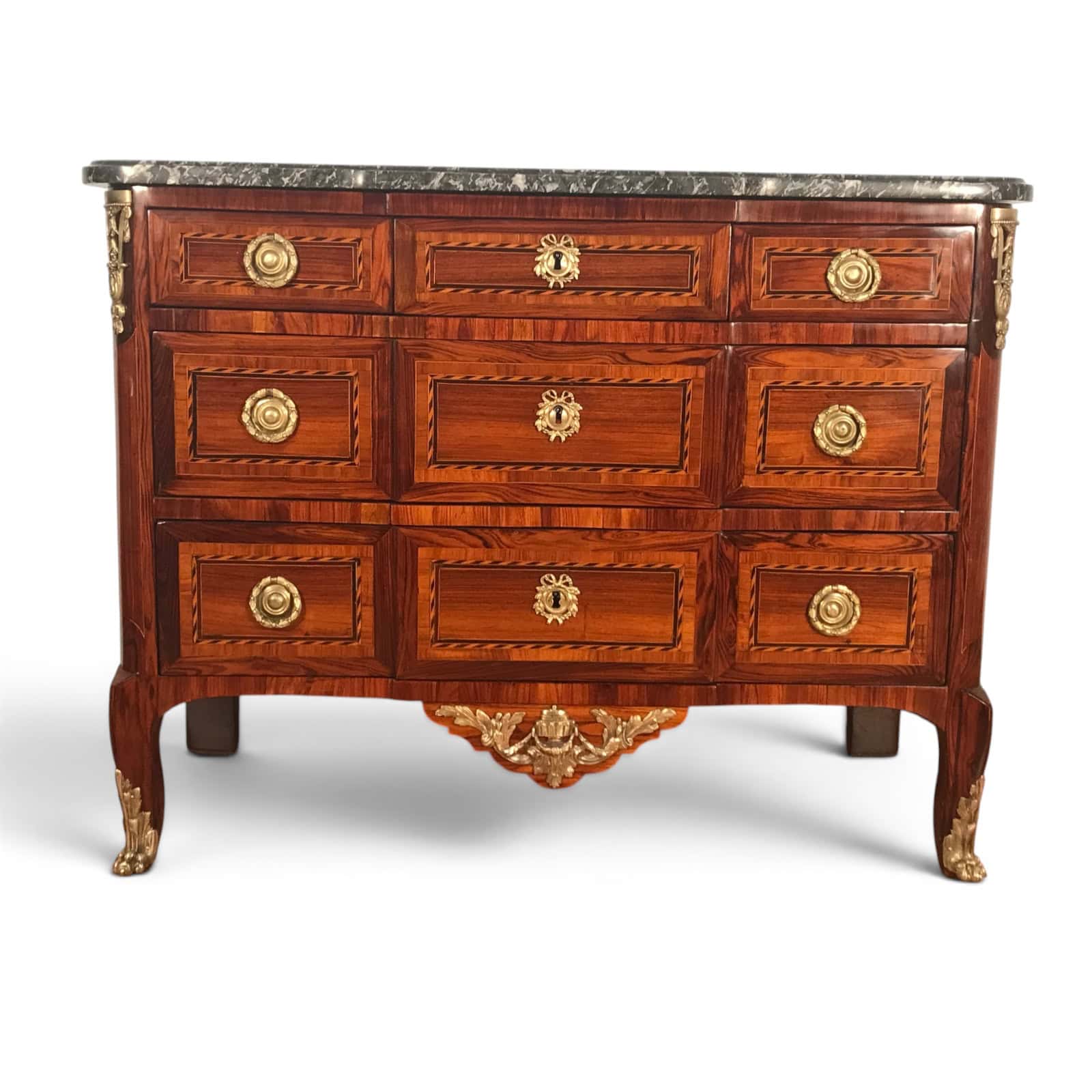
For contemporary interiors, Louis XVI pieces introduce sophistication without excessive formality. A Louis XVI side chair, console table, or commode can add architectural structure and historical depth to both traditional and modern spaces.
Empire Furniture: Bold and Monumental
The Empire style developed in France under Napoleon Bonaparte in the early nineteenth century, reaching prominence between 1804 and 1815. While firmly rooted in Neoclassical principles, Empire furniture reflects a dramatically different aesthetic from Louis XVI.
Where Louis XVI furniture is graceful and refined, Empire furniture is confident, powerful, and theatrical.
Napoleon actively used visual references to ancient Rome to reinforce his political ambitions. Furniture became an extension of this imperial symbolism, incorporating motifs associated with authority, conquest, and permanence.
Key Characteristics of Empire Furniture
Empire pieces are typically distinguished by:
- Massive, architectural proportions
- Dark mahogany veneers
- Heavy use of gilt-bronze mounts
- Classical columns and pilasters
- Eagle motifs
- Sphinxes, lions, and mythological figures
- Strong geometric forms
Empire furniture often feels more sculptural than decorative. A cabinet may resemble a Roman temple. A desk may be supported by carved animal forms. Consoles frequently feature dramatic gilt details and imposing silhouettes.
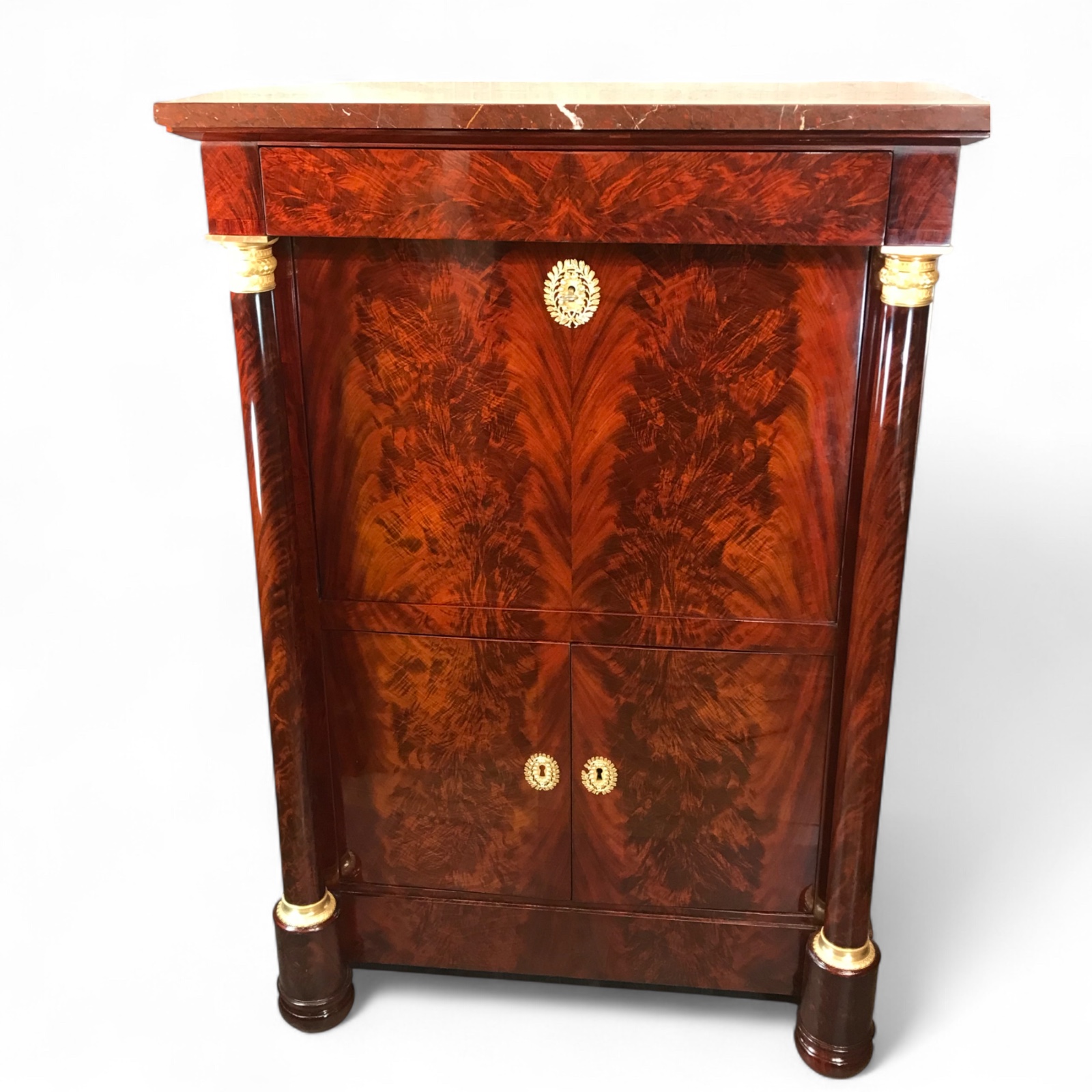
Because of its bold visual presence, Empire furniture is often used as a statement piece within a room. A single Empire commode or center table can anchor an entire interior scheme.
The Key Differences Between Louis XVI and Empire Furniture
Although both styles belong to the broader Neoclassical movement, several distinctions make identification relatively straightforward.
Proportions
Louis XVI furniture favors lighter proportions and visual delicacy.
Empire furniture embraces larger, heavier forms that project strength and authority.
Ornamentation
Louis XVI decoration tends to be subtle and refined, often featuring floral garlands, ribbons, and classical motifs.
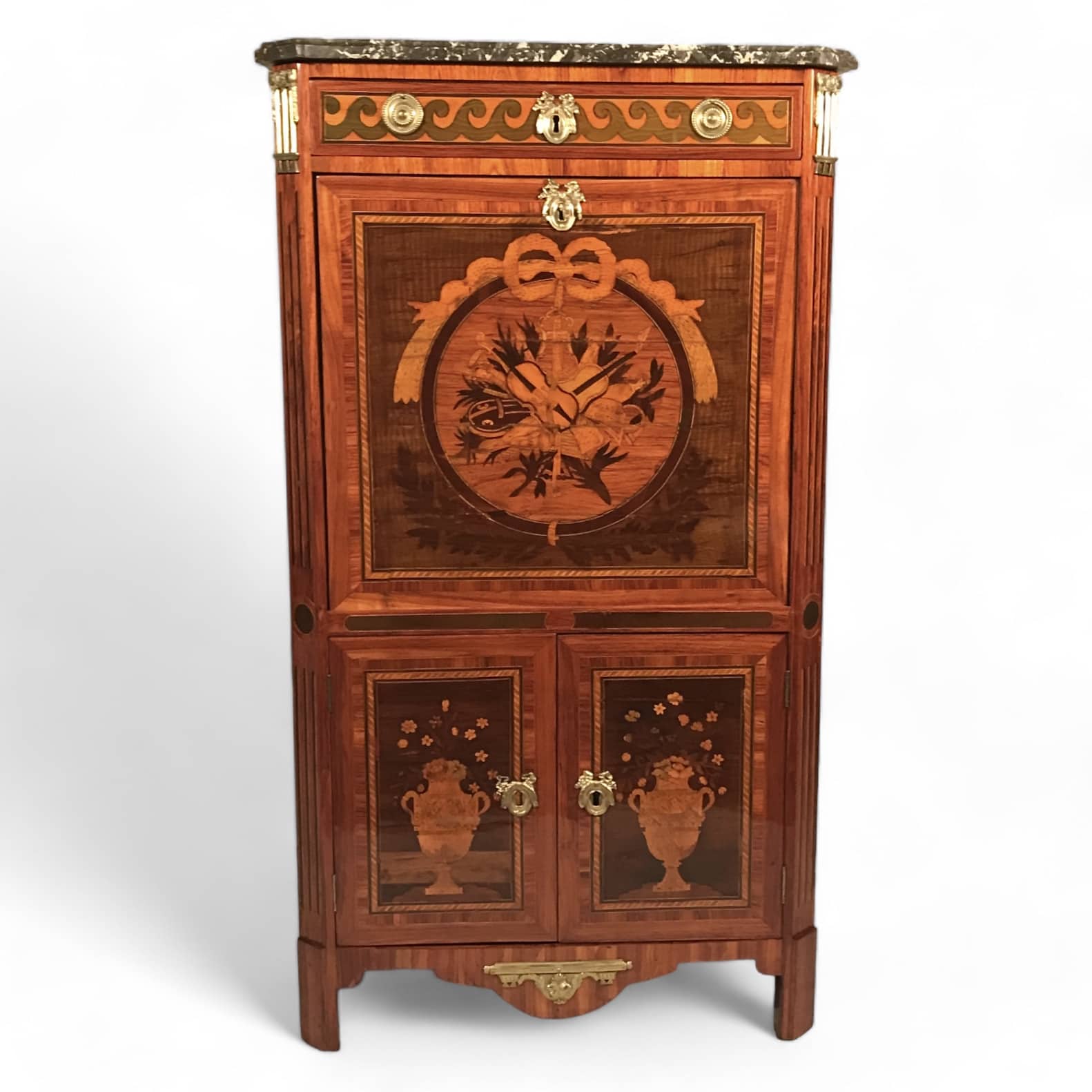
Empire decoration is more dramatic, incorporating military and imperial symbols, mythological creatures, and bold bronze mounts.
Materials
Louis XVI furniture often combines carved wood, painted finishes, and elegant marquetry.
Empire furniture frequently showcases richly figured mahogany with contrasting gilt-bronze accents.
Atmosphere
Louis XVI interiors evoke sophistication, grace, and aristocratic elegance.
Empire interiors communicate grandeur, confidence, and monumentality.
Why Both Styles Are Considered Neoclassical Furniture Styles
The confusion between these styles often arises because both are fundamentally Neoclassical.
Their shared characteristics include:
- Inspiration from antiquity
- Symmetrical design
- Architectural influence
- Classical decorative motifs
- Emphasis on craftsmanship and proportion
Rather than viewing Louis XVI and Empire as competing styles, it is more accurate to see them as different interpretations of the same classical ideals.
Louis XVI represents the refined beginning of the movement, while Empire reflects its more dramatic and imperial evolution.
Using Neoclassical Furniture in Contemporary Interiors
One of the reasons Neoclassical furniture remains relevant today is its remarkable versatility.
Interior designers frequently combine Neoclassical pieces with contemporary architecture, modern art, and minimalist palettes. The contrast between historic craftsmanship and modern simplicity creates visual tension and character that purely contemporary interiors often lack.
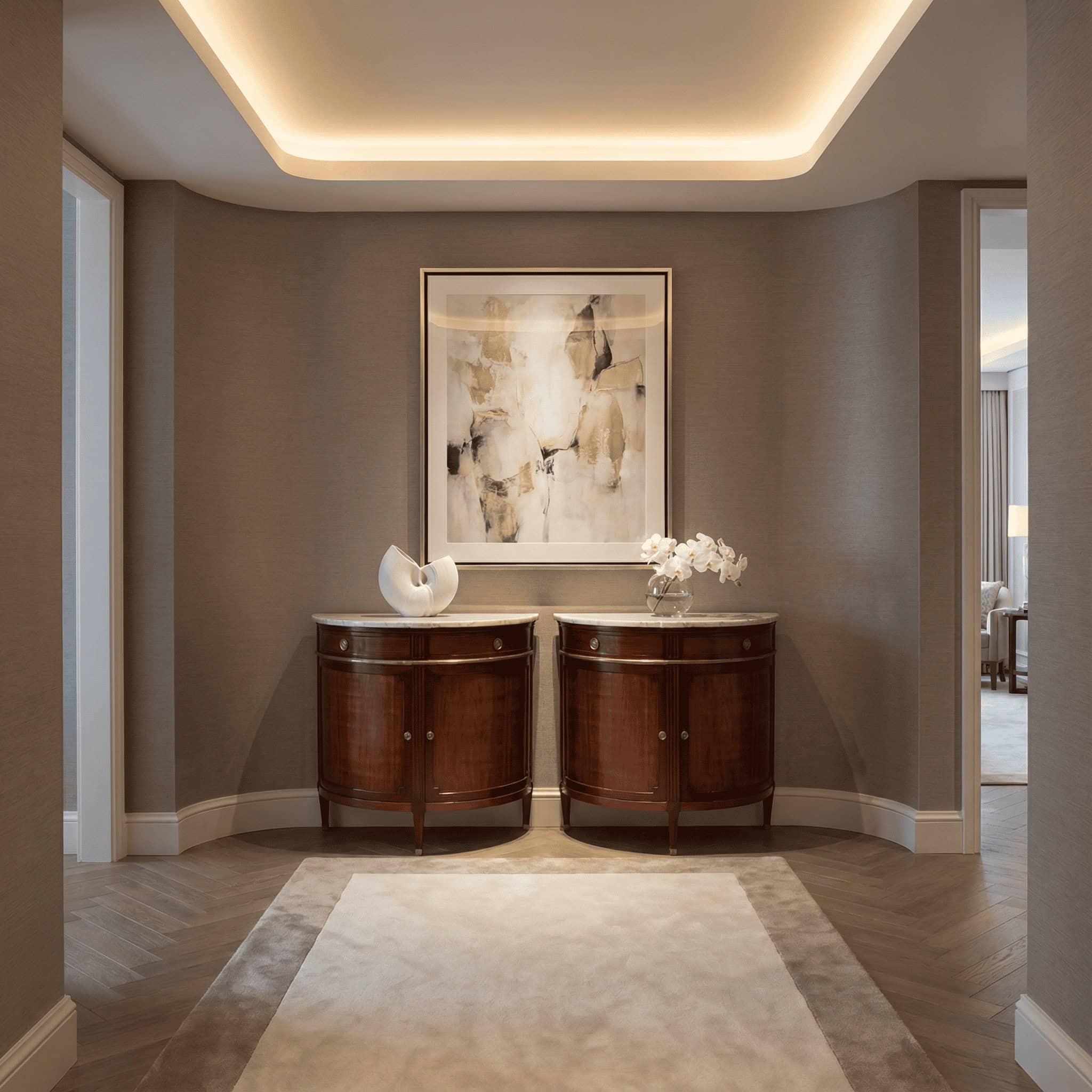
A Louis XVI bergère may soften a modern living room. A pair of Louis XVI Demilune cabinets can provide a dramatic focal point in a contemporary entryway. A Neoclassical dining table can introduce structure and elegance without appearing overly traditional.
The key is balance. Rather than recreating period interiors, designers often use a few carefully selected pieces to add depth, authenticity, and individuality.
Which Style Is Right for You?
If you are drawn to understated elegance, refined craftsmanship, and graceful proportions, Louis XVI furniture may be the ideal choice.
If you prefer bold statement pieces, dramatic forms, and architectural presence, Empire furniture offers undeniable impact.
For many collectors and designers, the broader appeal of Neoclassical furniture lies in its timelessness. Whether expressed through the delicate refinement of Louis XVI or the commanding grandeur of Empire style, these pieces continue to embody enduring principles of beauty, balance, and craftsmanship.
More than two centuries after their creation, they remain among the most sought-after forms of antique furniture—and among the easiest to integrate into sophisticated interiors today.

Silke Berlinghof
People also buy
Antique Furniture and Decor
Antique Furniture and Decor
Antique Furniture and Decor
Italian Provincial Neoclassical Marquetry Cabinet, circa 1780
Antique Furniture and Decor
Antique Furniture and Decor
Antique Furniture and Decor
German Neoclassical Small Chest of Drawers or Nightstand, 1820
Accent chairs